Avignon
Once upon a time . . . AVIGNON was the center of Christendom. Enchanted, it is encircled by medieval ramparts and bordered by the Rhone River. Today, Avignon remains one of Europe’s most elegant and captivating medieval cities.
In 2008, I visited this quaint medieval town while leading a group of high school students to France. I loved it! I looked forward to visiting again and exploring on our own. Fifteen years later, our Viking river cruise provided me with that anticipated opportunity!
AVIGNON holds a prominent place in the History of the Christian Church. As a professor of the subject, I was intrigued and desired to dig deeper into Avignon’s claim-to-fame! My brief summary of this major historical and religious event is included below under the Papal Palace section.
Avignon is filled with architectural treasures and church history – and so much more. It is filled with bustling squares, a lively cafe culture, festivals, and museums. Its contemporary, progressive attitude toward film and theater has gained it a reputation is that arena.
How to pronounce Avignon? Break ‘avignon‘ down into sounds : [AV] + [ING] + [YON] – say it out loud and exaggerate the sounds until you can consistently produce them. It’s fun!
Pont Saint-Benezet – Pont d’ Avignon
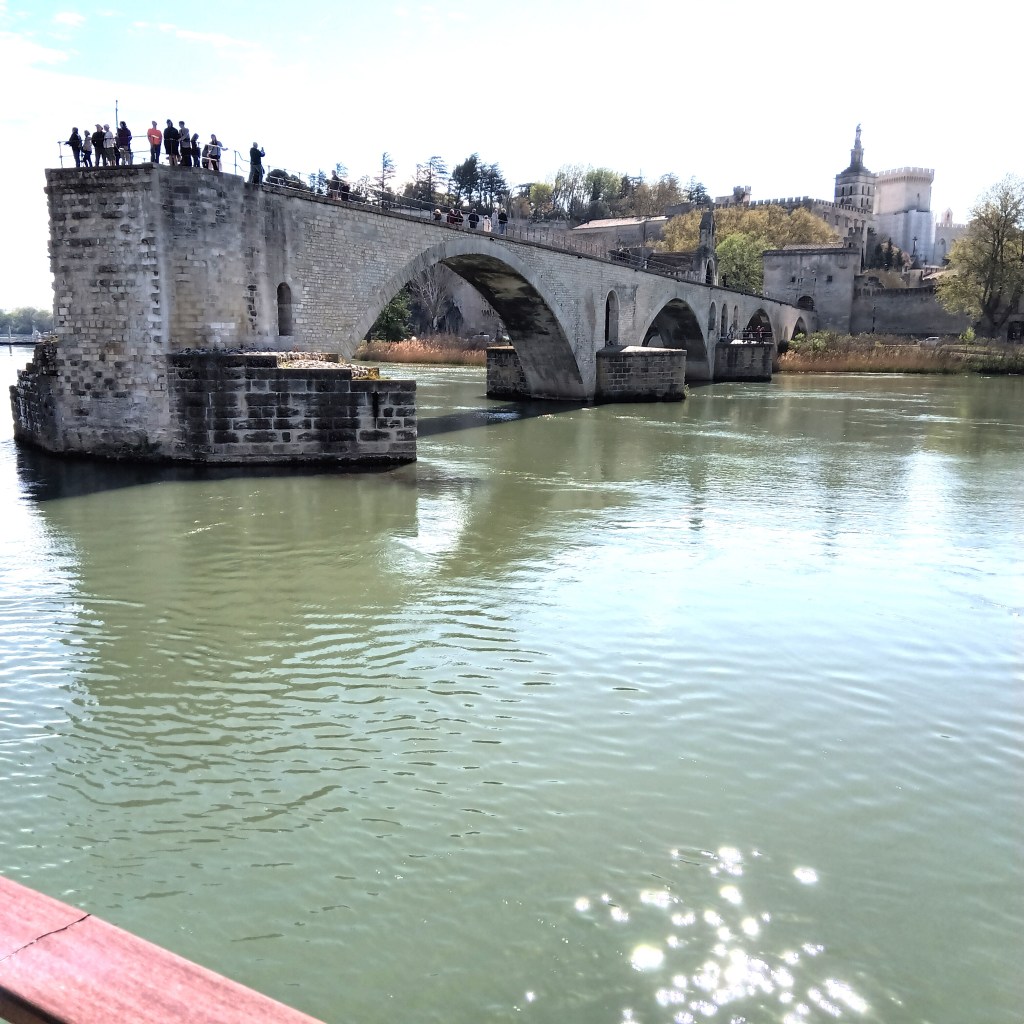
The Pont St-Benezet is the first sight one experiences when arriving by river. It is commonly known as the Pont d’ Avignon – or Bridge of Avignon. Spanning the Rhone River, one is first struck with the fact that it seems to be a “bridge to nowhere!” Technically – it is! Built between 1177 and 1185, there were 22 original arches. Only four remain today. Most of this 12th century monument was washed away during floods in mid-1600s and not rebuilt.
P.C. Cher B. 04 April 2023
Visitors can walk on the remaining portion of this iconic bridge. The experience plus the great views of both river and palace from this vantage point are well worth the entrance fee. A two-story chapel, Chapelle St. Nicolas, is on one pier. Intriguingly, the chapel architecture is Romanesque on one story and Gothic on the other. Legends abound as to the origins of the bridge and stories about the chapel, but history bears that it was a major pilgrimage route in the Middle ages between Italy and Spain.
TRAVELER TIP: As with most cities, combined tickets to multiple sites are a good way to save money. One idea is to buy a combined ticket for the Pont d’ Avignon and the Palais des Papes – or get an Avignon Pass (at any attraction) for sites and museums in Avignon and Villeneuve-lez-Avignon. officetourisme@avignon-tourisme.com
Weather was perfect for a picturesque stroll along the Rhone River where our ship was docked. One of the advantages of a river boat cruise is that getting on and off the ship to go into town was simple – and we didn’t have to worry about where to park a car!

P.C. Fellow Traveler 06 April 2023
Avignon Map
The Tourist Info Center was packed with brochures and helpful information including this map. The layout of this medieval walled city made it easy to navigate and explore on our own. After all, if we “hit a wall,” we simply turned around – literally!

P.C. Cher B. 06 April 2023
Avignon City Walls
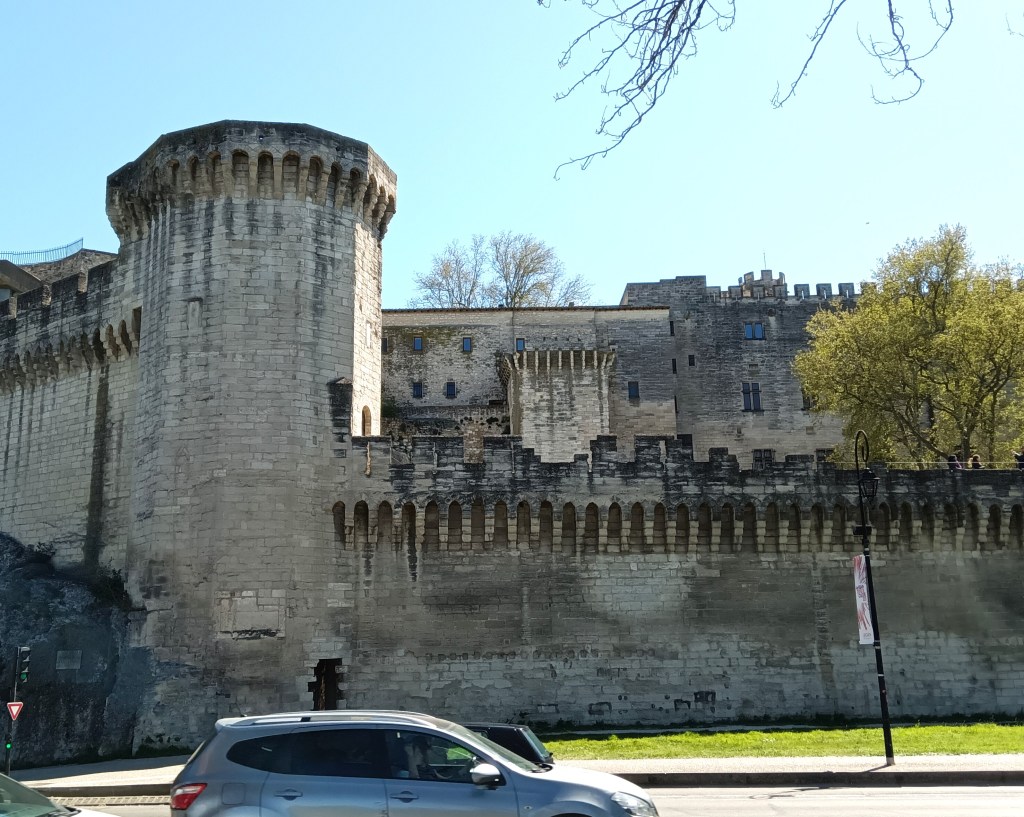
Massive ramparts enclose this fascinating town. The palace and its ten towers were designed as an impregnable fortress.
P.C. Cher B. 04 April 2023
Spring is a great time to visit the South of France! We enjoyed trees in full bloom!
This is a view of the walls from inside near the bridge. It is the backside of the previous photo.

P.C. Cher B. 04 April 2023
The Door in the Wall…
Openings were cut into the wall just wide enough for pedestrian to enter the towns, but too narrow for vehicles. It reminded me of one of my favorite medieval children’s classic “The Door in the Wall” (Marguerite De Angeli, 1949) which I enjoyed with my own children.

P.C. Skip B. 06 April 2023
Passage ways for cars – and probably horses – to enter the walled town were carved into the rock foundations of the walls.

P.C. Cher B. 06 April 2023
City Streets & Square
Medieval walled cities are famous for their quaint town squares and ambling side streets. Avignon is among the best! Every corner and twist in the street revealed another picturesque setting! Here are some of my favorites.
Quaint Side Street Scenes
This entrance to a medieval church was a fun surprise as we peaked through its wrought-iron gateway

P.C. Cher B. 06 April 2023
Narrow cobblestone streets beside tall apartment walls opened up to sunlit courtyards.

P.C. Cher B. 06 April 2023
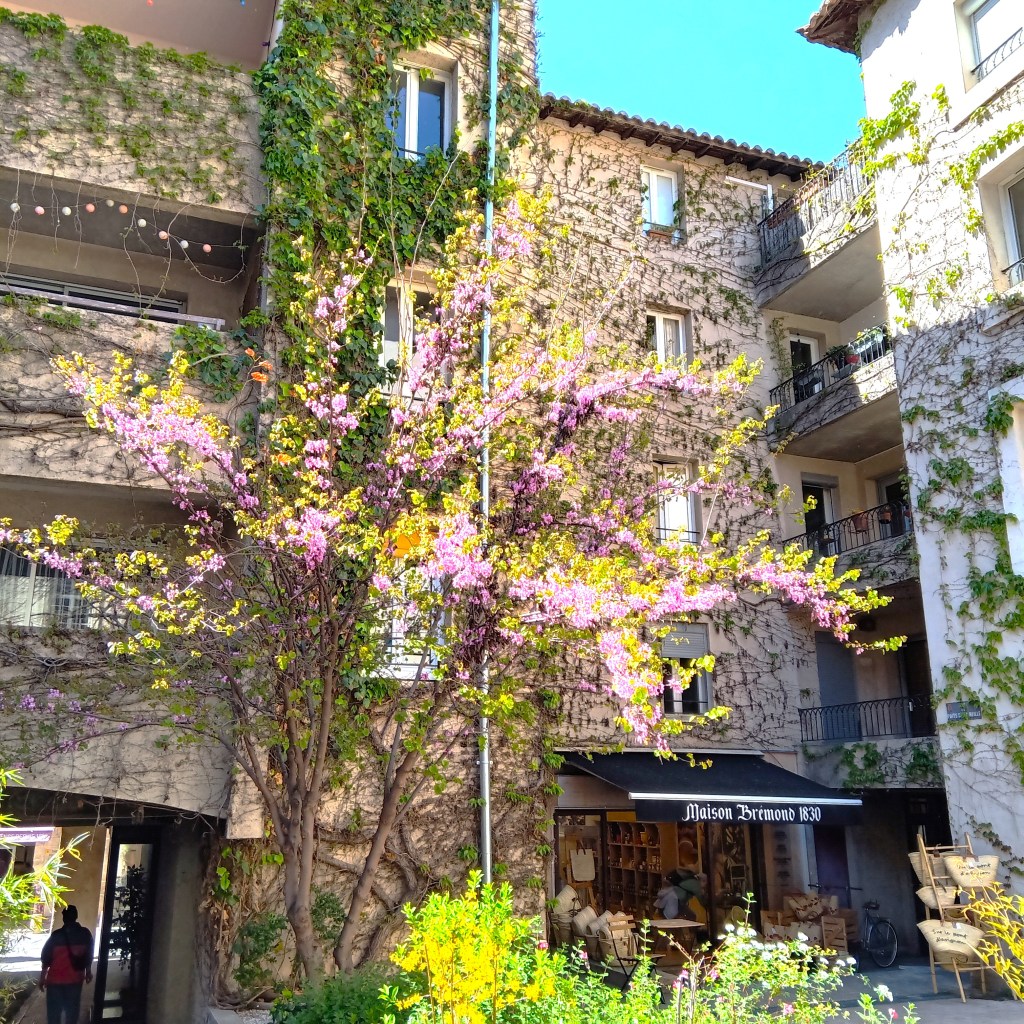
Vines climbed up the stone walls. Shops and alleyways tucked underneath apartment homes spilled out into the next street. It was easy to get lost!
P.C. Cher B. 06 April 2023
This covered alleyway was one of my favorites. Murals decorated the walls which opened up into shops. The alleyway ended in an enclosed courtyard with entrances to apartments and a cozy cafe.

P.C. Cher B. 06 April 2023
Bicycles were a common mode of transportation.

P.C. Cher B. 06 April 2023
Gardens blooming with seasonal tulips added color and fragrance to our strolls down the side streets of the main square!

P.C. Cher B. 06 April 2023
Avignon Carousel
This trip I set out to discover – and ride on when possible – carousels both in Paris and the South of France. It was a great adventure! Here is the Avignon double-decker carousel. It ranked one of the best in my survey for both its horses and its music.

P.C. Cher B. 06 April 2023

P.C. Skip B 06 April 2023
Avignon Cafes & Markets
Avignon Open-Air Cafes
Open-air cafes in Europe are one of the highlights of my travel experiences. Being from Minnesota where frigid temperatures drive us indoors much of the year, I enjoy how Europeans embrace dining in the open air, even if it means keeping your mittens on while you drink your coffee! Options in Avignon were around every corner!

P.C. Cher B. 06 April 2023
This cafe exuded a cozy French vibe. It was at the end of an enclosed alleyway.

P.C. Cher B. 06 April 2023
This is an interior shot of the quaint cafe in the previous photo.

P.C. Cher B. 06 April 2023
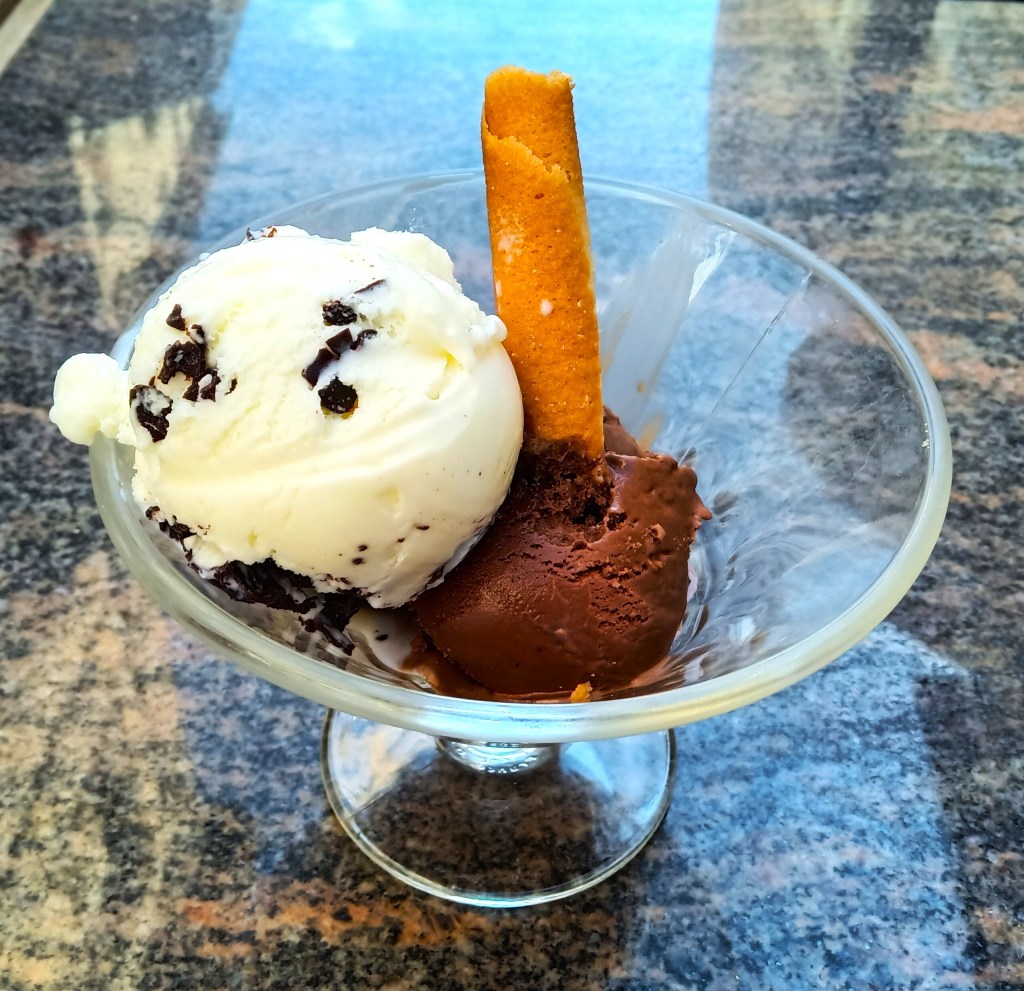
Ice cream / Gelato stop is always included in our itinerary. Of course!
P.C. Cher B. 06 April 2023
Markets
Europe is known for its open-air food markets. Avignon’s is unique in that it is indoors with an distinct outdoor feel.

P.C. Cher B. 06 April 2023

P.C. Cher B. 06 April 2023
Avignon Artists
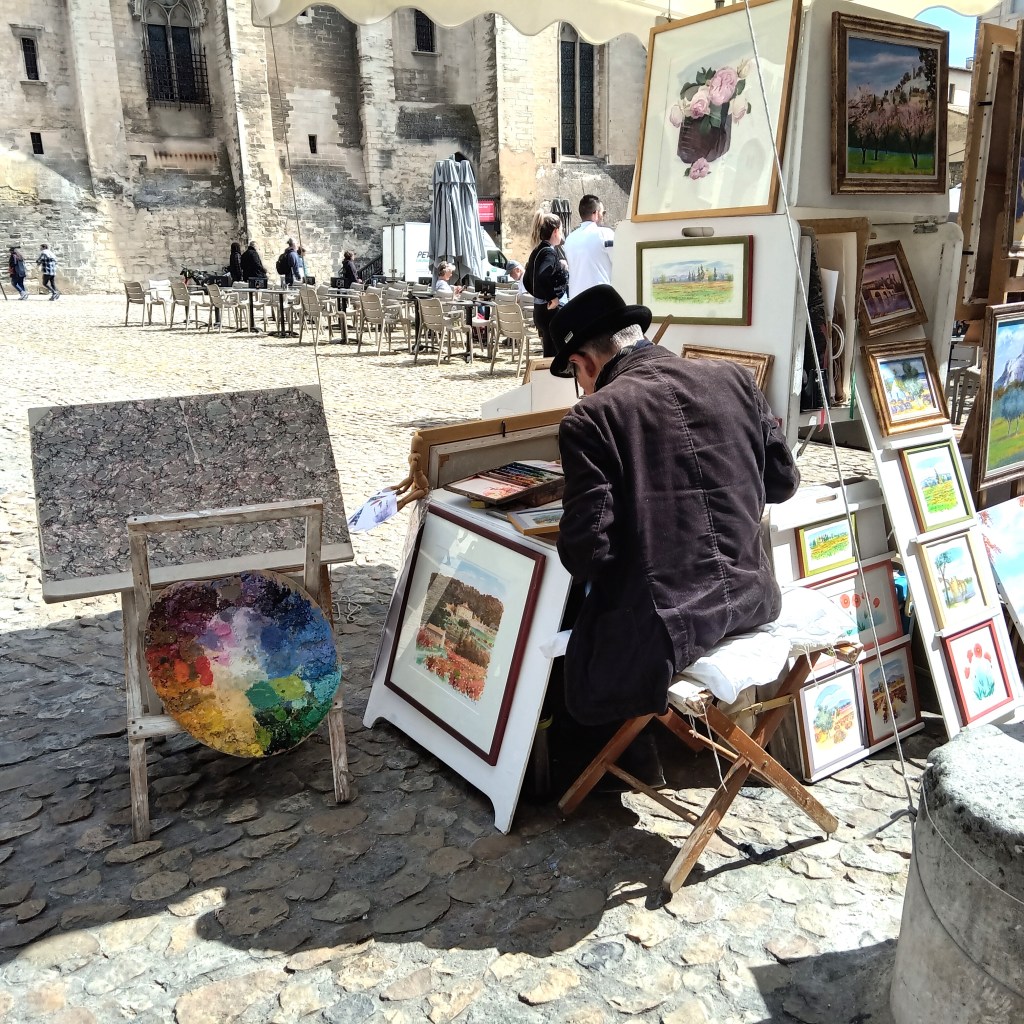
The South of France is well known for its heritage of famous artists. Van Gogh, Cezanne, Matisse and others called it home to their studios and subjects of their art. The scenery, culture, and climate lend to great artistic attraction.
P.C. Cher B. 06 April 2023
Situated on a side street, this man and his dog invited us to stop and check out at the art he had for sale. Paintings of the local architecture, scenery (cypress trees) and flowers (poppies, lavender) were common scenes.

P.C. Cher B. 06 April 2023
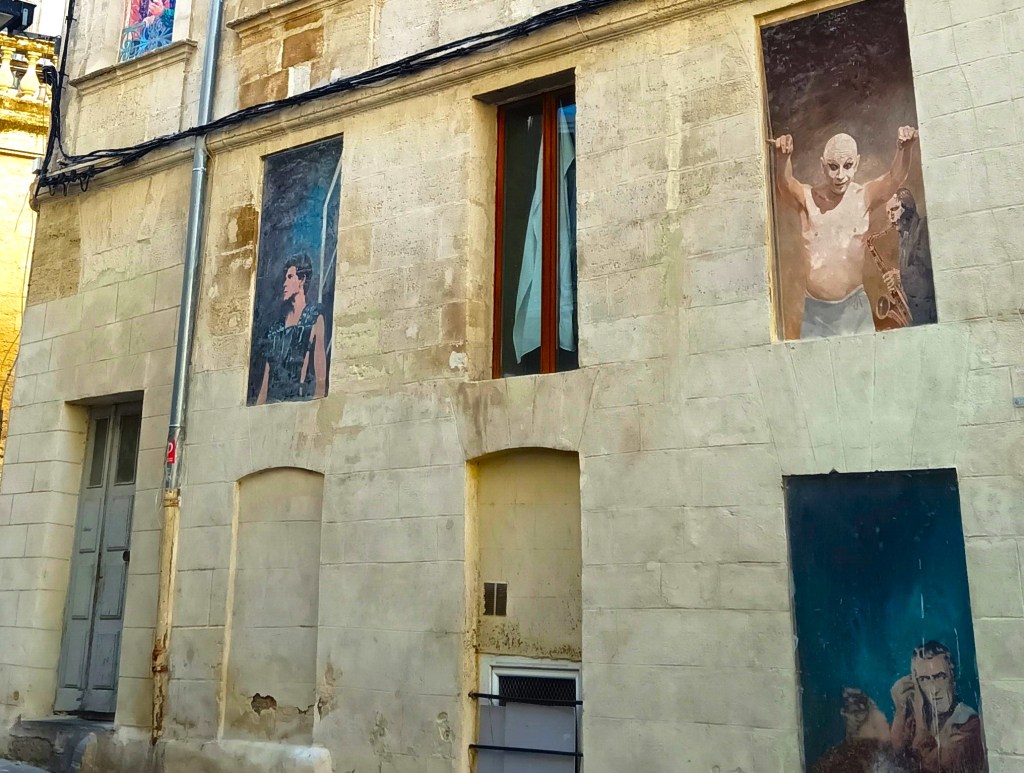
Trompe-l’oeil (“tromp-LOY;” French for ‘deceive the eye’) is an artistic style that fascinates me. It refers to the highly realistic optical illusion of three-dimensional space and objects on a two-dimensional surface. Experiencing it on the windows throughout the town was interesting and unexpected.
P.C. Cher B. 06 April 2023
Papal Palace: Palis des Papes
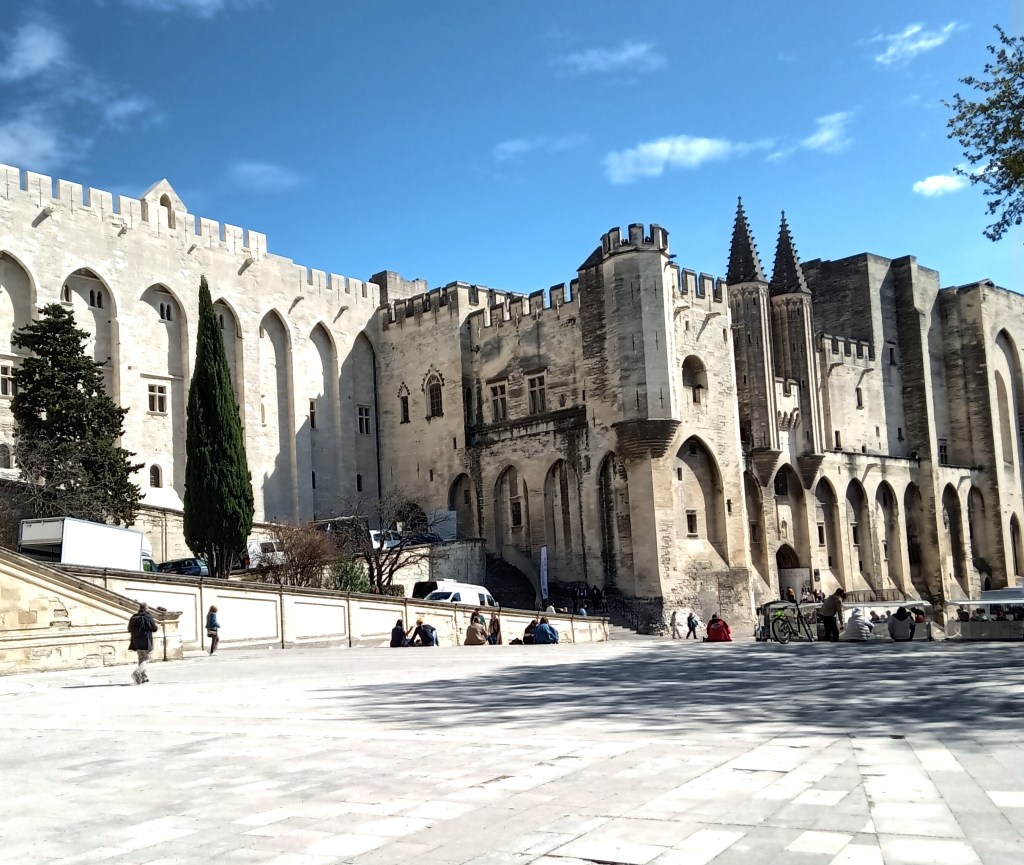
The Palis des Papes (Palace of the Popes) dominates Avignon from the hilltop. This 14th century monument is one of the most notorious palaces in the Christian world! Following a period in Church History called the Western Schism, it became the headquarters of a schismatic group of Roman Catholic Cardinals who came close to destroying the authority of the popes in Rome.
P.C. Cher B. 06 April 2023
Babylonian Captivity: Between 1309 and 1377, the Roman Catholic papacy moved its headquarters from Rome, Italy to Avignon, France. Due to its 70 year time frame, it has been dubbed the “Babylonian Captivity,” referring back to the 70 years the Jews were exiled in Babylon (586-516 BC). The relocation to Avignon had a great impact on the workings of the Church. One was the influence and power given to the French monarchy.

P.C. Cher B. 06 April 2023
Seven popes resided more or less continuously at Avignon during this time. This prolonged absence from Italy is highly significant and quite unprecedented in the history of the Church.
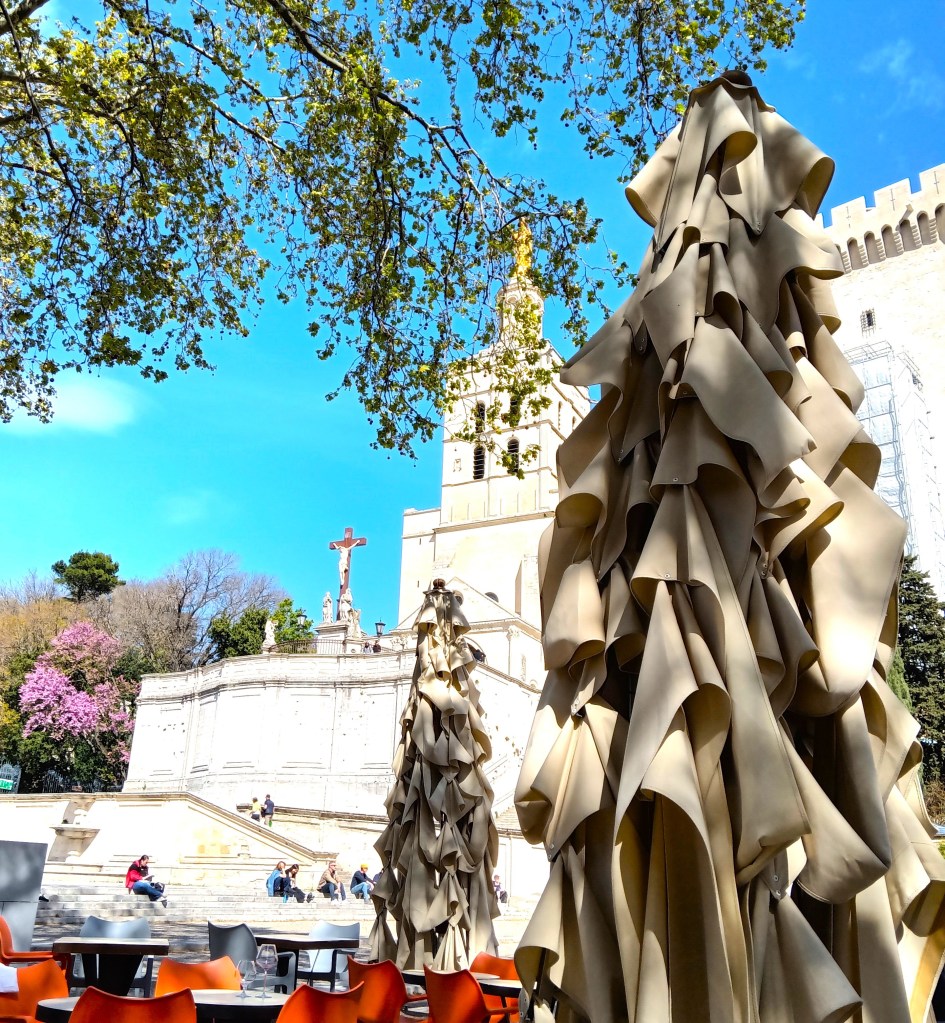
I am always on the look out for interesting shapes. These were perfect! Situated in the courtyard in front of the Papal palace, the crazy looking “sculptures” in the front and right are actually umbrellas used to cover the patio dining in the area below.
P.C. Cher B. 06 April 2023
Avignon Babylonian Captivity spanned the papacies of Clement V (1305-1314), John XXII (1316-1335), Benedict XII (1334-1342), Clement VI (1334-1352), Innocent VI (1352-1362), Urban V (1362-1370) and Gregory XI (1370-1378). The era ended when Gregory XI returned the papacy to Rome. Note please that several of these dates overlap – meaning that there was more than one pope at the same time! This of course added to the overall chaos.
This picture provides some perspective on the massive size of this palace. This inner courtyard is surrounded by thick walls with windows (and former patios) looking in.

P.C. Cher B. 06 April 2023
Why the move to Avignon? The explanation is complex in both circumstances and events. The town provided many advantages for the ruling papacy. Primarily, it was safe. No other town could offer the Pope such strong guarantees of independence and security. The local medieval overlords were vassals of the Church, so there was nothing to fear from them. Speedy communication with Italy was assured as it was close to France, but not dependent on it.
The papal court remained in Avignon until 1377 during which time his successors transformed the modest episcopal building into the present magnificent palace. Its heavy fortification was vital to define against rogue hands of mercenaries.
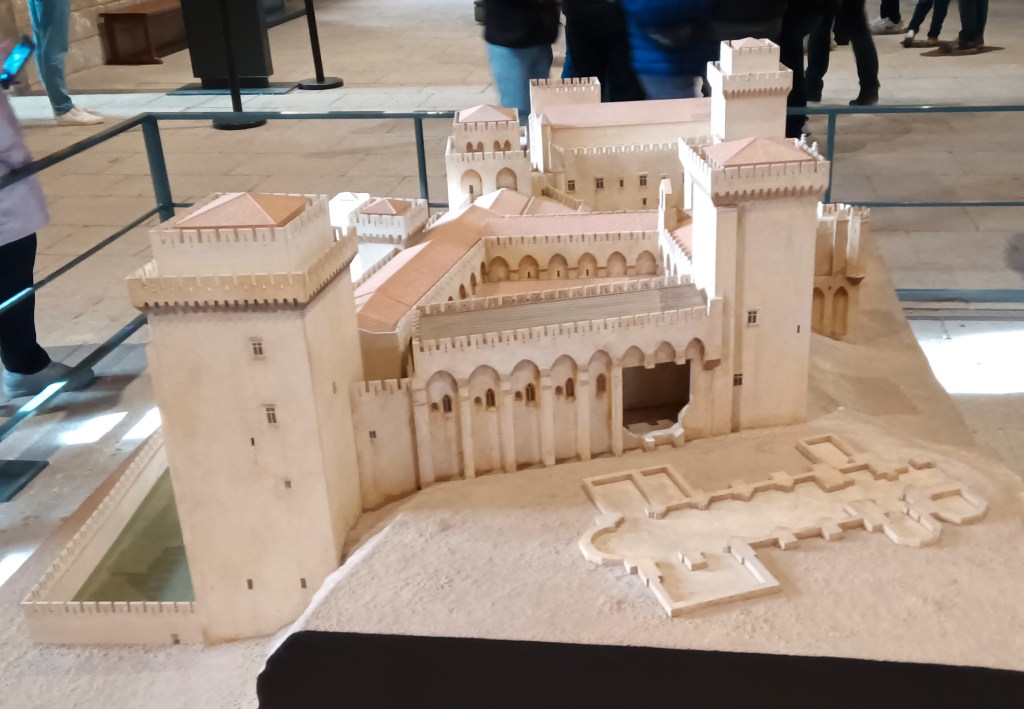
Romanesque & Gothic
During a time when medieval architecture was moving between Romanesque to Gothic, this palace utilized both. Like the bridge, both are used in the palace. The door is mostly Romanesque while the rib vaulting interior leans toward Gothic.

P.C. Cher B. 06 April 2023
Today the palace is empty of the luxurious trappings of the court life of the 14th century. Over the centuries, virtually all its works of art and opulent furnishings were looted or destroyed.
One of the joys of art of architecture is that it basically cannot be looted. Some of its treasures, maybe. Destroyed, maybe. But the main building cannot be looted! Such is the Gothic ribbed vaulting in this high ceilings which we can still enjoy hundreds of years later.

P.C. Cher B. 06 April 2023
Although stripped of most of its finery, some treasures are still visible. Those that were permanently attached to the building through fresco paint or reliefs carved into the walls remain for us to enjoy and stimulate our imagination to its original grandeur!

P.C. Cher B. 06 April 2023
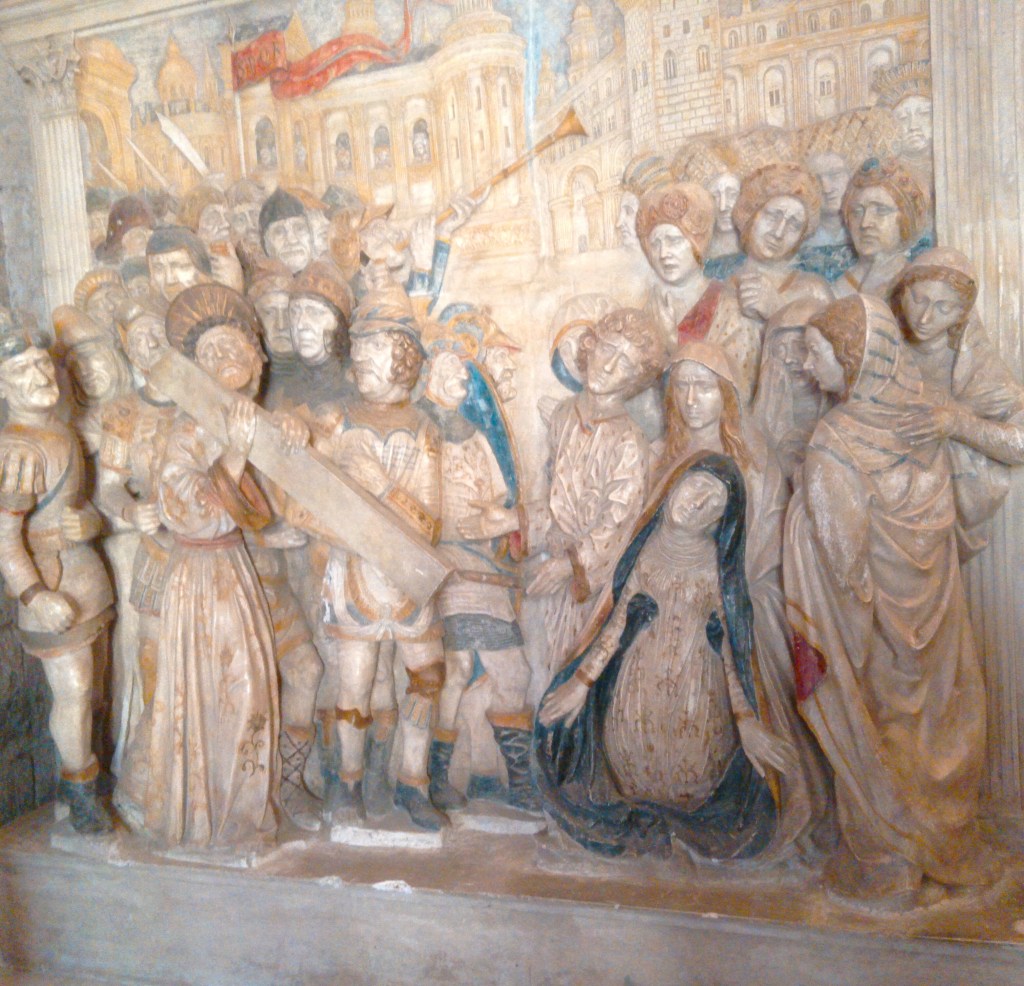
P.C. Cher B. 06 April 2023
This photo was taken on one of the ramps going from the inner courtyard into the palace. It provides good perspective on its massive scale.

P.C. Skip B. 06 April 2023
Visit
Sources
- Brochures, Plaques and Viking Travel Guide Lectures presented on site on our visit of 06 April 2023.
- Lecture material from university classes I taught in Christian Church History and Western Art History between 2000-2020.
 Charamana Consulting