Tut Ankh Amun
Experiencing King Tut!
Tut Ankh Amun… Tutankhamen. The very sound of the name evokes mystique and delight! Commonly known to most of us as King Tut, I am enthralled with the sound of his full name! It took me years to learn how to pronounce it correctly and let it roll easily and effortlessly off of my tongue. “Tu Tut Ka Men.” Then, with great flourish, I proudly shared it with my students when we studied Egyptian Art in my classes (poor kids!).
My King Tut Quest
My Tut Experience has been a Lifelong Quest. In that journey, I have traveled to Egypt twice. I have experienced several Tut exhibitions when they toured the USA. My bookshelves are lined with books about all things Tut and the magnificent treasures discovered in his tomb.
My quest began over half a century ago and culminated in May 2024. My husband and I took a memorable Viking Nile River Cruise. This included an opportunity to visit the Valley of the Kings and actually go inside the inner sanctums and experience King Tut’s tomb in person!

P.C. Skip B. 27 May 2024
1977: Tut comes to Chicago – My Quest begins
My fascination with the study of King Tut began over a half century ago when my passionate high school art history teacher, Mrs. Werner, introduced me to the magnificence of Egyptian Art and the Treasures of Tut. The opportunity to immerse myself in world class art in fabulous museums developed while living in New York City. The journey had begun. I began to spread my wings in the lifelong exploration of great art around the world.
Then . . . Tut came to Chicago!
In 1977, the Field Museum of Chicago was one of the six places in the United States to host an incredible traveling exhibition on Tut. My future husband and I drove the 7 hours to Chicago and paid $1.50 for a timed admission. We waited in line from before dawn with fellow Tut enthusiasts on the grand steps of the museum for our entrance. It did not disappoint! It whet my insatiable appetite on “all things Tut!” (And provided a great window into our lifelong journey together in the exploration of the world, including two trips to Egypt!)

P.C. Cher B. April 2025
- Side Note: There are actually FOUR masks layered one on top the other over Tut’s mummy, each one slightly different – but all magnificent. Tut’s golden death mask no longer leaves Cairo. His mummy remains in his tomb in the Valley of the Kings in Luxor, Egypt. Over the decades of traveling to museums around the USA and the world, I have learned to appreciate this policy. Imagine my disappointment to have traveled all the way to Egypt only to discover that Tut’s mask or mummy were on tour somewhere else in the world! (This is one reason I enjoy architecture! The Eiffel Tower remains in Paris! The Parthenon never leaves Athens!)
2007: Visit to Cairo – My Encounter with Tut’s Mask
My first visit to Egypt in 2007 included a visit to the Egyptian Museum in Old Cairo. The old museum was stacked high with Egyptian artifacts, the most important of which were the contents of the Tomb of King Tut. It was surreal. Coming face-to-face with Tut’s golden death mask (the one closest to his mummy) was one of the most emotional experiences of my travels. As I stood in awe before it, in all its glory and splendor, tears began to stream down my cheeks! As Howard Carter is recorded to have said, Gold! Everywhere there was gold!
- Side Note: Unfortunately, it is forbidden to photograph many of the key Tut artifacts in museums, like his mask and jewelry. Photos in books are copyrighted. So I encourage you to check them out in person – or at least online and in print!
2011: Tut comes to Minnesota
In 2011, “Tutankhamen: The Golden King and the Great Pharaohs” exhibit came to the Science Museum of Minnesota, St. Paul. I was among first to get a ticket and get in line! I discovered that each Tut exhibit and experience added new and unique insight along with renewed appreciation for the magnitude of treasures in this collection.
- Side Note: Realizing that Tut was a small player in the history of Egypt, and his tomb so small, I cannot imagine what treasures of the larger tombs of the major pharaohs such as Ramses II might have held!
2024: My Visit to Tut’s Tomb
In May, 2024, the quest that began over half a century ago, was culminated. Our Viking Nile River Cruise included an opportunity to visit the Valley of the Kings. I was able to climb down into and experience King Tut’s actual tomb in person!
King Tut: Who is he?
Why is he famous today?
Most everyone has at least heard of King Tut. What is it that makes him so famous?
- King Tut is not famous for his long reign. He became child-king at the age of 9 on the death of his father, Akhenaten. He lived/reigned only a few short years and died at age 18 (1332-1323 BC). Rumors have swirled over the centuries about his death. Was he murdered by those who wanted the throne? Was it some disease? Was it….??? The discovery of his mummy provided some, but not all, answers.
- King Tut was not famous for his political or military accomplishments. He was too young and his reign too short. There is evidence of limited achievements which suggest he led a military campaign against the rebellious Nubian tribes, neighbors to the south of Egypt. This had strategic importance because of their gold resources.

P.C. Cher B 23 May 2024
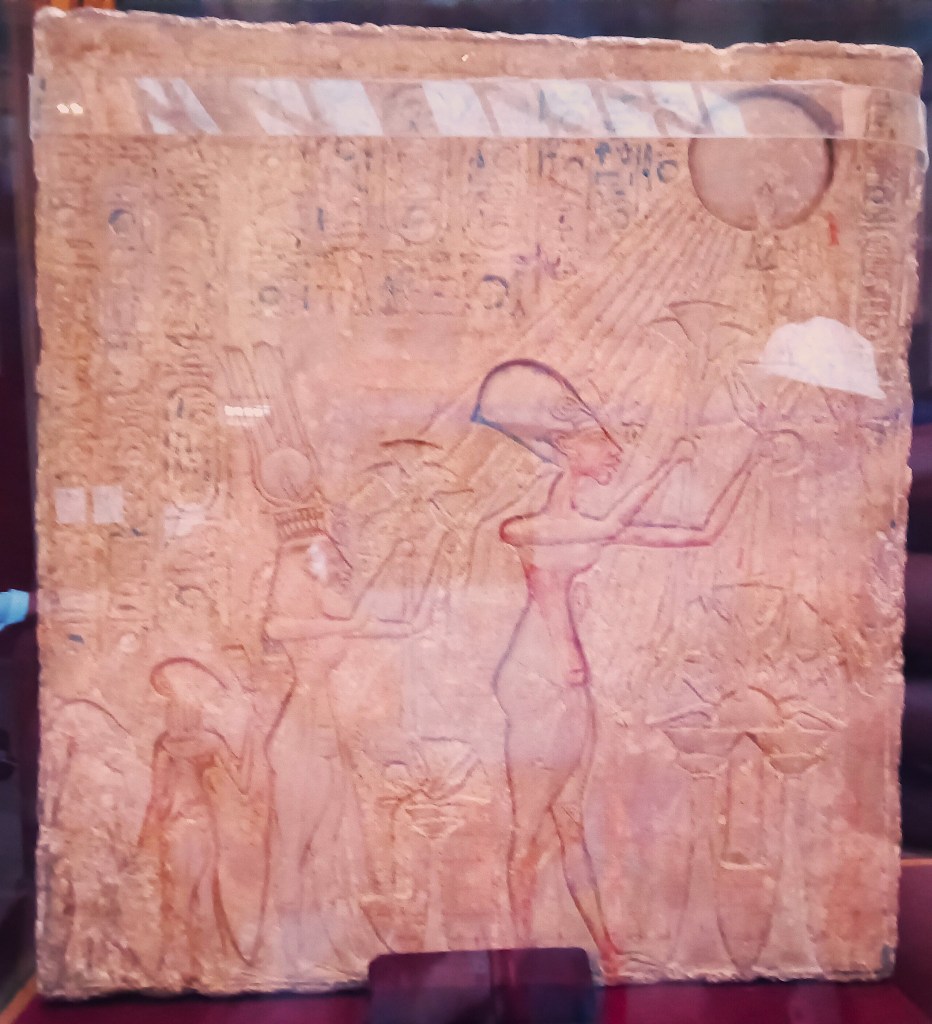
- King Tut was somewhat famous – at least within Egypt – for undoing changes made by his father. One thing we know for sure is that Tut had inherited unpopular changes achieved by his father. Akhenaten had insisted the worship of only one god, Aten, which challenged the established Egyptian worship of many gods. The young Tut was assigned the difficult task of restoring the old religion.
- King Tut is credited – mostly in Egypt – with restoring the capital back to Thebes. Akhenaten had moved the capital to Amarna, a newly established city. It was away from the historical and cultural center of Egypt in Thebes. Tut moved it back to Thebes, revitalizing its sorely need temple construction. Not bad for a teen-age king!
P.C. Cher B. 23 May 2024
King Tut’s Tomb Discovered: His Claim to Fame
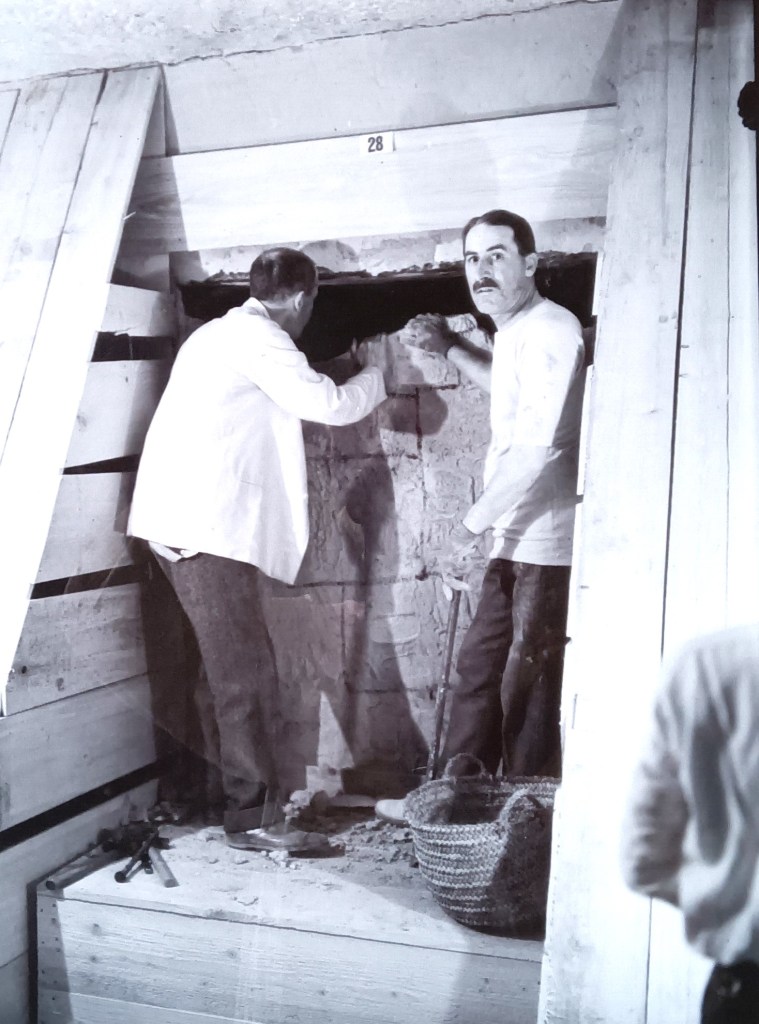
King Tut’s claim to fame came thousands of years after his death. On November 26, 1922, Tut became a household name and world-wide celebrity! On this date, British archaeologist Howard Carter made one of the most significant archaeological discoveries in all of history: the long-deserted tomb of King Tut! Why was this so extra significant? Unlike the discovery of the tombs of more famous Egyptian rulers, Tut’s tomb was intact and untouched for over 3,000 years!
P.C. Cher B 27 May 2024
Tut’s Tomb: The Location
Where was Tut buried? The location of his tomb was fairly predictable. As was the custom of the time, he would have been buried within the Valley of the Kings, deep in the rock, under the endless sand. During our visit, the near-impossibility of discovering any of these tombs became very clear to me. The windswept landscape is made up of mountains of sand for miles and miles. But Howard Carter had done his home work. Meticulous in his goals, he had kept track of all the discoveries in the area over the years. He knew that the tomb of one pharaoh had not been found: the tomb of King Tut.

P.C. Cher B 27 May 2024
2024: My Visit to Tut’s Tomb
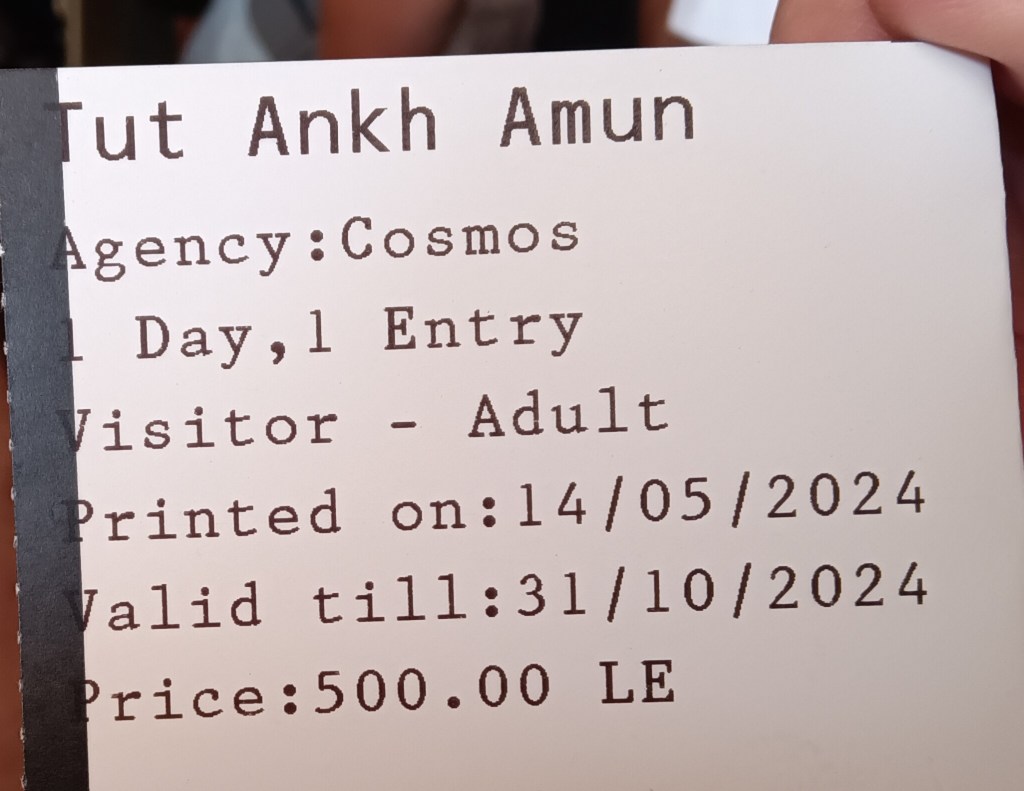
Today, one can experience some of the excitement felt by Carter a century ago. The steps going into the entrance of the tomb are as they were when it was discovered, just a bit more accessible. The priceless contents have been moved into the safety of Cairo museums. The wall paintings remain to be seen, as does King Tut’s sarcophagus and his mummy. Special timed tickets specific to Tut’s Tomb can be purchased with entrance to the Valley of the Kings complex.
P.C. Cher B. 27 May 2024

P.C. Cher B. 27 May 2024
This poster at the entrance gives insight and brief refresher course about Carter’s original discovery.

P.C. Cher B. 27 May 2024
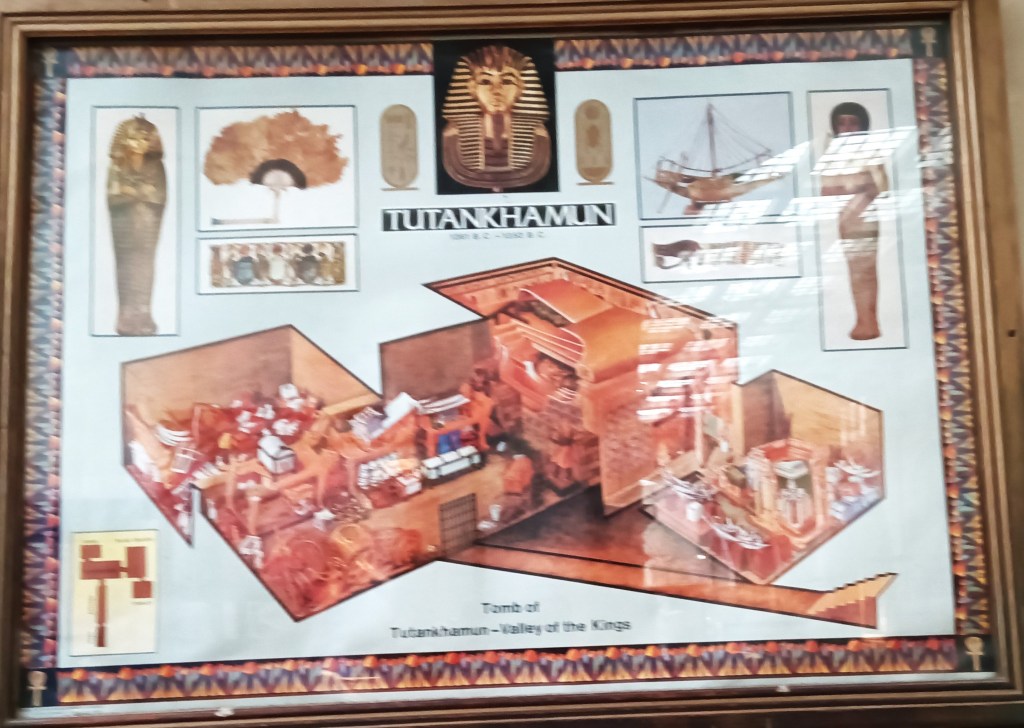
This poster on the wall at the Old Cairo Egyptian Museum provides a glimpse at the layout of contents discovered by Carter. The poster can be purchased from the museum gift shop. The one I purchased was a great visual aid during my art history courses on Egypt and King Tut.
P.C. Cher B. 27 May 2024
King Tut’s tomb is one of the smallest in the Valley of the Kings. Why? Is it that his young death did not allow for much time to build a larger one? Was it built simply as a “holding pen” with plans for a larger one to be built later? We simply do not know.

P.C. Cher B. 27 May 2024
King Tut’s sarcophagus remains where it was discovered. The wall paintings are original. Being inside this room was significant to me. It was SO SMALL! Knowing that this sarcophagus was the last one stacked inside FOUR other boxes like Russian nesting dolls (1) I cannot comprehend how they got them all in here to start and (2) I cannot imagine the work that Carter’s team went through to safely getting them out without damaging anything!
The crack in the cover intrigued me, as it did Howard Carter. He documented his wonderment on why it was there and why it had not been properly repaired. (“Into the Mummy’s Tomb” p 44, hereafter referred to as “MT”). It is a mystery that will be left for the ages!

P.C. Cher B. 27 May 2024

P.C. Skip B. 27 May 2024
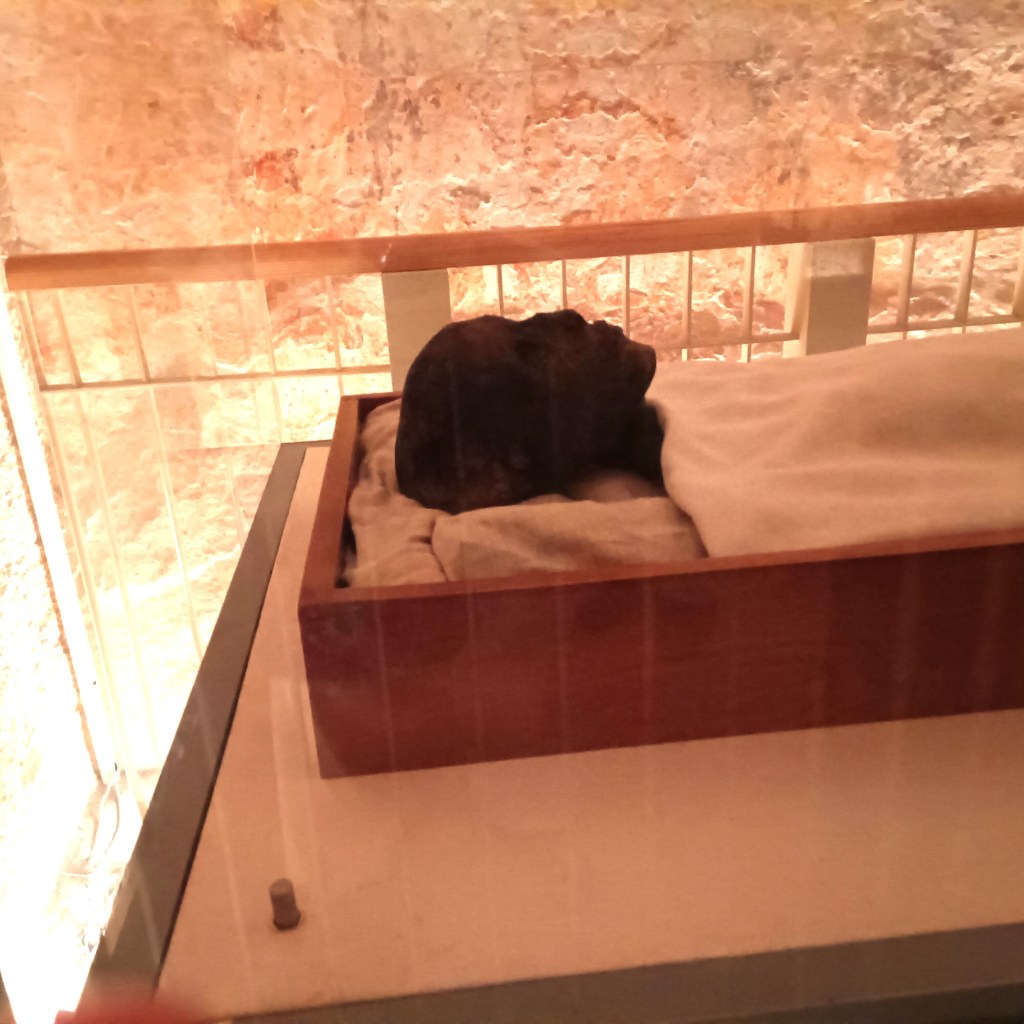
The mummified body of King Tut has been examined by every scientific method conceivable over the years. It remains at rest in one of the rooms of his tomb. His head and feet are revealed for the visitor to view.
P.C. Cher B. 27 May 2024
King Tut’s toes are sticking out and on display for visitors to see. This may appear strange, but they were a key discovery. Before his toes were wrapped in linen, each of them was encased in a sheath of gold. Sandals made of beaten gold were placed on his feet. (MT p 56)

P.C. Cher B. 27 May 2024

P.C. Cher B 23 May 2024
Egyptian Museums in Cairo
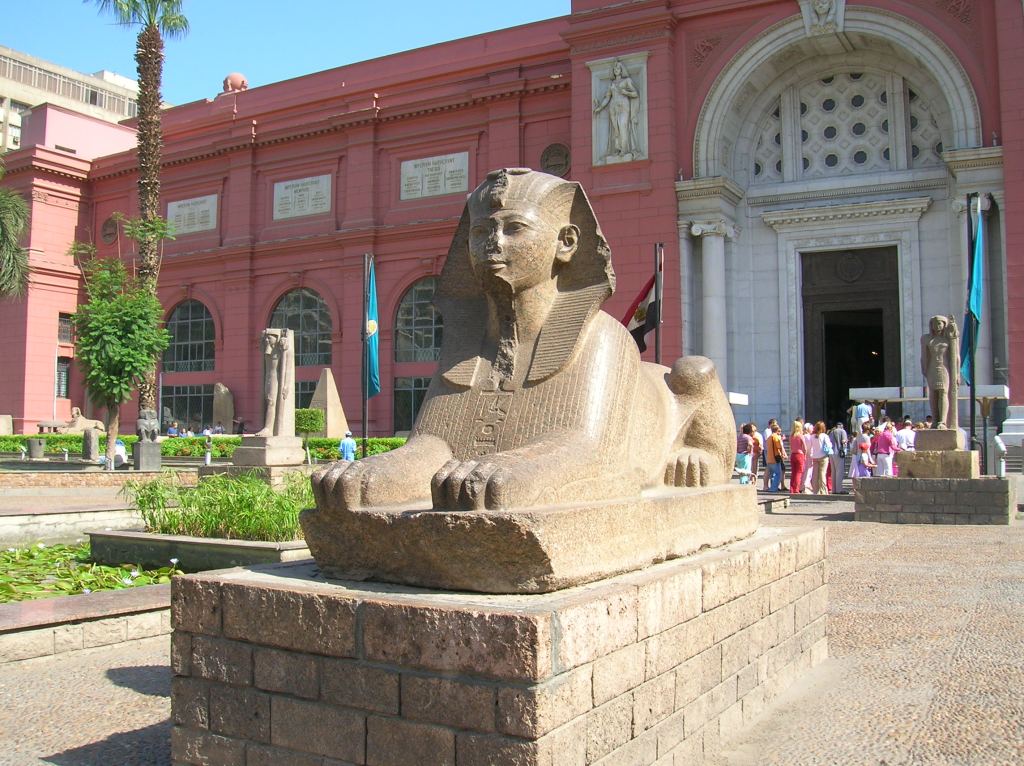
The Treasures of King Tut have been housed in a crowded Egyptian Museum in downtown Cairo for the past century. My visit in 2007 included viewing the complete treasures in this museum. My 2024 visit included only a partial viewing as the curators are in the process of moving the entire collection to the new museum, Grand Egyptian Museum (aka: GEM).
The Grand Egyptian Museum will be just that: GRAND! It is located outside of Cairo, next to the Giza Plateau with the Great Pyramid and Great Sphinx. Its creation has been decades in the making and at our visit, and this writing, it is still waiting for enough completion to warrant a Grand Opening and availability of all galleries to the public. Keep it in your radar! (Side Note: John Navarre, The Egypt Travel Channel on YouTube has been my go-to resource on this subject).
King Tut’s Tomb Treasures in the Cairo Museums
The items I’m sharing below are those that remain in the Old Museum – for now, waiting to be moved to the GEM. Many of those we viewed in 2007 are in storage at the GEM waiting a grand unveiling. We were able to visit the partial displays at the GEM and it is amazing!
P.C. Cher B May 2007
Tut’s Treasures
I enjoyed physically viewing items from the tomb treasures I had studied for decades in books! My photos record my experience at our May 2024 visit. They do not do begin to do it justice.
Tut’s Throne
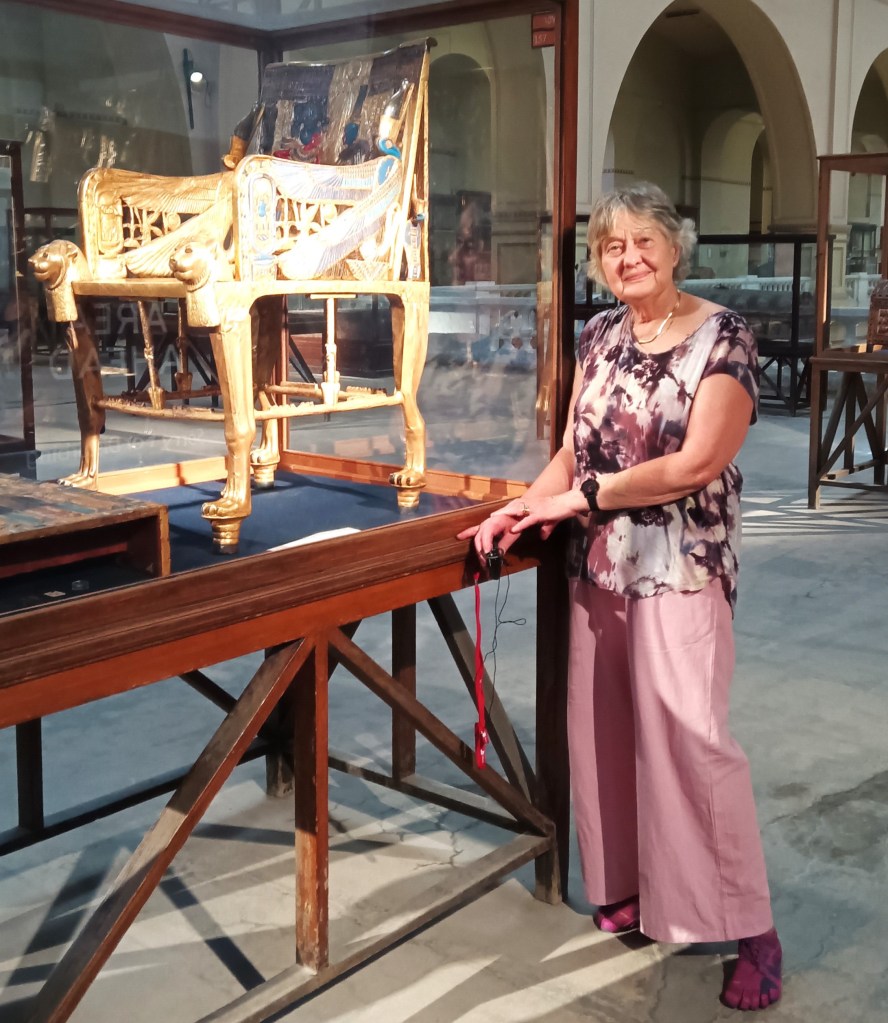
The Throne of Tutankhamen was one of the highlights of my visit. The throne is made with wood and covered with gold leaf, inlays of silver and semi-precious stones, and colored glass paste. Its feet are those of a lion. The armrests are formed by two winged serpents. it is much smaller than I would expect a throne to be. (Egyptian Museum in Cairo, the Illustrated Guide. pp 278-79; hereafter referred to as Eg Mu)
P.C. Skip B 23 May 2024
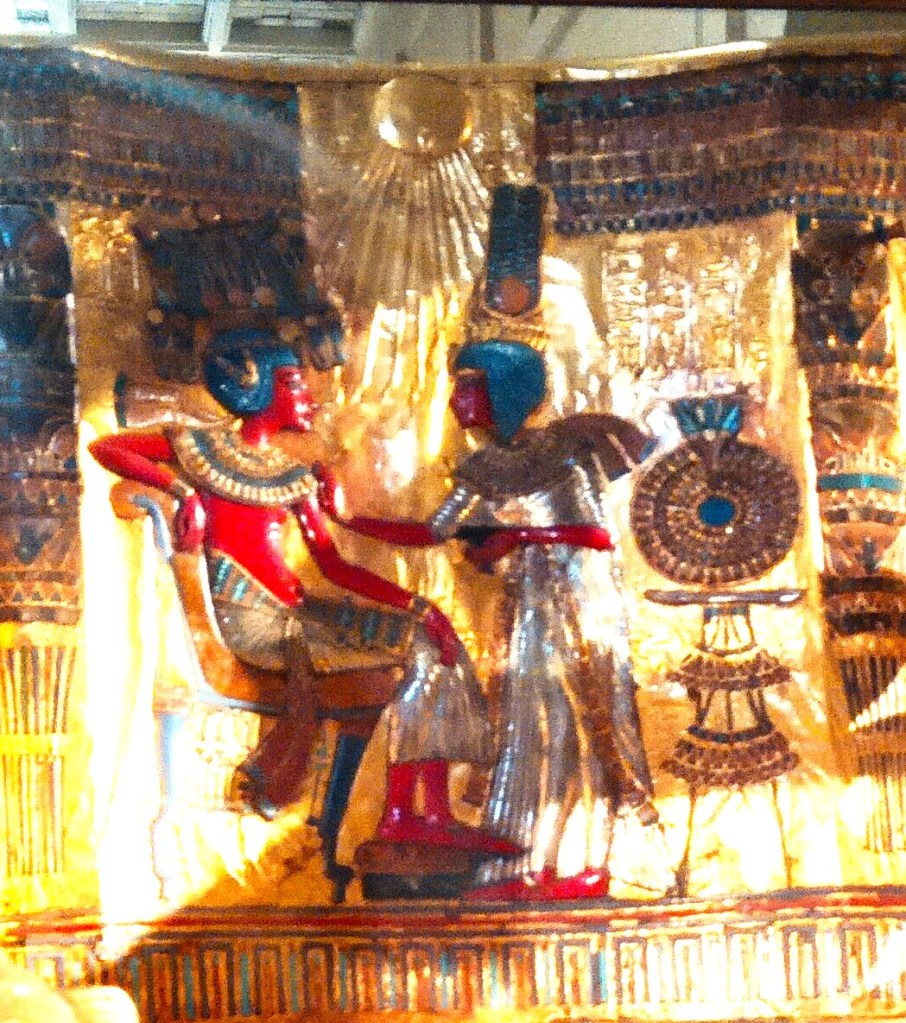
This relief on the inside backrest of his throne is one of my favorite scenes on King Tut’s furniture. It is a portrait filled with symbolism and distinction sharing the affection between Tut and his young wife, Queen Ankhesenamun. The young couple are portrayed in several pieces of furniture discovered. The presence to the sun disk Aten dates the throne from the first years of his reign when the worship of one god was still in practice. (Eg Mu pp 278-79)
P.C. Cher B 23 May 2024.
Tut’s Ceremonial Seat
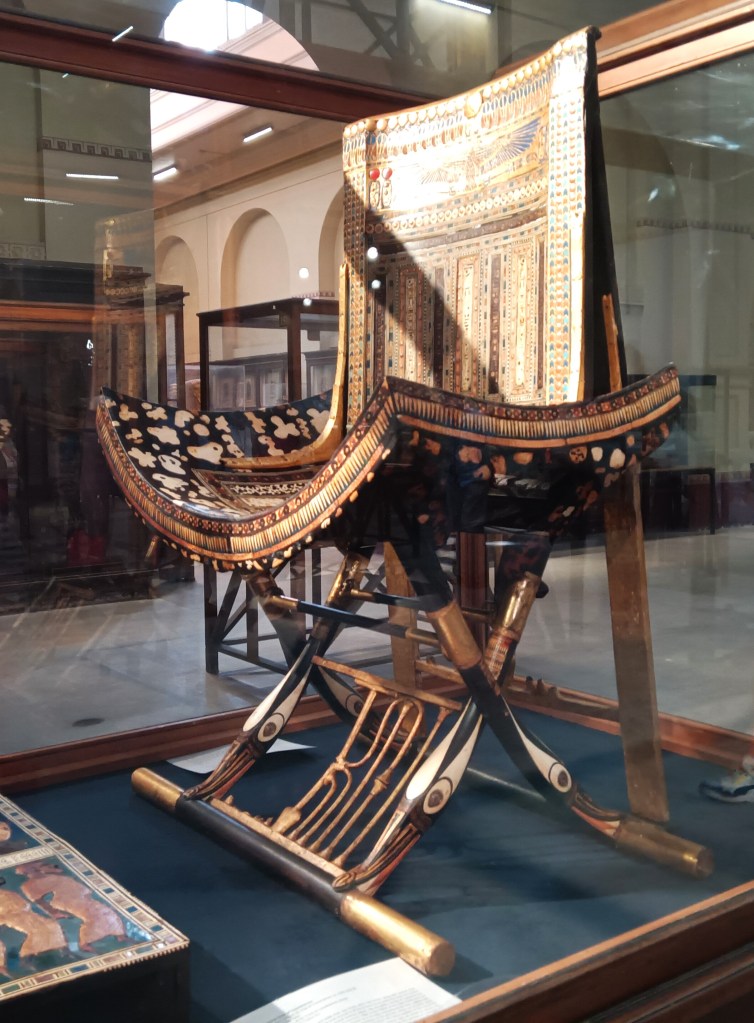
King Tut’s Ceremonial Seat was one of the treasures remaining in the Old Museum during our 2024 visit. It was created with ebony, gold leaf, ivory, semi-precious stones and glass paste. Having looked at photos for so many years, it was exciting to see it in real life. (Eg Mu p 285)
P.C. Cher B 23 May 2024
Tut’s Casket/Chest
This chest reveals a lot about King Tut’s life/reign/military history. Created from wood coated with stucco and painted, Carter was especially struck by it quality of the painting and details. Archaeologists declare it to be one of the most valuable items they found. The long sides portray Tut on his chariot drawn by magnificently harnessed horses. The short sides portray Tut as a sphinx trampling his northern and southern enemies. There is reference to the Syrians and the Nubians. The chest’s lid also shows another version of the triumphal military theme.
The treasures tucked carefully inside this chest have been identified as priceless. Due to the delicacy of the items (sandals, jewelry), it is reported that emptying the chest took three weeks of meticulous work. (Eg Mu 270-271)

P.C. Cher B 23 May 2024
Tut’s Statue: Ka
Two life-sized statues of Tut, standing guard just outside the Antechamber, were discovered. in the tomb. They are made of wood painted with shiny black resin and gilded bronze. In case something were to happen to his mummy, they would provide bodies for his spirit to inhabit. (Eg Mu pp 362-363)
- Side Note: Based on data discovered in other burials, there may have been another purpose for their design. Ancient records written on papyrus may have been hidden in the skirts of the statues. This would reveal more about the ancient Egyptian burial customs and religion. (Eg Mu. pp 362-363)

P.C. Cher B 23 May 2024
Statue of Anubis
This Statue of Anubis is one of my favorite pieces. Fixed on the cover of a casket in the form of a shrine, this one guarded the entrance to the Treasury of the tomb. According to ancient Egyptian myths, Anubis made the first mummy and by doing this, showed how eternal life could be possible for everyone.
Officially called the “Portable Simulacrum of Anubis” it is made of wood lined with stucco and tar, gold leaf, silver, gold, quartz and obsidian. It has gilt ears and eyes and silver toenails. (Eg Mu p 301; MT p 60)

P.C. Cher B 23 May 2024
Tut’s Mannequin, Chest & Sandals
The life-size, unusual wood statue, with no arms or legs, was probably used as a mannequin by tailors to fit his clothes. The dark red paint on his wooden body would reflect the traditional color used to represent Egyptian males. An interesting note is that the earlobes are pierced so earring could be worn. Introduced by the Hyksos (2nd Intermediate period) it seems Egyptian males wore them only until adolescence. (Eg Mu p 299)
Tut’s toes were an interesting study for archaeologists – and us! They were first wrapped in linen, then each of them was encased in a sheath of gold. Sandals made of beaten gold were placed on his feet. (MT p 56)

P.C. Cher B 23 May 2024
Tut’s Canopic Vases
An Alabaster & Gold Leaf Container for Canopic Vases held the internal organs of the embalmed King Tut. Carved out of alabaster, inside were 4 compartments, each with a lid shaped like the Pharaoh’s head. Under each of the 4 lids is a miniature coffin. Inside each of the tiny coffins were the internal organs of the king – lungs, liver, stomach and intestines – mummified and wrapped in linen. During our 2024 visit, it was on display in Old Cairo Egyptian Museum. (Eg Mu p 302-303)

P.C. Cher B 23 May 2024
Howard Carter: His Home
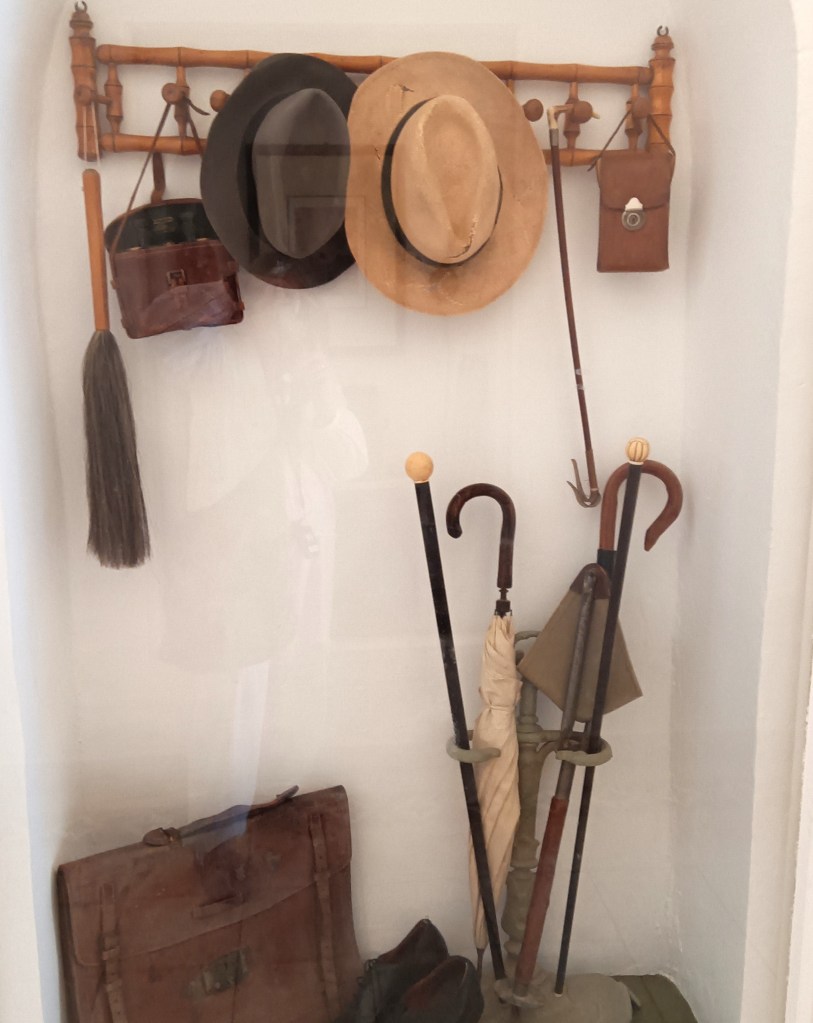
A visit to the home of Howard Carter, the British archaeologist who discovered Tut’s tomb, was included in our 2024 visit to the Valley of the Kings. It was furnished as it was during his time in Egypt. It provided another step back in time with an “Indiana Jones” vibe.

P.C. Cher B 27 May 2024
P.C. Cher B 27 May 2024
The other Characters in the Story…
There are two other key characters in the story that must not be overlooked.
- First is Lord Carnarvon, the British aristocrat who financed the exploration of Howard Carter in the Valley of the Kings.
- The second is the young boy who can be credited with the accidental discovery of the entrance to Tut’s Tomb.
Lord Carnarvon, the $$ behind the Dig
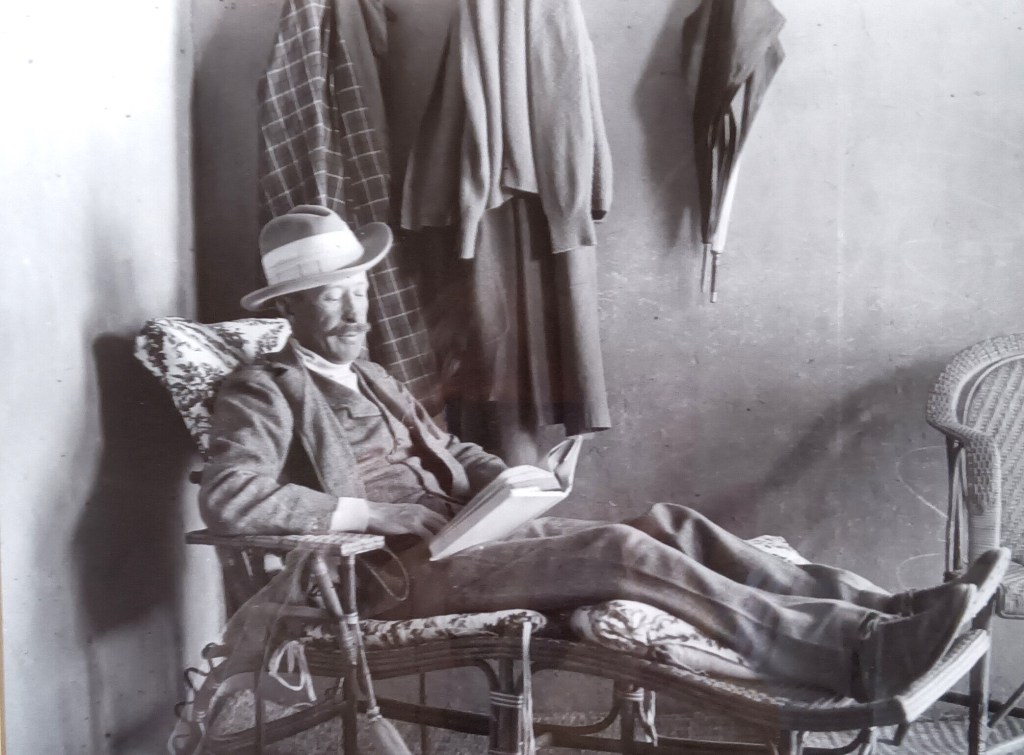
Had it not been for his relationship with the English art lover and aristocrat, Lord Carnarvon, 5th Earl of Carnarvon, Howard Carter’s discovery probably may not have been realized. Carnarvon had moved to Egypt for his health and taken up the hobby of Egyptology. He had the passion – and the finances. He needed a professional expert to oversee his new hobby and put his dreams into reality. Carter had the passion, ambition and single-minded quest for discovery of the illusive King Tut’s Tomb in the Valley of the Kings. He needed the financial resources to carry it out. It is said that they hit if off immediately. The rest is history! Their names are forever tied together to the monumental discovery of King Tut’s Tomb!
P.C. Cher B 27 May 2024
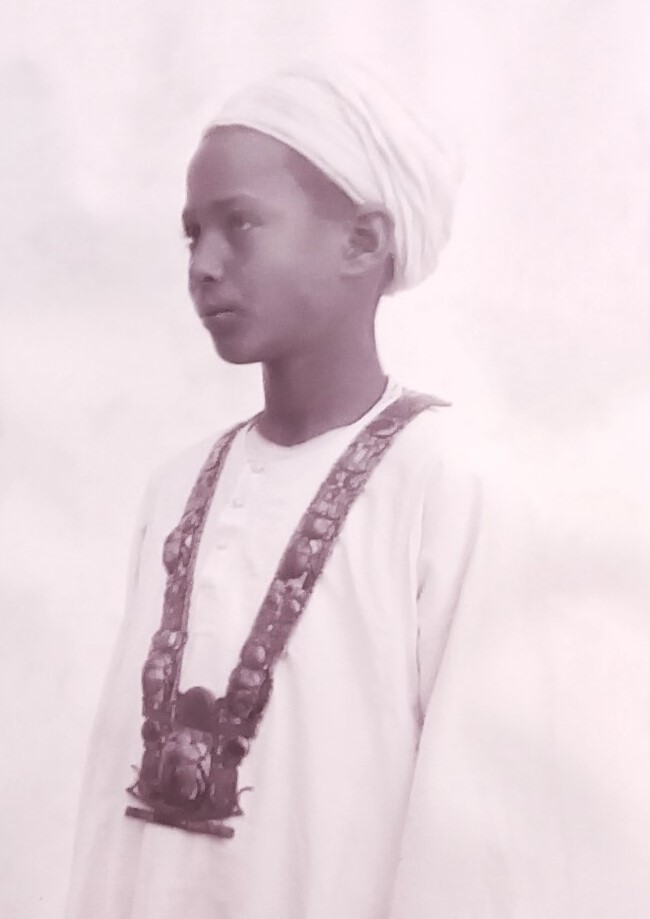
The Boy Hero: Hussein Abdel Rasoul
The story of the amazing discovery of the Tomb of King Tut cannot – should not – be told without including this often unsung hero!
I love the true stories of children who were instrumental in the great archaeological finds in history. Two immediately come to mind. First story is of the boys and their dog who discovered the Lascaux Cave Paintings paintings in France. The other is the discovery of the Dead Sea Scrolls by the young boy in the caves near the Dead Sea of Israel. The discovery of King Tut’s Tomb includes a boy hero as well!
Howard Carter and his crew had been searching the hot desert sands of the Valley of the Kings for six long years. They were discouraged and ready to give up the search. Along comes a young water boy, looking for a place in the sand to rest his water jug. In his search, he accidentally comes upon a flat stone which looked like it had been sculpted. Familiar with the area, he knew was it unusual. Realizing its potential significance, he quickly informs Carter and the workers.
What this young boy had discovered proved to be the key to the dig. It turned out to be the initial stone step of several which led down to Tut’s tomb!
The story has a happy ending for him as well. He was rewarded for his key role in the archaeological discovery of the century! After the tomb was excavated, a necklace from the tomb, a Sacred Scarab, was placed over his head to honor his role! Today, it remains a cherished treasure with his descendants. (Old Cairo Museum display)
P.C. Cher B 23 May 2024
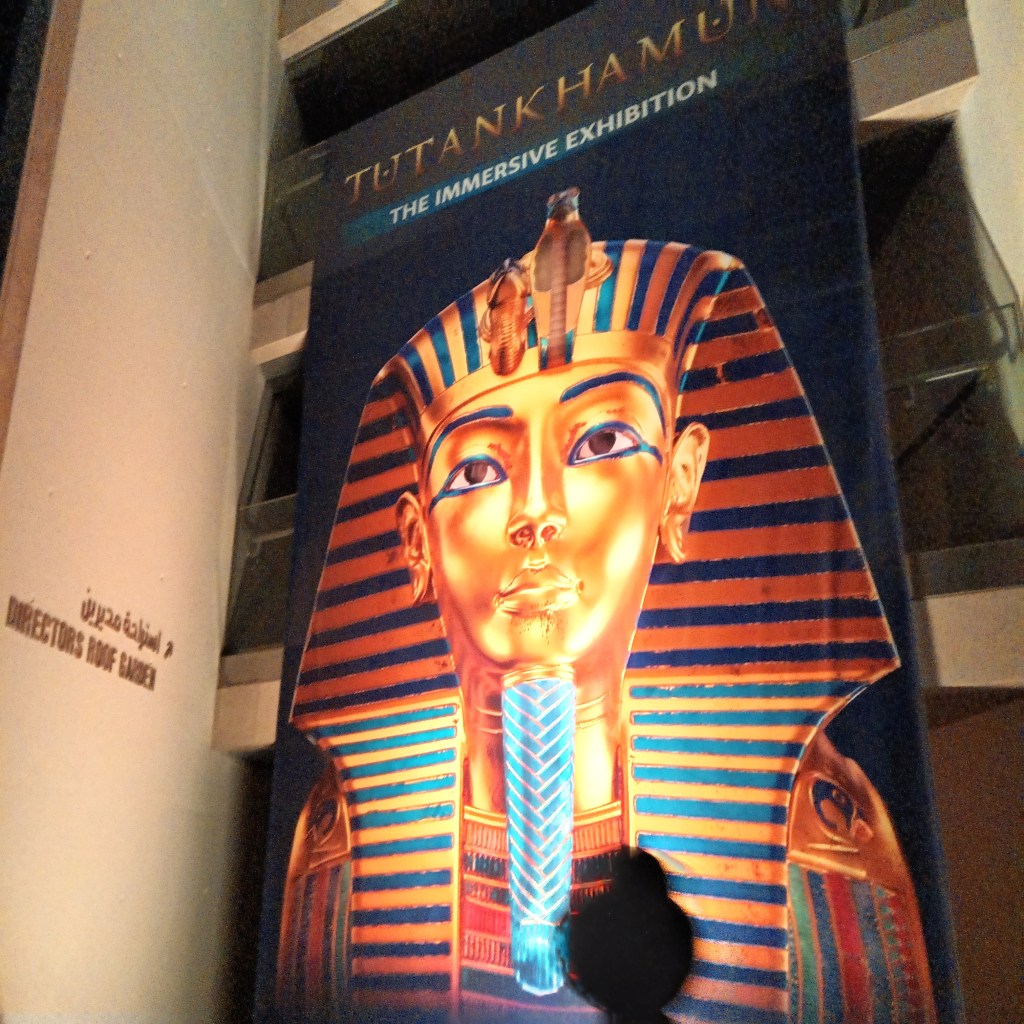
Tutankhamen: The Immersion Exhibition
Tut Comes To Life with Modern Technology
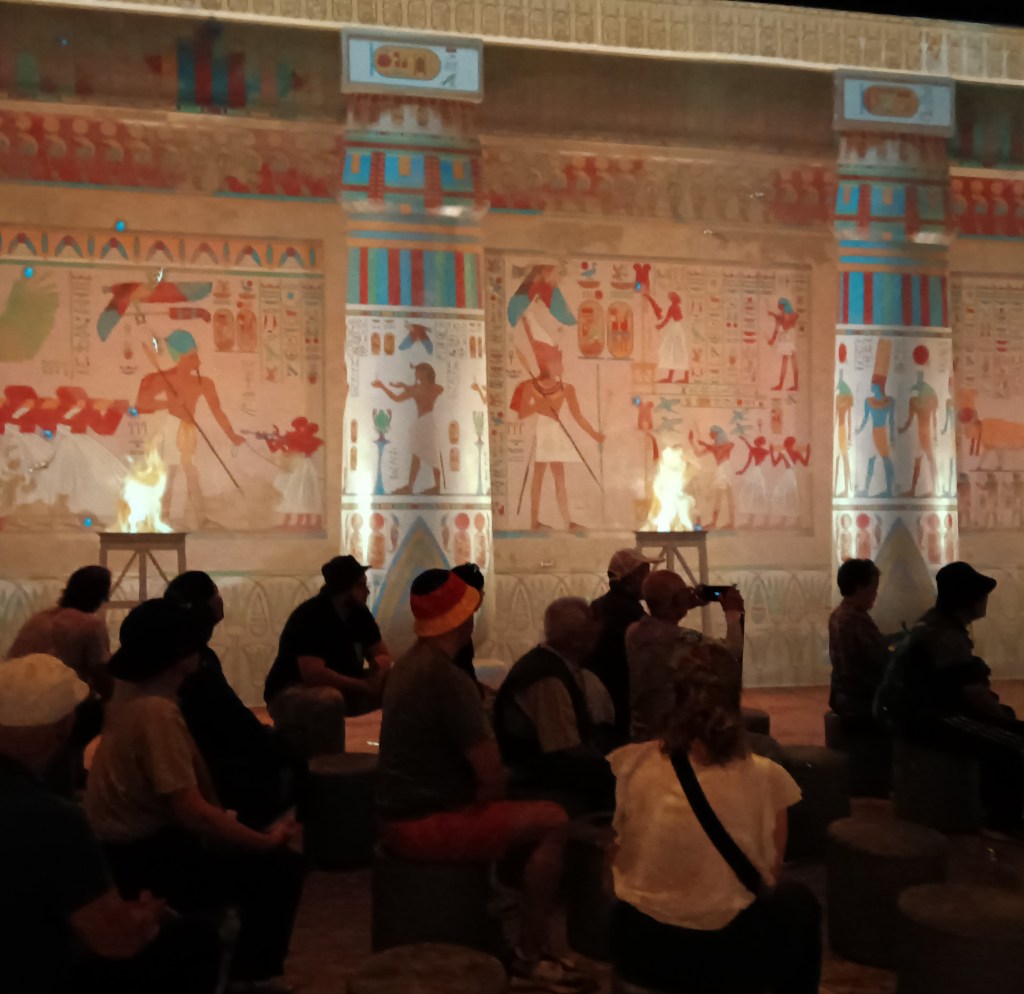
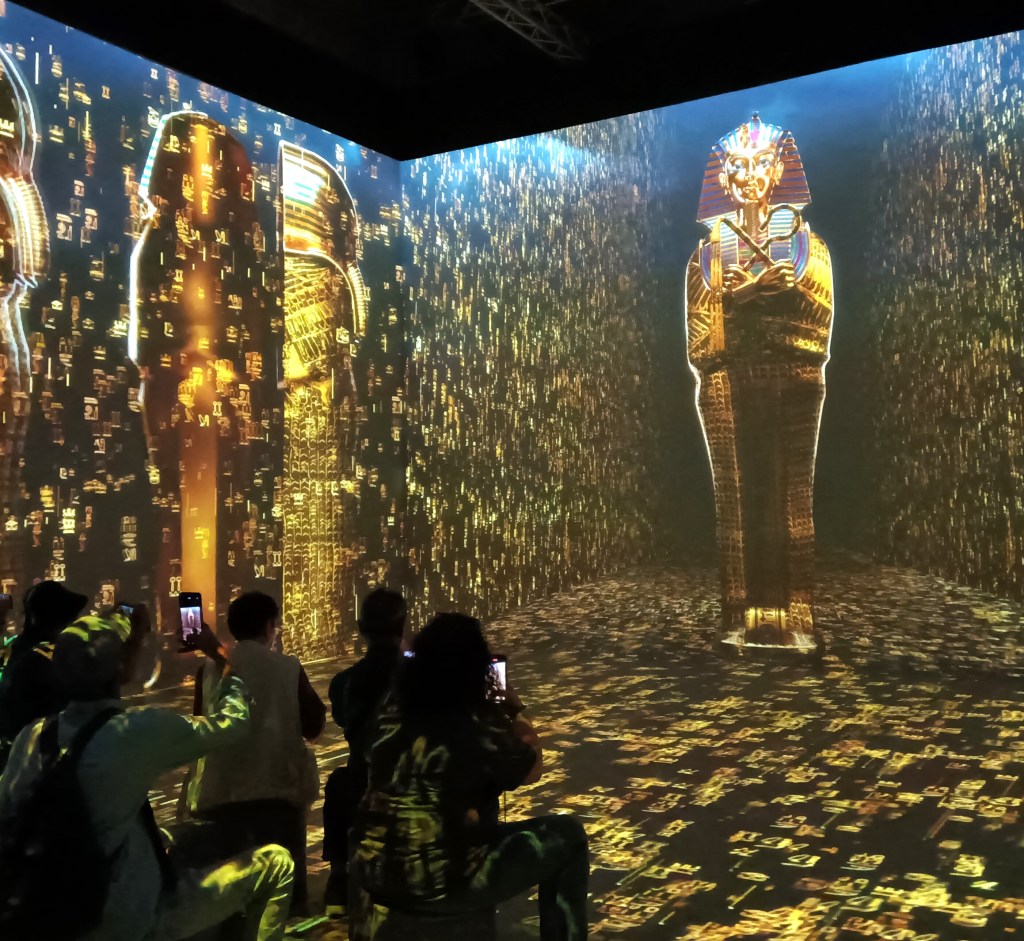
“Tutankhamun: The Immersion Exhibition” was an unexpected bonus we experienced while in Cairo 2024 was during our visit to the GEM (Great Egyptian Museum). I knew what to expect since I had enjoyed the “Van Gogh Immersion Exhibition” when it was in Minneapolis, Minnesota, a few years ago. The website advertises that “For over 100 years, the myths surrounding Pharaoh Tutankhamun have captivated people around the world. Now ancient Egypt is being resurrected: Tutankhamun: The Immersive Exhibition takes you into the legendary ancient Egypt and its secrets through new, digital multimedia Egyptian art.” And it does! If you get a chance to experience Tut in a new way – check it out! (Tutankhamunexperience.com )
P.C. Cher B 23 May 2025
P.C. Cher B 23 May 2025

P.C. Cher B 23 May 2025

P.C. Cher B 23 May 2025
P.C. Cher B 23 May 2025
My King Tut Quest is complete… or is it?
My Lifelong Quest to discover and experience King Tut is complete (for now)! The visits to Cairo Egyptian museums, the bits and pieces displayed at the various Tut Exhibitions in the USA, and being immersed in the subject while sharing it with students for decades, have all lead up to this grand finale: going inside his tomb in the Valley of the Kings! However, I would not pass up the opportunity to experience more Tut sightings should they come across my path. I may even get to visit Egypt again some day and experience the new Tut exhibit at the new GEM (Grand Egyptian Museum) – which is guaranteed to be as grand as the museum itself!
Sources & Travel Tips
- Egyptian Museum in Cairo, the Illustrated Guide. American University in Cairo Press. 3rd printing 2005. Cited above as “Eg Mu” (This complete guide includes the descriptions and gorgeous photos of all of the artifacts in the old Cairo Museum at that time of publication, including those in the Tut collection. Rooms are no longer applicable since the shifting of items to the GEM)
- historyjustgotinteresting.com/tomb-of-tutankhamun/carter-and-carnarvon. 02 April 2025. (This site includes a great article with everyday, interesting language about all-things-Tut and the individuals involved.)
- Museum Visits and Information about Tut Exhibitions provided on placards and guides on site: Egyptian Museum of Cairo, Cairo, Egypt (2007, 2024); Grand Egyptian Museum/GEM, Cairo Egypt (2024); House of Howard Carter, Luxor (2024); Science Museum of Minnesota, St. Paul, MN (2011); Field Museum, Chicago, IL (1977).
- Navarre, John. The Egypt Travel Channel (YouTube). He has been a good source of updates on Egyptian travel, including ongoing info on The Grand Egyptian Museum.
- Reeves, Nicholas. Into the Mummy’s Tomb, the Real-Life Discovery of Tutankhamun’s Treasures (Scholastic, e. 1992). Cited above as MT. (This Time Quest book is an easy, picturesque read which includes excellent photos of the Tut artifacts, descriptions an information.)
- Sobhy, Lamia. Viking Tours Program Director and Tour Guide, Egyptologist. Lectures both onboard the ship and on site in Egypt. May 2024
- Tutankhamunexperience.com (website for the Tutankhamun Experience)
Thanks for letting me share my adventure with you. If you enjoyed it, please let me know by clicking the “like” button below. It will keep me encourage to keep sharing! Thanks!

P.C. Cher B. 23 may 2025
 Charamana Consulting