Melk Abbey
Austria’s most magnificent Baroque monastery is an imposing ocre-yellow and white castle perched dramatically atop a high cliff overlooking the picturesque and romantic Danube River.
About 37 miles west of Vienna, it was an anticipated stop on our Viking Grand European Tour in May 2025. The Melk Abbey is perhaps the most graceful landmark of the Wachau Valley.
The Melk Abbey was a favorite place to share with students in my art history classes in our study of Baroque art and architecture. Having visited here with students in 2012, I knew what I had to look forward to on this second visit.

P.C. Cher B 28 May 2025
Our tour guide was from the abbey, not Viking. I was sadly reminded of the fact that one’s tour guide makes all the difference in the world! It also reminds me that for one to fully appreciate a place visited, it is good to prepare ahead of time for that place! (More on this later…)
Melk Abbey History
The Melk Abbey has experienced a rich, sometimes turbulent history.
- In the 11th century, Leopold II invited the Benedictines to locate in Melk. He granted them the land and castle. The monks turned it into a fortified monastery.
- In 1297 it was almost completely destroyed by fire.
- In the 16th century it withstood a Turkish invasion.
- In 1702, it experienced a complete, fashionable facelift. A thorough remodeling was begun. Renowned artists of the day transformed the abbey into the magnificent Baroque form we experience today. Architect Jacob Prandtauer designed the building to be one-with-nature, an intriguing concept for the fanciful, elaborate nature of Baroque architecture! The 200-foot-tall dome and symmetrical towers dominate the complex and emphasize the sacred purpose of the abbey.
- In 1996, the most recent, grand restoration project was completed. It was financed in part by the sale of the abbey’s Gutenberg Bible to Harvard.

P.C. Skip B 28 May 2025
Today the Melk Abbey complex is magnificent. The imperial rooms are home to a magnificent museum chronicling the abbey’s history from its inception to modern times. Its library is home to a vast range of medieval manuscripts.
Unfortunately, photos are not allowed within the interior rooms and museum – although this policy did allow for a much more focused and relaxed tour as a whole!
Melk Abbey Site Plan
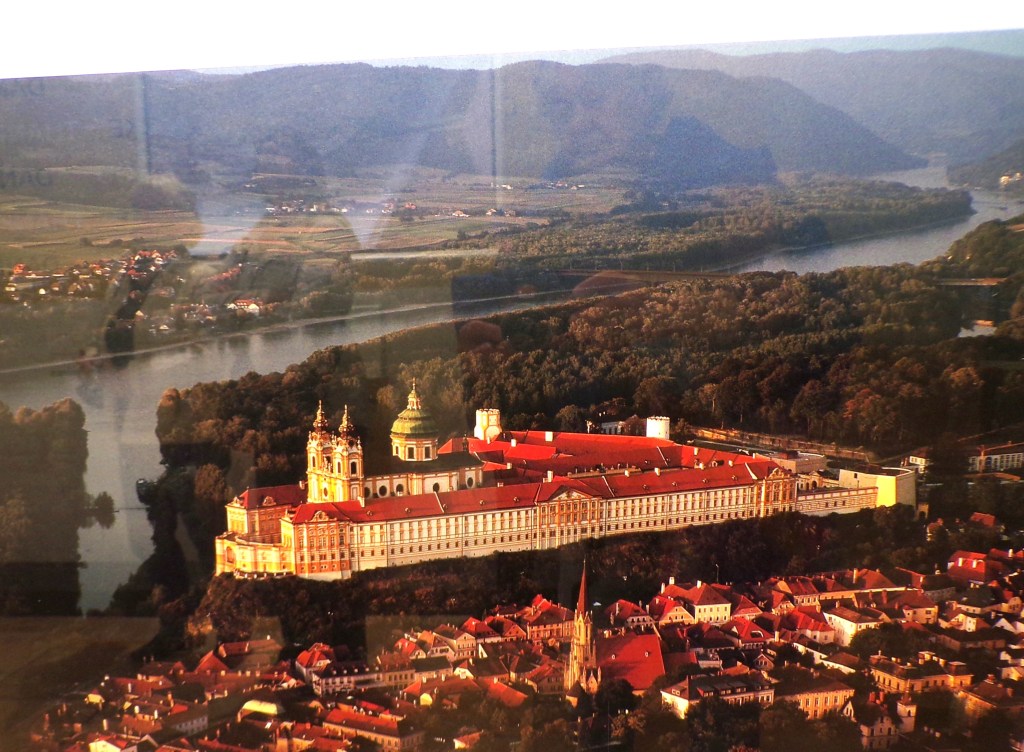
The whole Melk Abbey complex is huge! This postcard aerial view helps with perspective, size and proximity to the river. We entered in the Prelate’s Courtyard (more below) on the right side. The museum is in the center area. The chapel with the towers and dome – and balcony with great view of the area – are on the left side of the photo. The village is in the foreground. I’ll be referring to them all in the post below.
Purchase and P.C. Cher B 28 May 2025
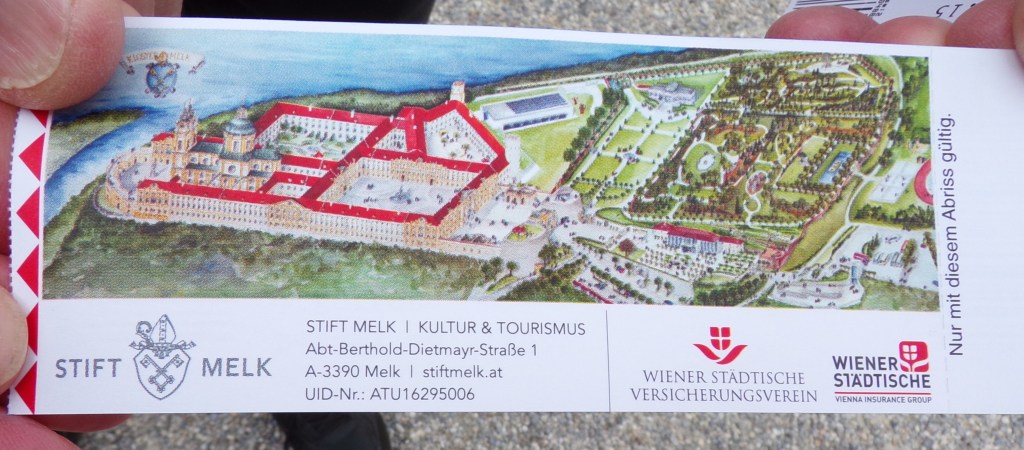
Our entrance ticket provides perspective of the whole site. The red outlined area is the abbey. The formal gardens are in the middle and right side of the ticket.
P.C. Cher B 28 May 2025
The Balcony & The View
P.C. Cher B 28 May 2025
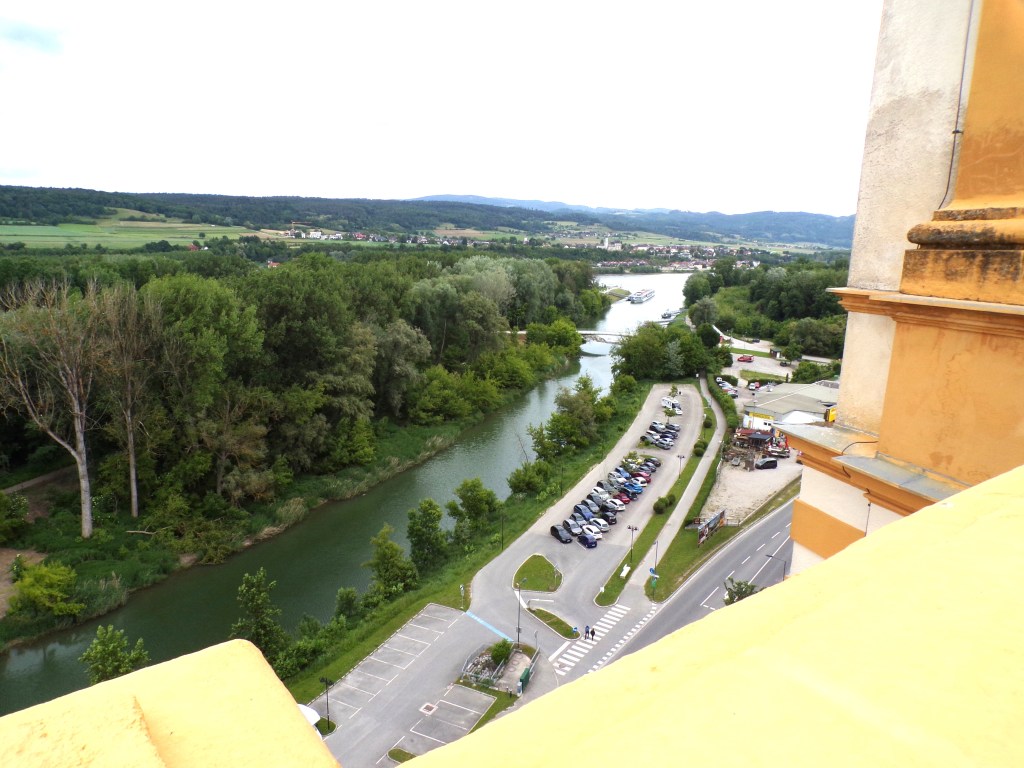
The balcony overlooks the river and provides dramatic views of the Danube Valley, the town of Melk, and the facade of the monastery church.

P.C. Cher B 28 May 2025
The risen Christ is seen in the huge statue atop the abbey church. Cross in hand, Jesus Christ is victorious over death. This theme echoes the central message of the entire Melk Abbey complex.

P.C. Cher B 28 May 2025
The expansive terrace has breathtaking views of the river, the city and the expanding valley.
P.C. Cher B 28 May 2025
The grand arch in the Balcony frames the valley and sets a great stage for photos.

P.C. Cher B 28 May 2025
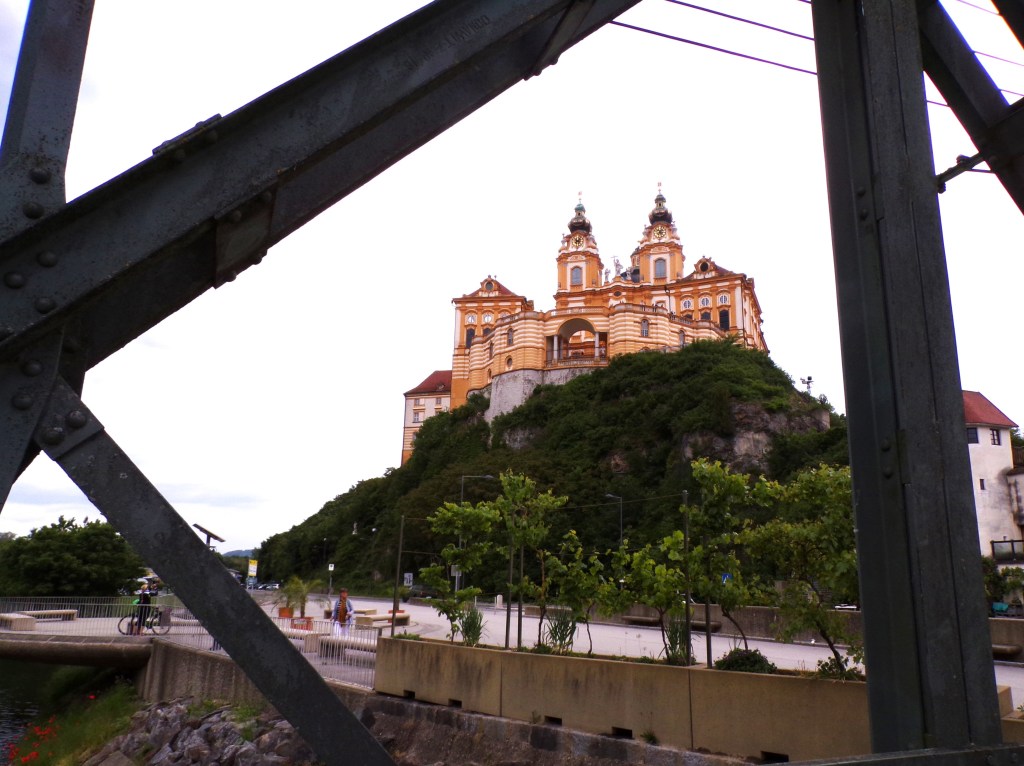
We crossed the bridge seen in the photo below to get to where our ship was docked.

P.C. Cher B 28 May 2025
Prelate’s Courtyard
Prelates’ Courtyard is the first space encountered upon initial entrance to the abbey. It is surrounded by imposing buildings crowned with statues of the prophets as well as frescoes showing the cardinal virtues.
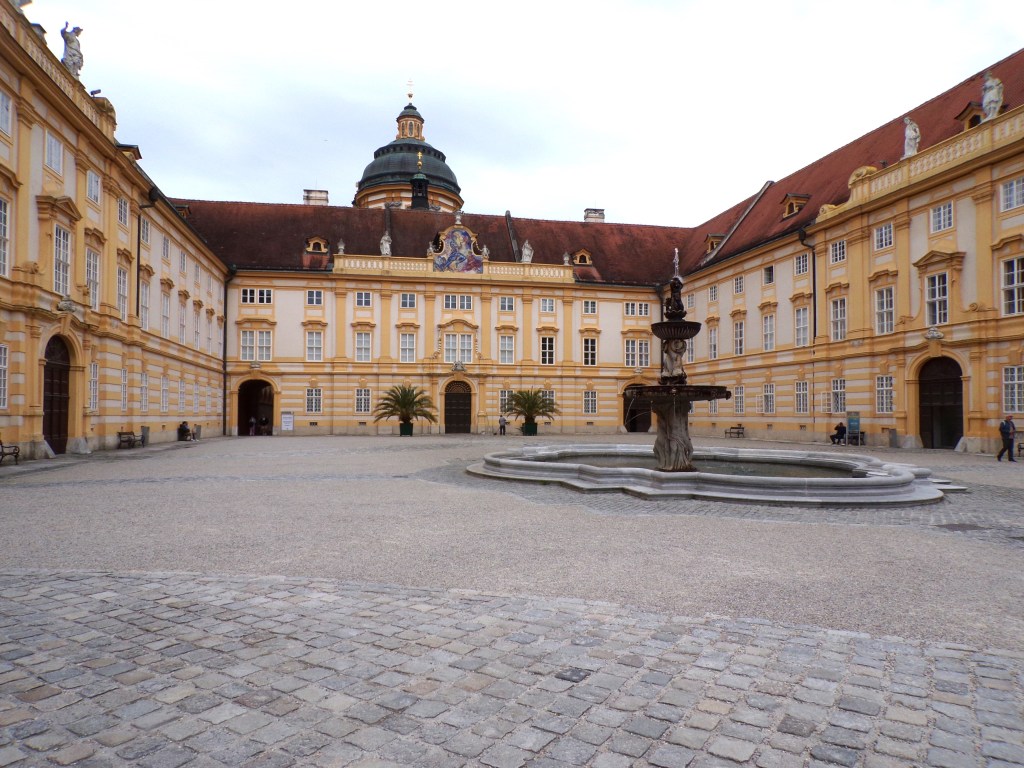
P.C. Cher B 28 May 2025
For 900 years, Benedictine monks have lived and worked here at the abbey. They are also heavily invested in the Melk community. Their task is to bring and maintain Christianity and culture to the region. This mission includes running a high school with about 800 students, operating a small boarding school, and overseeing a busy retreat center.
Courtyard Archway
The courtyard archway is the first interior building we visited in our tour. This is the last inside spot where photos were permitted.

P.C. Cher B 28 May 2025
Melk Abbey Library
The Melk Abbey Library is impressive in both its appearance and content – how it looks and what it holds. It holds some 100,000 volumes, including 2,000 manuscripts and 1,600 incumabula (these are extant copies of books produced before 1501 in the earliest stages of printing with movable type)
The library is filled with inlaid bookshelves, books with matching bindings, and a spectacular Baroque ceiling fresco by Paul Troger. Together, they combine in perfect harmony to provide for the thematic counterpart of the also-very-grand Marble Hall. (see below). The marble hall and library are above one another. A picturesque spiral staircase connects to two.
The Melk Abbey Library is said to celebrate deep faith rather than wise politics. This is seen in the ceiling which portrays a woman surrounded by the four cardinal virtues: wisdom, justice, fortitude, and temperance. Supernatural faith is believed to come from these natural traits. The imposing statues in the room represent law, medicine, philosophy, and theology. The colorful globes seated on the floor provide a unique 17th century view of the earth and heaven. Many of the monastery’s 100,000 volumes fill the shelves. The glass display case reveals a few of the oldest and most precious manuscripts.
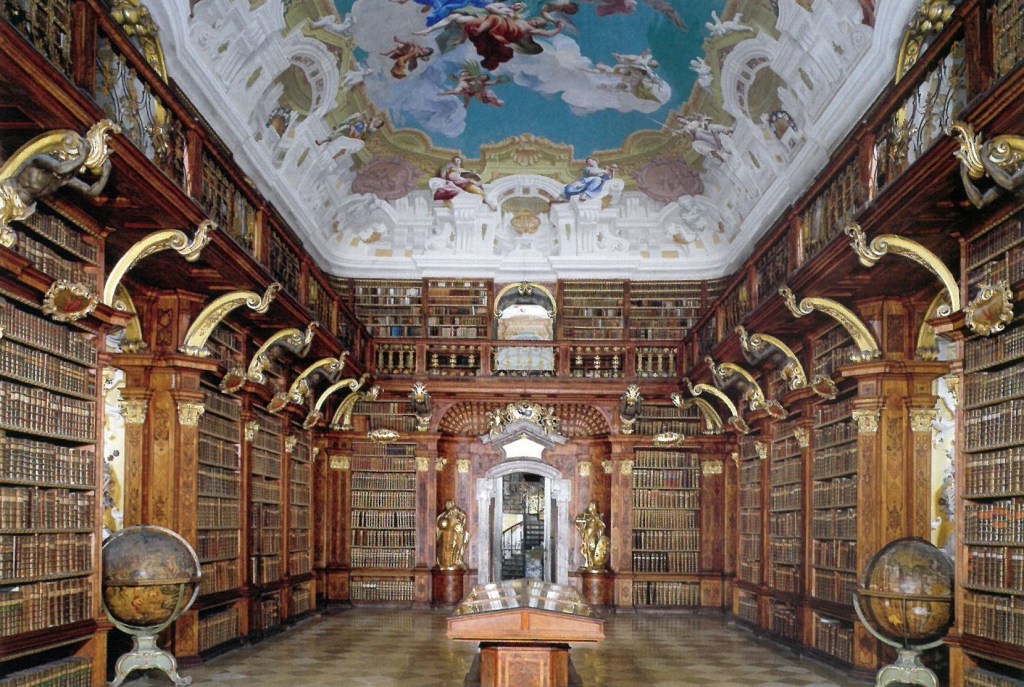
Purchase and P.C. of postcard by Cher B 28 May 2025.
Melk Abbey Marble Hall
The Marble Hall is a spectacular room; it is my favorite in the whole abbey. Once used for receptions and ceremonies, its outstanding highlight is the ceiling mural painted by Paul Troger in 1731.
Several aspects make this a very spectacular room. Real marble is found only in the door frames. Most of the grand dining room/ballroom is realistically painted stucco to look like marble.
The real treasure of this room for me is the ceiling. Created during the Habsburg Dynasty, it includes three very-Habsburg themes. (1) Habsburgs like to be portrayed as Hercules. (2) The Habsburgs were smart as well as strong – so Athena, goddess of wisdom, is included. (3) The Habsburgs loved art and culture, symbolized by angels figuratively reining in the forces of evil, darkness, and brutality. The philosophy is that through this wise moderation, goodness, beauty, art and science will rule.

Purchase and P.C. of postcard by Cher B 28 May 2025.
The most impressive aspects of the Marble Hall ceiling are the trompe l’oeil views painted by Troger on the ceiling and the architectural painting by Gaetano Fanti.
Viewing the ceiling… where to stand… are all critical to the experience. When one stands in the center of the room (see square grate in above photo), ones view of the perspective of the ceiling is perfectly accurate. Then… if one views the ceiling from the end doors – or any of the side walls – the perspective is grossly distorted and gives a very warped view of the paintings. Buildings actually appear to be toppling over! (I.e. If you have ever seen a sidewalk chalk artist convey great perspective from one side – and then look at the distorted opposite view – this is sort of the same thing…)
This intriguing phenomena on the ceiling’s perspective was shared during my first Melk visit (2012) by our wonderful abbey guide that time. We had a grand time as it proved to be a great interactive experience. My students and I took posts in different corners of the room to watch the perspective changes play out. It was one of the most memorable experiences of not only our Melk Abbey visit, but of our whole Austrian trip.
Traveler Tip: To maximize a trip, be prepared with information on places you visit and for unique experiences such as this. Sadly, this mesmerizing fact was not included in our second abbey tour. I was also surprised that I could not find this intriguing fact noted in any of my written guidebooks or my online searches. If I had not experienced it myself, I would never have known. (And of course, with the NO PHOTOS rule, I have no photos to prove my point… you’ll have to take my word – and visit yourself!)
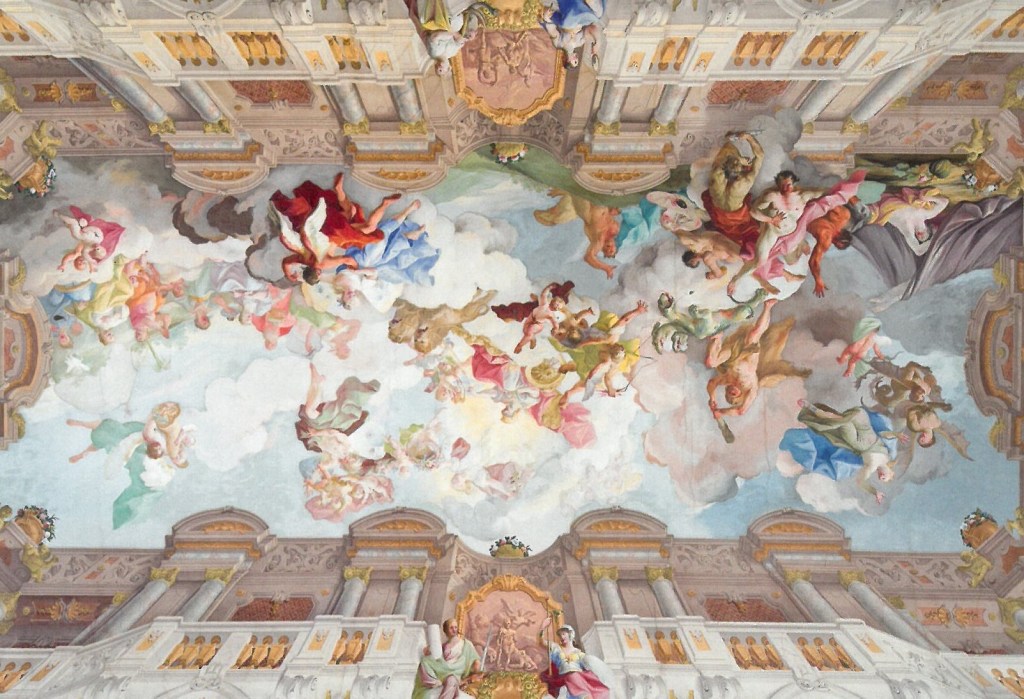
Purchase and P.C. of postcard by Cher B 28 May 2025.
Abbey Church / Stiftskirche
The finale of the abbey tour is a visit to its stunning Baroque church. The architecture, ceiling frescoes, stucco marble, grand pipe organ, and sumptuous chapels make the theological point that a Just Battle Leads to Victory.
The interior of the abbey’s church is a kaleidoscope of colors: reds, oranges, and golds. The magnificent carved pulpit and dynamic ceiling frescoes by Johann Michael Rottmayr complete the scene. The altar features the figures of apostles, St. Peter and St. Paul, the patron saints of the abbey church.
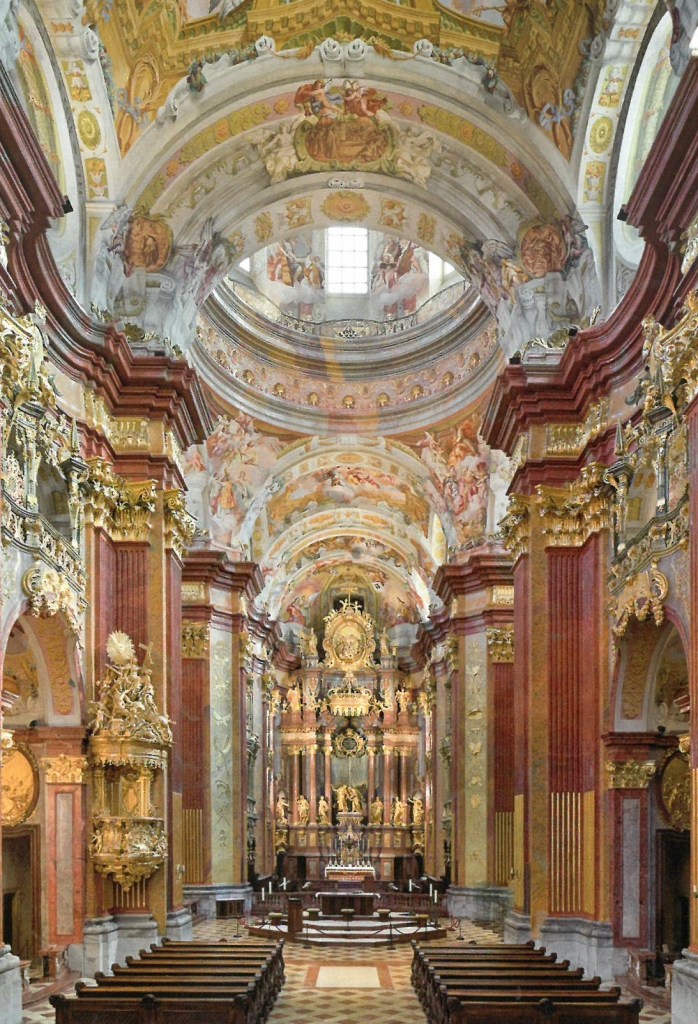
This intriguing chapel ceiling is alive with activity! St. Benedict’s triumph and entry into heaven presents him on an elaborate carpet. St. Peter and St. Paul shake hands above the papal crown before they depart for their final battles and ultimate victory. In the dome high above, the Holy Trinity can be seen in heaven, surrounded by saints of importance to Melk.

Purchase and P.C. of postcard by Cher B 28 May 2025
The Melk Abbey has twice been a highlight of my travels in Austria. The treasures in the interior rooms which cannot be photographed and for which I could not find postcards, are awesome. The spiral stairwell which connects the library with the church would undoubtedly be one of the most crowded and photographed places in the abbey!
One nice aspect about the NO PHOTOS policy is that we could truly absorb the magnificence of the objects and the glorious rooms without the distraction of anyone and everyone taking photos. We could be present in the moment.
Outside the Abbey: The Grounds
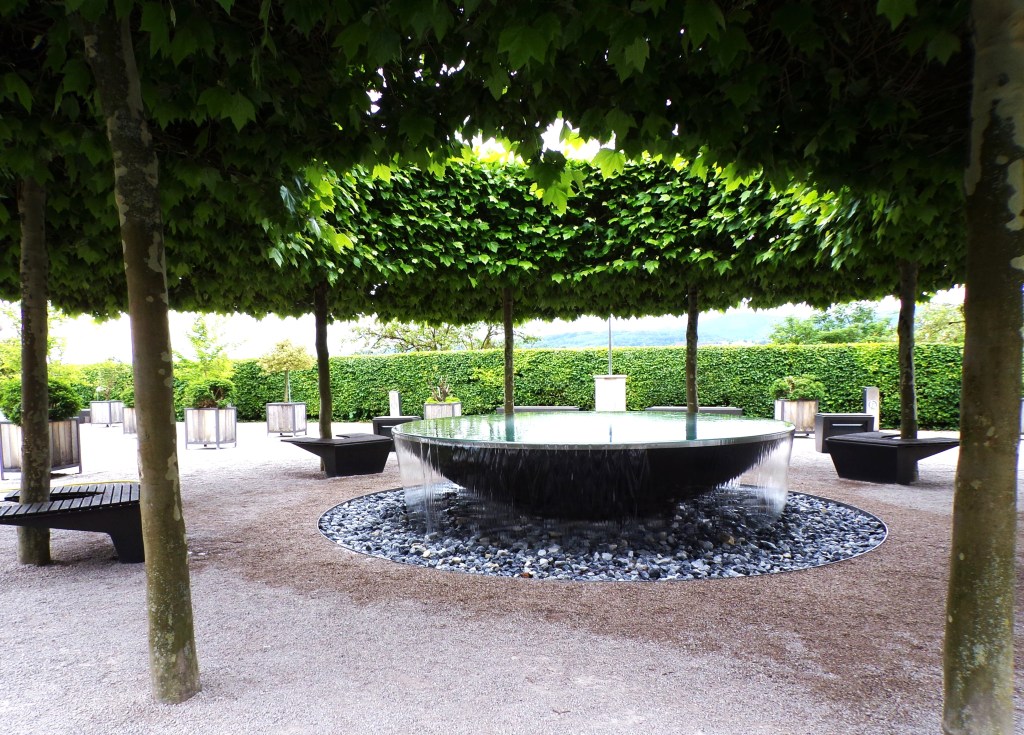
Surrounding Melk Abbey are ponds, fountains and open gathering spaces to relax and reflect, in line with the purpose of an abbey. Allowing time to enjoy these spaces is something to be considered if one is not hampered by keeping up with a tour group!
P.C. Cher B 28 May 2025
Next to the Melk Abbey is a peaceful, formal Baroque garden with ponds, trees and well-manicured lawns.

P.C. Cher B 28 May 2025
Outside the Abbey: The Town
Below the rocky cliffs upon which Melk Abbey is nestled lies a quaint little town. When one leaves the abbey through this charming arch, the cobblestone path follows along the sides of the abbey walls. One enters another world.

P.C. Cher B 28 May 2025
Cobblestone streets wind their way through the hilly town with places to shop, eat, drink – and live.

P.C. Cher B 28 May 2025
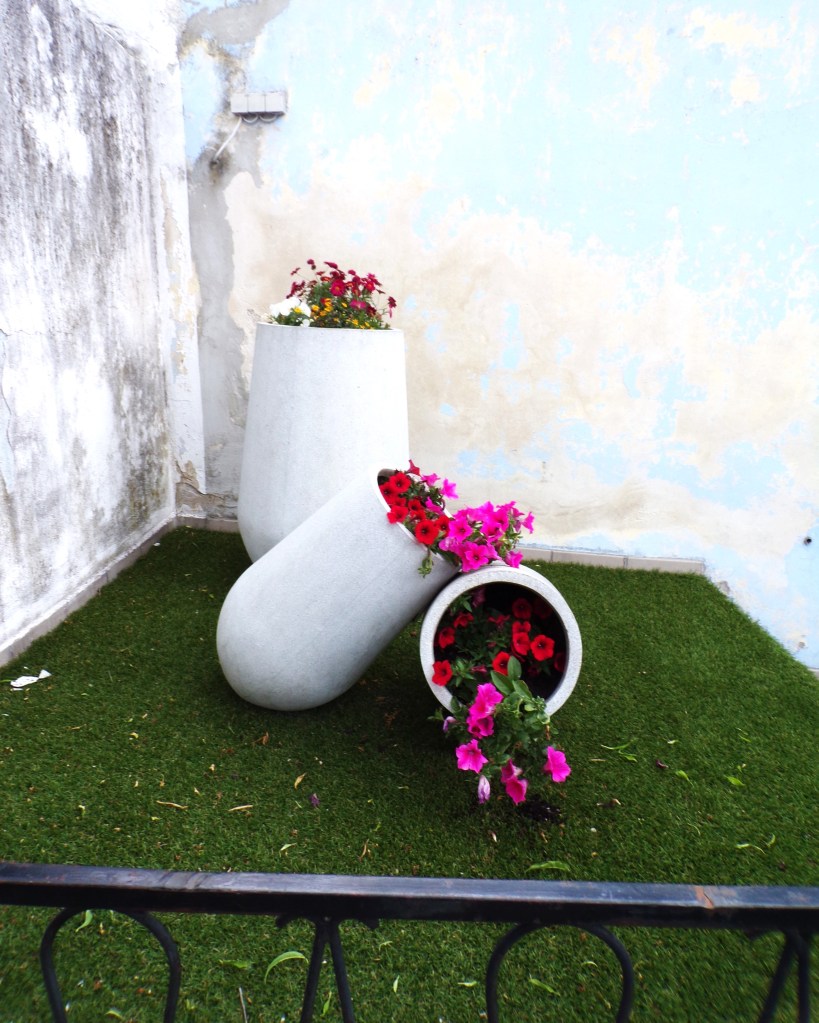
Amidst the streets with shops and eateries are residences with lovely gardens and artistic displays such as this one I really enjoyed!
P.C. Cher B 28 May 2025
Traveler Tip: Visiting a site in person that one has only studied in books or film adds a multidimensional realism to the place. The Melk Abbey is such a place – and so much more! Both of my visits were with a tour group and from my observations of the on-site visitors, I would recommend a planned tour vs. just showing up and hoping for tickets.
Sources
- Dk Eyewitness Travel Guide Austria. ed. 2010. pp 142-143.
- Melk Abby on-site tour guide and information posted on-site. 28 May 2025.
- Rick Steves’ Germany & Austria 2007 on Melk Abbey. pp 534-537.
- Viking Cruise printed and lecture information provided for us prior to the visit.
 Charamana Consulting