Kennedy Space Center
Cape Canaveral, Florida, USA
January 2026
In 1998, I had the privilege of visiting the Kennedy Space Center while on a road trip with my family. In the 28 years since then, the facility – and the age of space exploration – has dramatically changed. During our recent visit prior to a cruise out of nearby Port of Canaveral, I enjoyed walking down memory lane as well as getting a glimpse of the exciting journey on which is around the corner.
As I write this, four astronauts are preparing to venture around the moon on Artemis II. By the time you read it, it may be already accomplished.
These 3 men and 1 woman make up the first crewed mission on NASA’s path to establish a long-term presence for science and exploration on the moon. (I noticed they post the mission as being “crewed” vs. “manned!”) The goal of the 10-day flight is to help confirm hardware and systems needed for human lunar exploration missions.
Artemis II: Sending Humans Back to the Moon
For the first time since 1972, NASA is sending humans back on the path toward the moon. Their goal, through the Artemis II mission, is to verify modern human capabilities in deep space as well as pace the way for long-term exploration and science on the lunar surface.
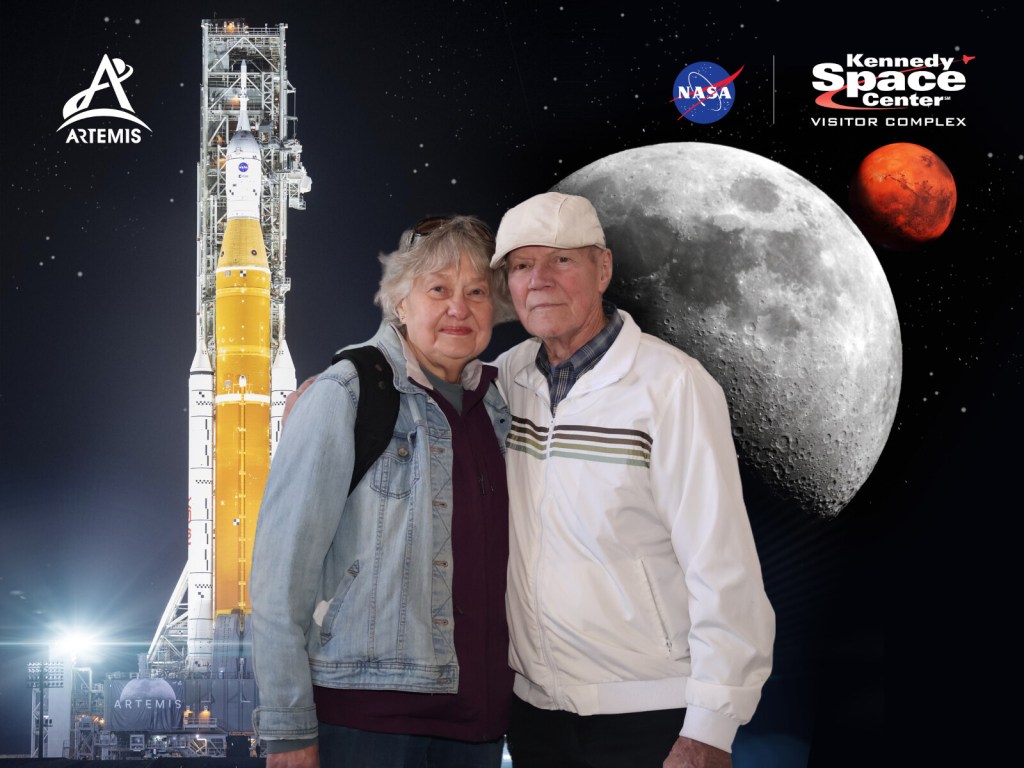
P.C. KSC photo purchased 01 Jan 2026
If timed right, visitors to the Kennedy Space Center, Port Canaveral, Florida, USA may get to see Artemis II on the launch pad and participate in opportunities for launch viewings.
Rocket Garden
Near the entrance, the Rocket Garden is one of the few places that remain from the original setting we visited in 1998. Searching for the perfect photo op? This is it!
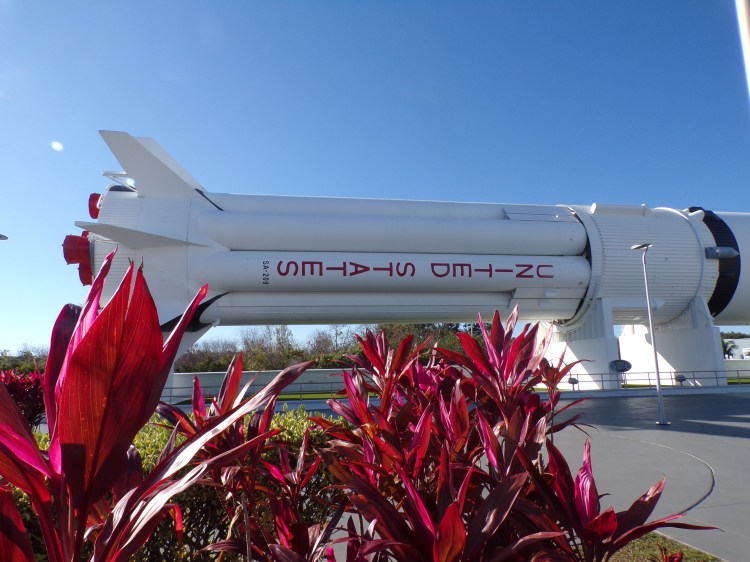
P.C. Cher B 01 Jan 2026
In the Rocket Garden one can stand beneath a stunning collection of real rockets. These are all rockets from NASA’s early days.
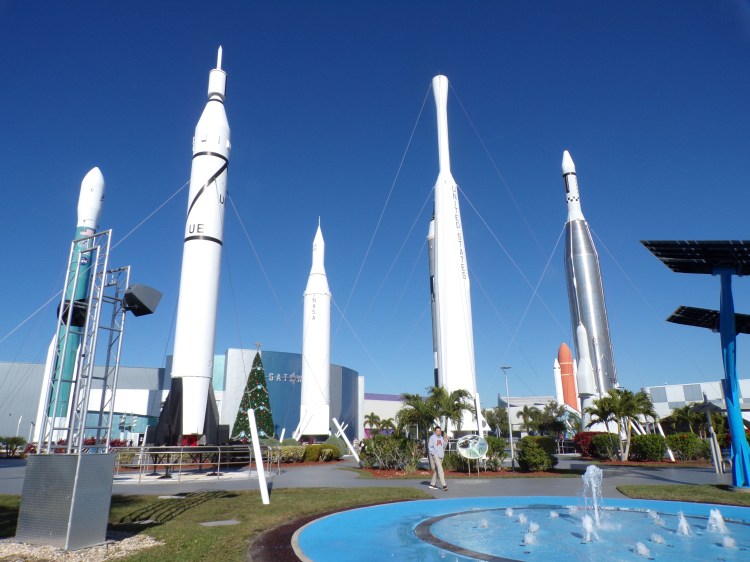
P.C. Cher B 01 Jan 2026
The historic Mercury-Redstone 3 launched the first American in space: Alan Shepard!
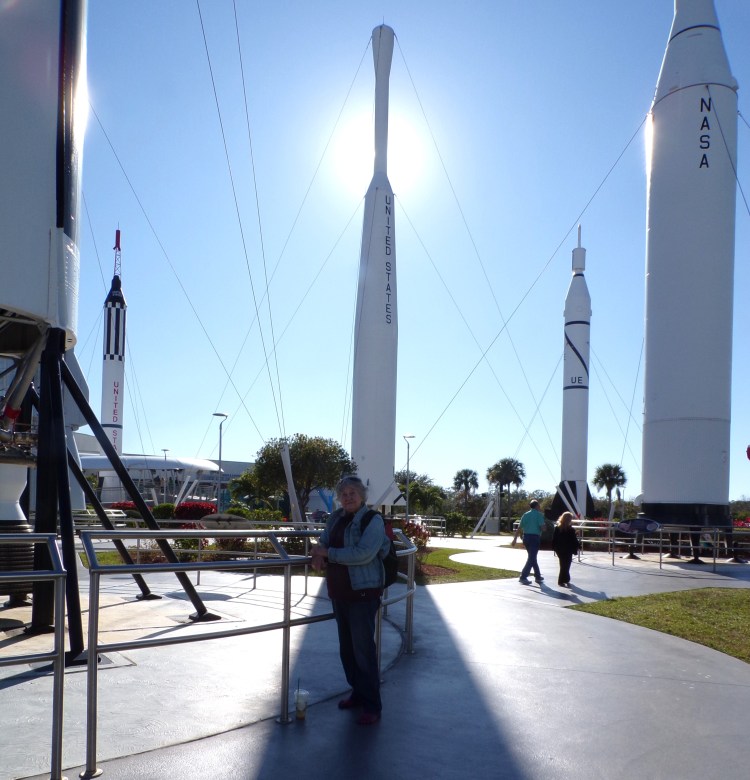
P.C. Skip B 01 Jan 2026
Traveler Tip: Join a guided tour (see daily program for times) – and immerse yourself in the rich history and stories of these towering giants of space.
Meet An Astronaut,
Hear Stories From the Source
Want to meet an astronaut? Each day at Kennedy Space Center Visitor Complex, you get the rare opportunity to meet a veteran NASA astronaut.
During Astronaut Encounter, commanders, pilots, mission and payload specialists share their experiences during a live presentation and question & answer session. These are people who have actually lived and worked in space. We really enjoyed the real-life scenarios our in-person astronaut shared with us. Check the daily schedule for time and location.
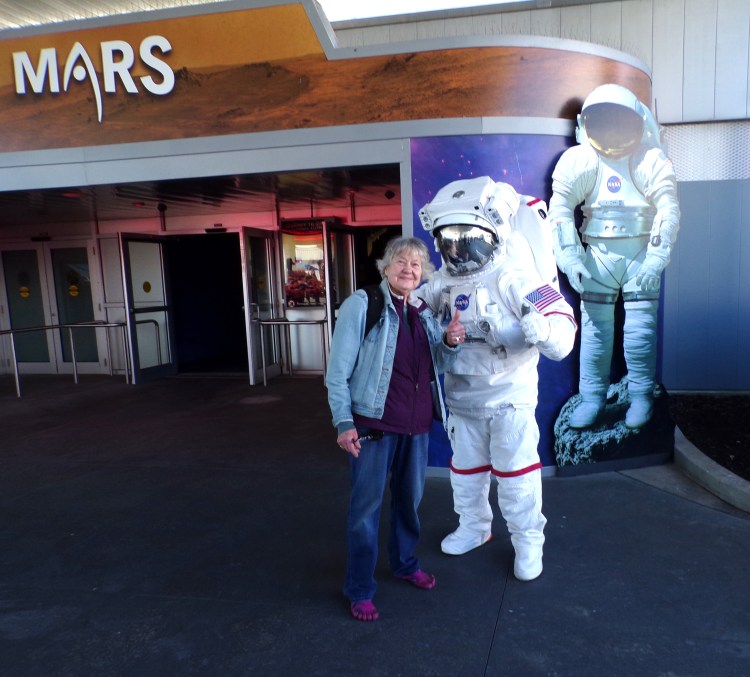
The Astronaut of the Day is available to visit with and get their autographs at The Space Shop or Shuttle Express. I enjoyed this “thumbs up” experience with this astronaut (male? female? imposter?!) in a real life space suit outside the Journey to Mars building.
P.C. Skip B 01 Jan 2026
Traveler Tip: Check the daily schedule to learn how, where and when you can meet a real veteran NASA astronaut each day at KSC Visitor Complex.
NASA
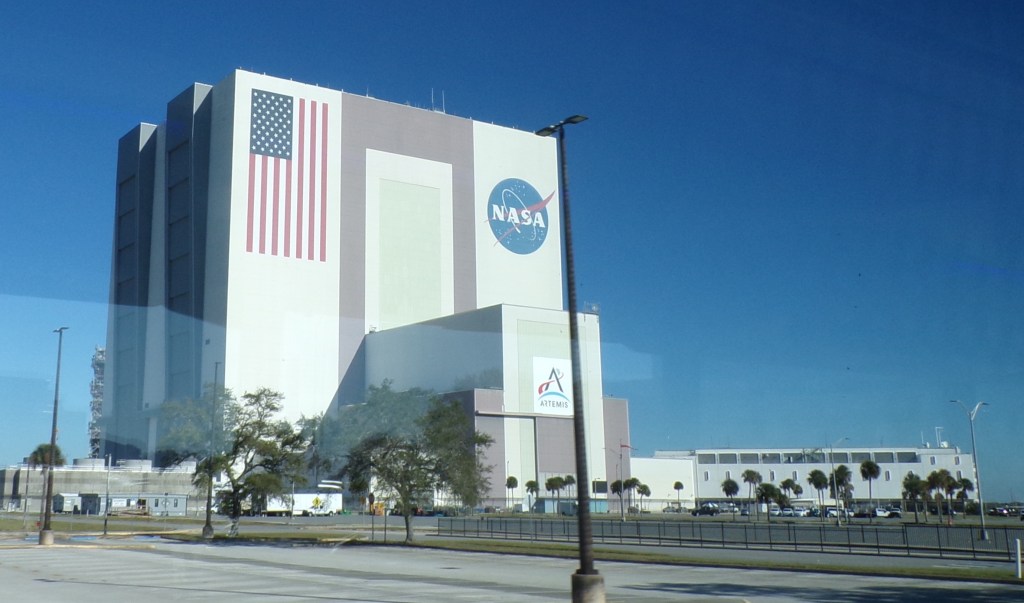
The Vehicle Assembly Building (VAB) is a large building designed to assemble large pre-manufactured space vehicle components. It stacks them vertically onto one of three mobile launcher platforms. We drove by it, but did not visit. (Visits and Photo-Op Stops are available with paid reservation. )
P.C. Cher B 01 Jan 2026
This iconic facility serves as the central hub of NASA’s premier multi-user spaceport. It is capable of hosting several different kinds of rockets and spacecraft at the same time. Whether they are going into Earth orbit or being sent into deep space, the VAB has the infrastructure to prepare them correctly for their missions.
At 129,428,000 cubic feet, it is:
- the largest single-story building in the world,
- the tallest building in the United States outside an urban area.
- the 8th largest building in the world by volume (as of 2022),
- covers 8 acres
- The VAB It can be seen for miles and certainly “marks the spot” in the landscape. We could even see it across the water from our cruise ship at Port Canaveral.
P.C. Cher B 01 Jan 2026
Apollo
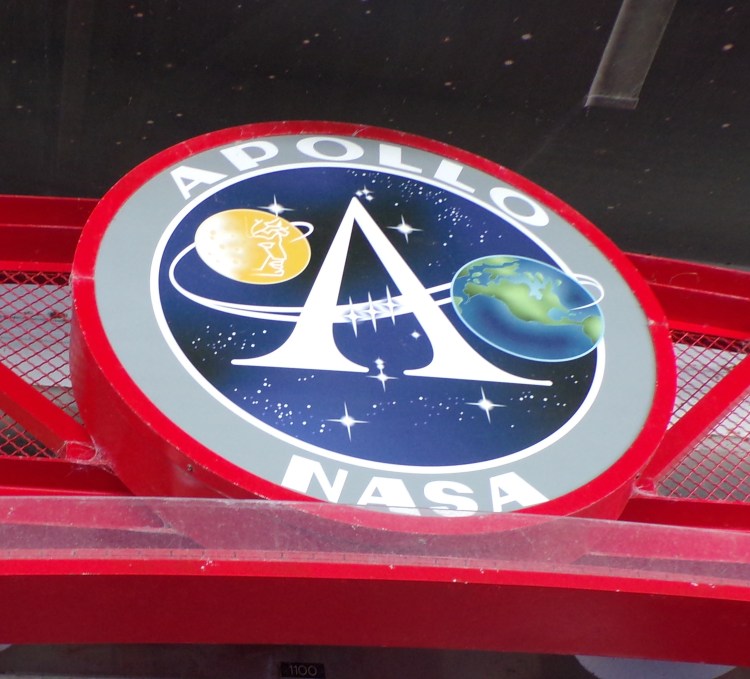
The Apollo / Saturn V Center is separate from the Kennedy Space Center complex. It is accessible by a tour bus boarded at the KSC.
Traveler Tip: Upon admission to the KSC, immediately proceed to the area marked TOUR BUS and get in line. The earlier you get there, the less time you have to wait in line and more time at the center. It is my recommendation to get the the KSC as soon as they open and head to the bus tour to Apollo / Saturn V Center.
P.C. Cher B 01 Jan 2026
Saturn V Rocket
Here one can witness one of the most significant achievements in human history – the Saturn V rocket! This towering giant made the Moon landings possible.
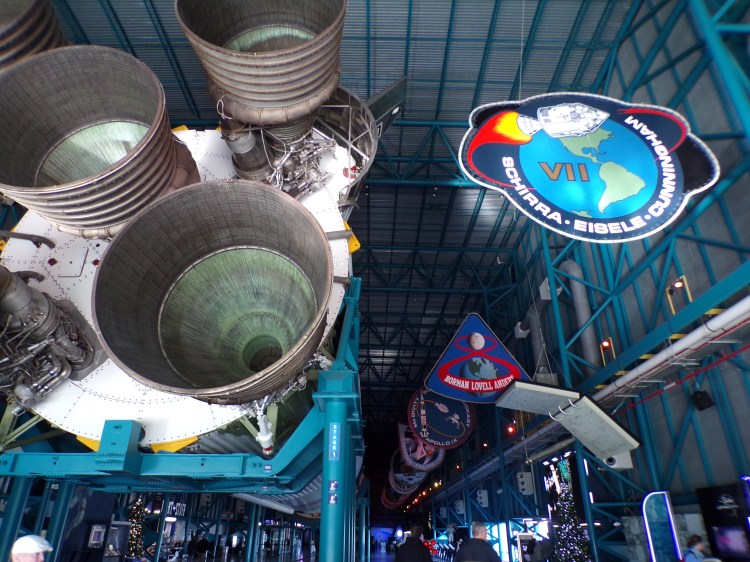
P.C. Cher B 01 Jan 2026
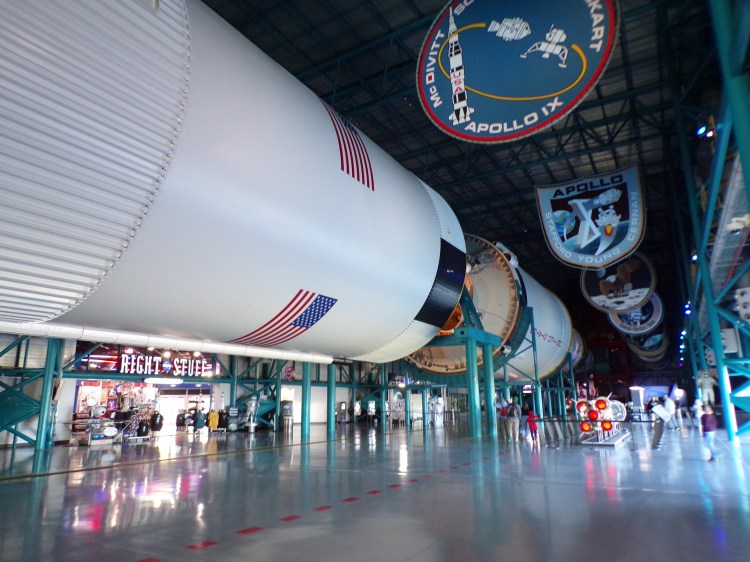
P.C. Cher B 01 Jan 2026
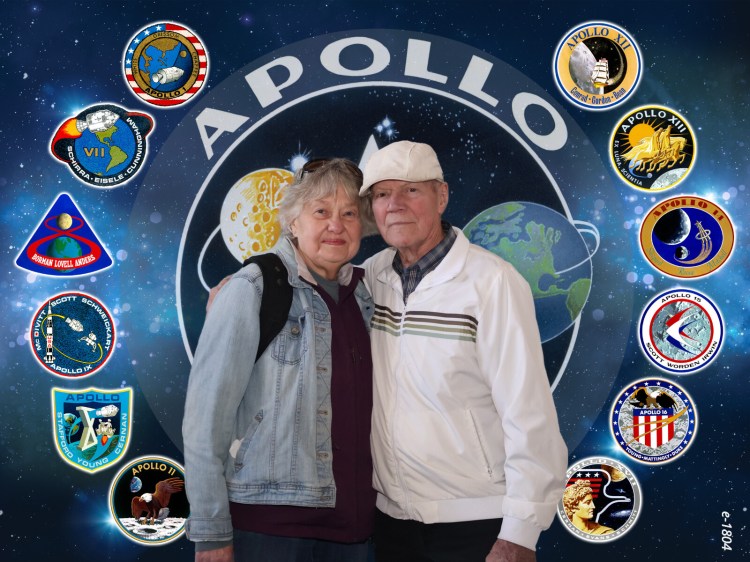
P.C. KSC photo purchased 01 Jan 2026
Man on the Moon
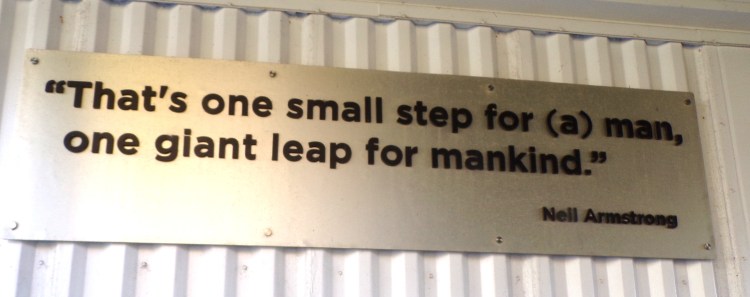
P.C. Cher B 01 Jan 2026
Simulated experiences such as man landing on the moon are common throughout the complex provide one with the feeling one was there.
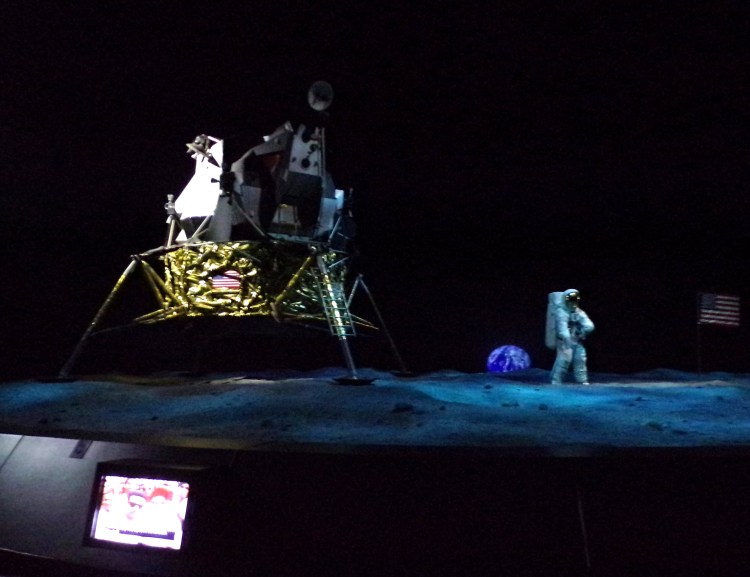
P.C. Cher B 01 Jan 2026
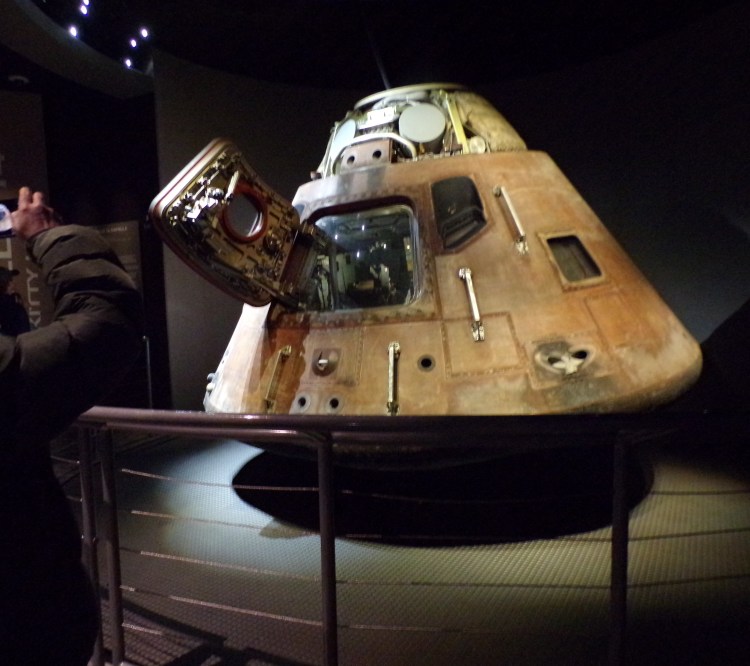
P.C. Cher B 01 Jan 2026
Moon Tree Garden
Outside the Apollo Center is a garden with plaques commemorating each of the Apollo Missions.
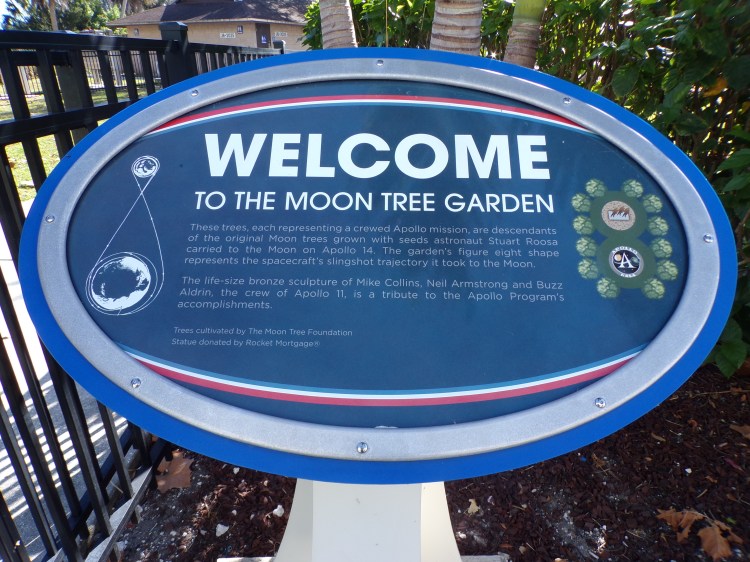
P.C. Cher B 01 Jan 2026
Trees planted next to each plaque have grown from seeds that were carried into space on that mission.
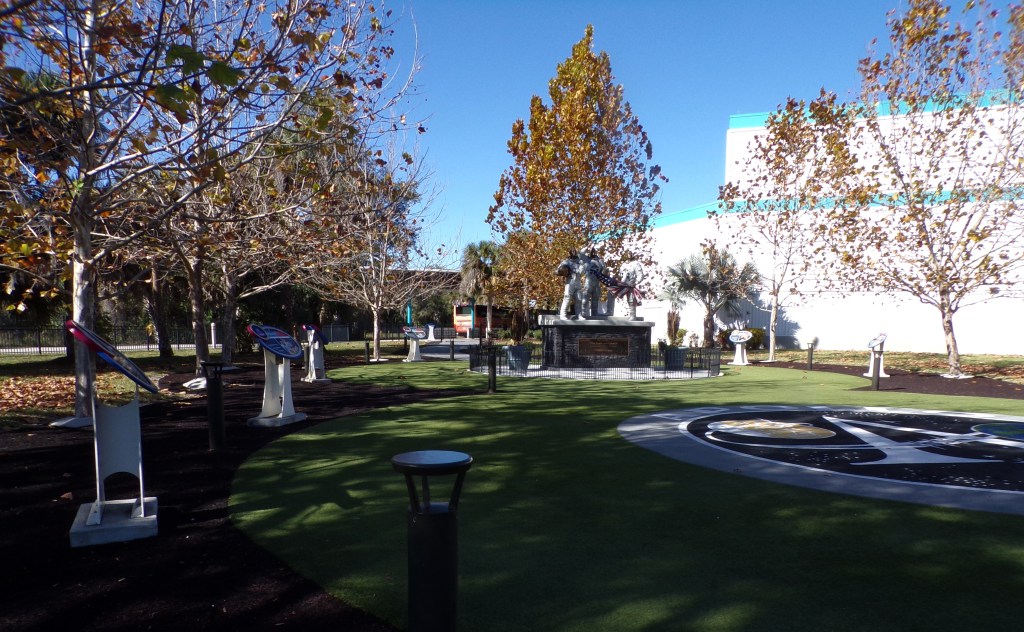
P.C. Cher B 01 Jan 2026
The Eagle Has Landed…
Ever heard this phrase and wonder where it came from?
This widely and commonly used phrase has been adopted today to indicate a task or mission that has been successfully completed.
“Houston, Tranquility Base here. The Eagle has landed.”
The Apollo 11 Mission Lunar Module that carried Neil Armstrong and Buzz Aldrin in 1969 was named “Eagle.” When it landed on the moon, Armstrong announced, “The Eagle has landed,” signifying the successful completion of a significant part of their mission.
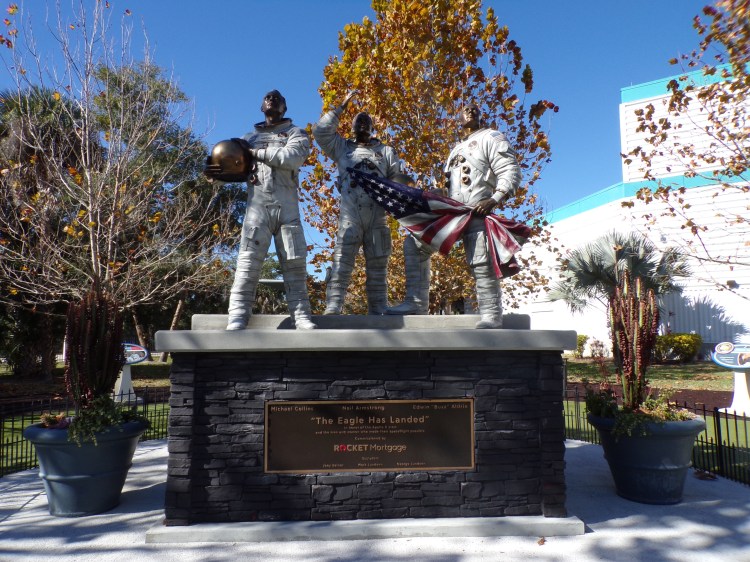
P.C. Cher B 01 Jan 2026
The Gantry at LC-39
During our drive, we also experienced the biodiversity of the Merritt Island Wildlife Refuge on which the Kennedy Space Center resides. We were surrounded by nature and wildlife such as eagles, cranes, alligators – and even wild pigs! It was refreshing to learn how NASA goes above and beyond to minimize their impact on the ecosystems, including the wildlife, that share their home!
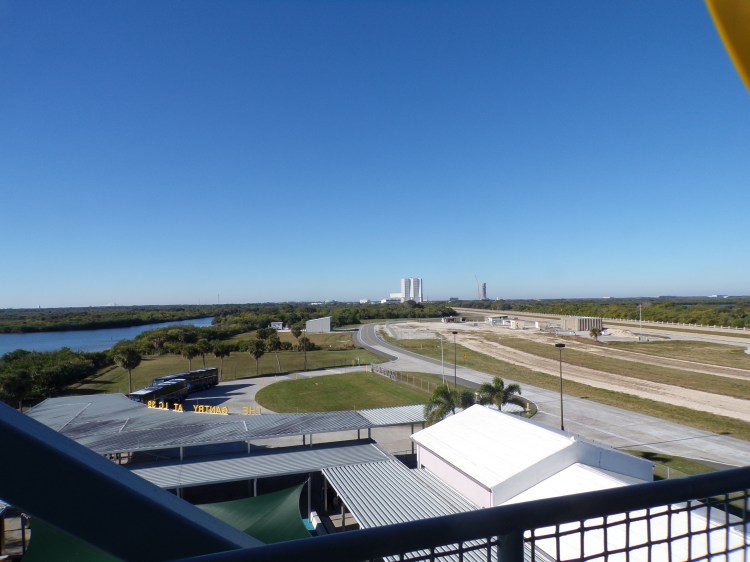
The Gantry at LC-39 is NASA’s newest attraction and was the first stop on our bus tour. A gantry, by definition, is a large structure used for moving equipment and machinery. As it relates to NASA, it is a large structure used for vehicle assembly and launch operations.
The Gantry is situated in the day-to-day action of America’s premier spaceport. It is adjacent to legendary Launch Complex 39 at Kennedy Space Center and the launch pads at Cape Canaveral Space Force Station. Hence the name Gantry at LC-39.
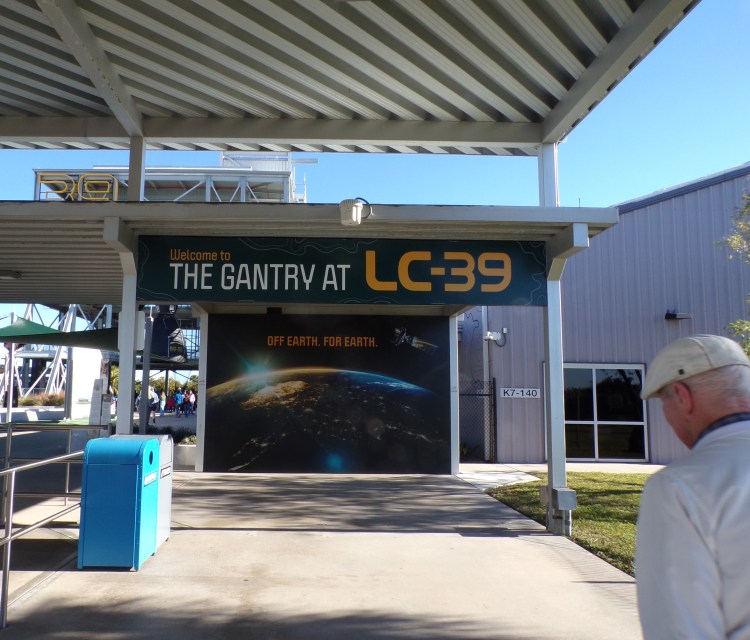
P.C. Cher B 01 Jan 2026
Themed “Off Earth, For Earth,” The Gantry also tells the story of NASA’s symbiotic relationship between nature and technology, its mission to protect Earth through space exploration. The structures offers awe-inspiring 360-degree views and doubles as a premium viewing location for select rocket launches.
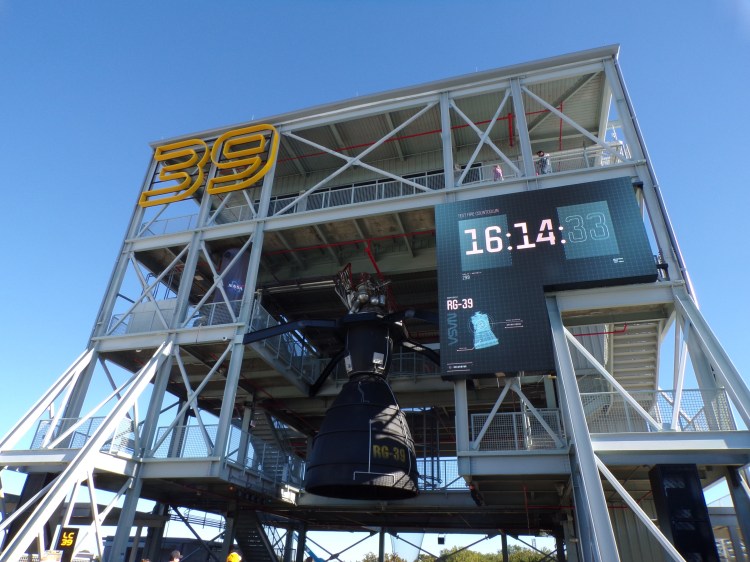
P.C. Cher B 01 Jan 2026
Gantry at LC-39 houses an impressive full-scale model of a rocket engine. It comes to life during a simulated static test fire. When the countdown reaches zero – great for audience participation! – the engine roars with sound, dynamic light, and a cooling mist, all of which creates an impressive multi-sensory experience!
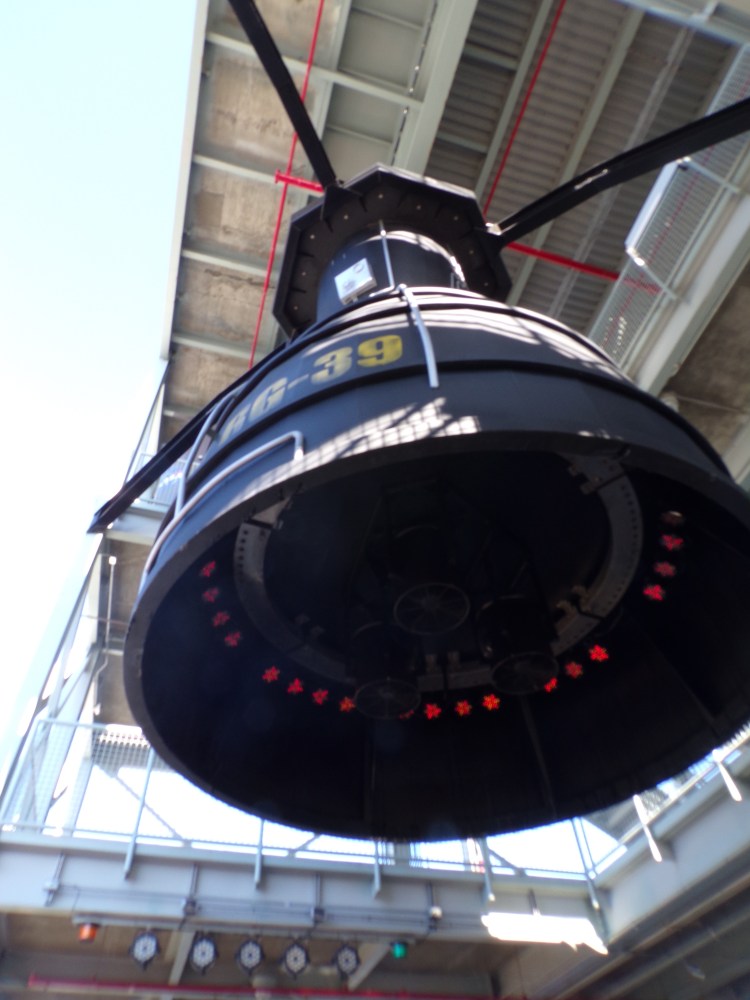
P.C. Cher B 01 Jan 2026
The Gantry at LC-39 is also home to NASA’s largest Earth Information Center. Stunning visualizations, interactive media, and powerful narrations express a holistic view of how the planet is changing in ways that affect all of life on Earth.
As one climbs the stairs up the gantry’s levels, one can explore the intricate process of designing, building, and launching rockets. Interactive kiosks along the route illustrate how each rocket is crafted to meet specific mission requirements. (There is also an elevator for those who prefer the quicker route to the top, but you will miss the illustrations!)
Want to Watch a Rocket Launch?
The Gantry at LC-39 is a premium viewing location for select rocket launches. There were no rocket launches taking place during our visit. On the positive side, their absence provided ease of travel time since launch days experience huge traffic jams. I understand that traffic tie ups during launch times will cause locals hours of delays. One local told us that on launch days, her usual 10 minute drive to work can easily take 1.5 hours or more! There are no easy “back road options” due to all the islands of the area.
We did see several spots where one can view a launch – similar to the bleachers for watching a sports game!
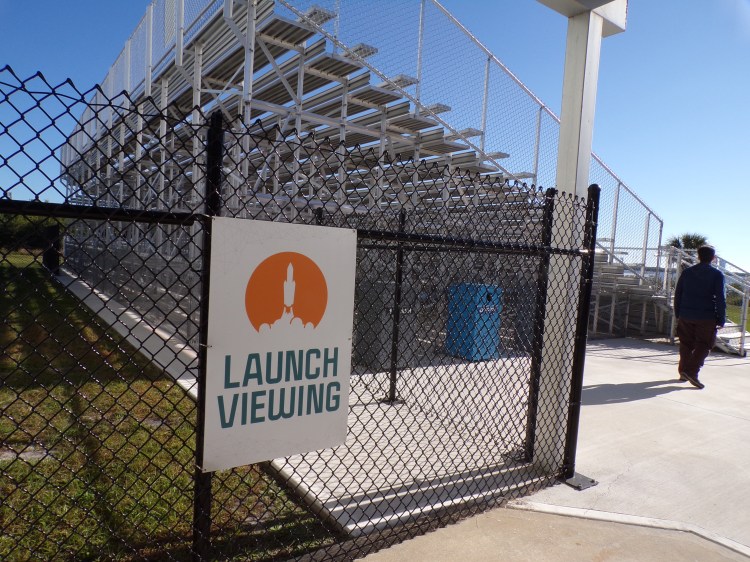
P.C. Cher B 01 Jan 2026
Traveler Tip: Want to watch a rocket launch from Kennedy Space Center Visitor Complex? Launch viewing opportunities are determined by the launch window, launch pad, visitor complex operations, Space Force Range Safety and NASA approval, and/or anticipated public interest.
Space Shuttle Atlantis®
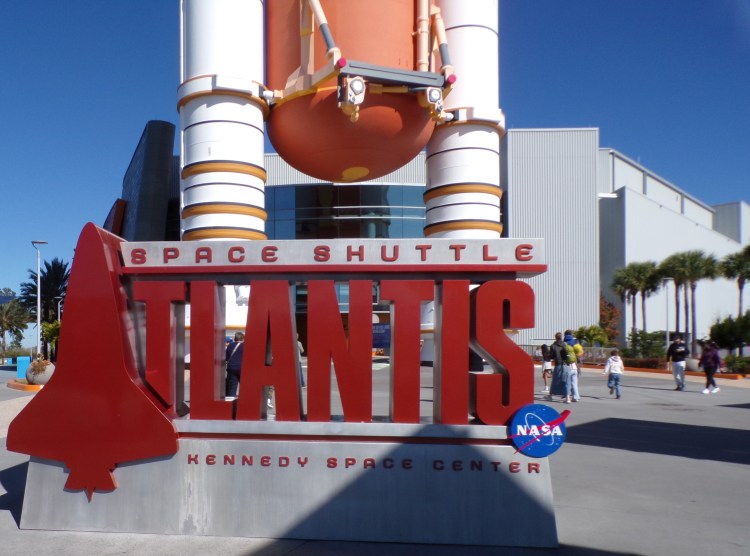
After our tour of Apollo and The Gantry at LC-39, the bus returned us to the main complex. Because of both proximity and complexity, we visited the Atlantis exhibition next.
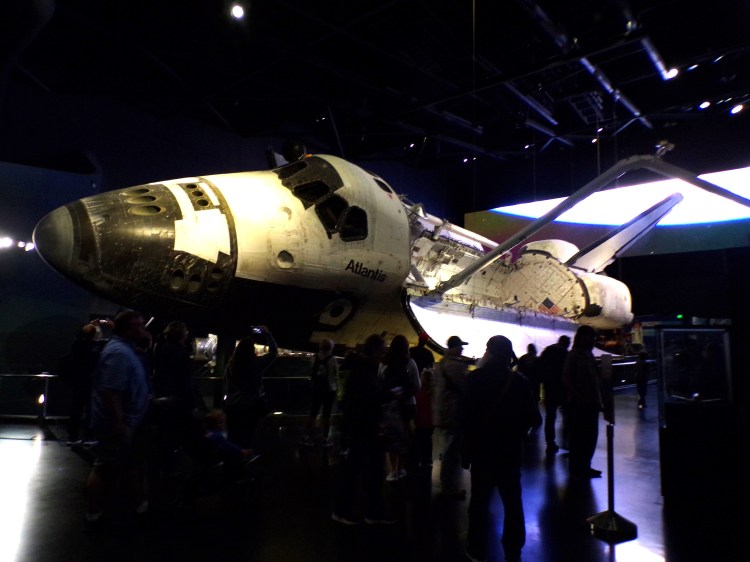
In part because it was a space era in which I grew up, I revisited the thrill of NASA’s shuttle era which can be experienced at the Space Shuttle Atlantis® attraction. Its main attraction is that it is home to the REAL Atlantis orbiter that flew over 33 missions!
P.C. Cher B 01 Jan 2026
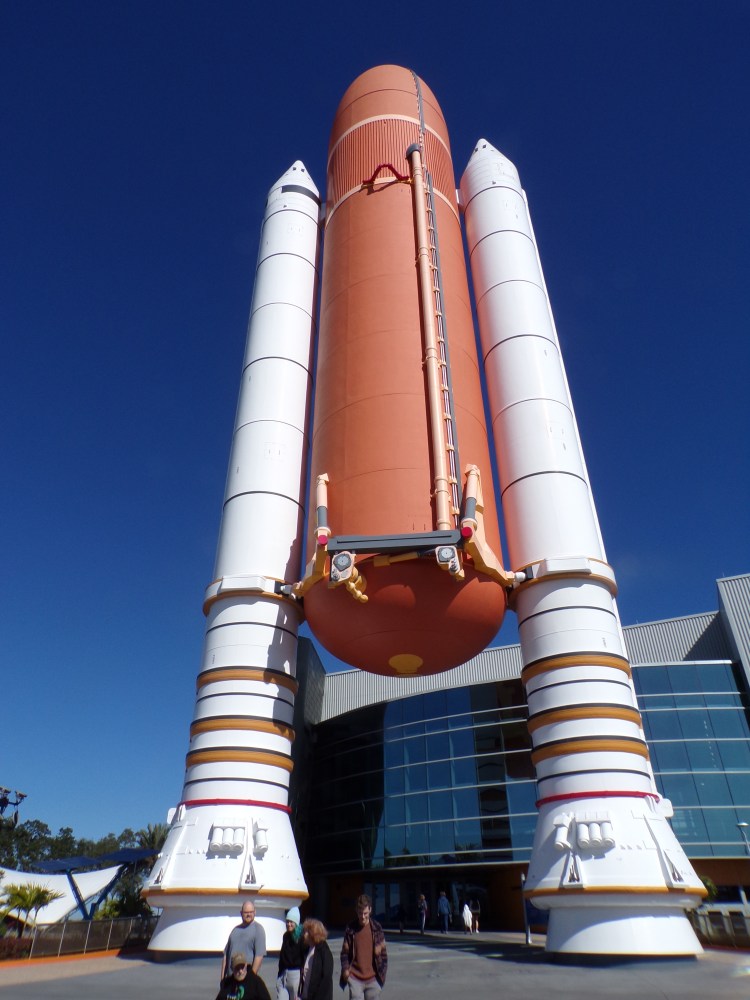
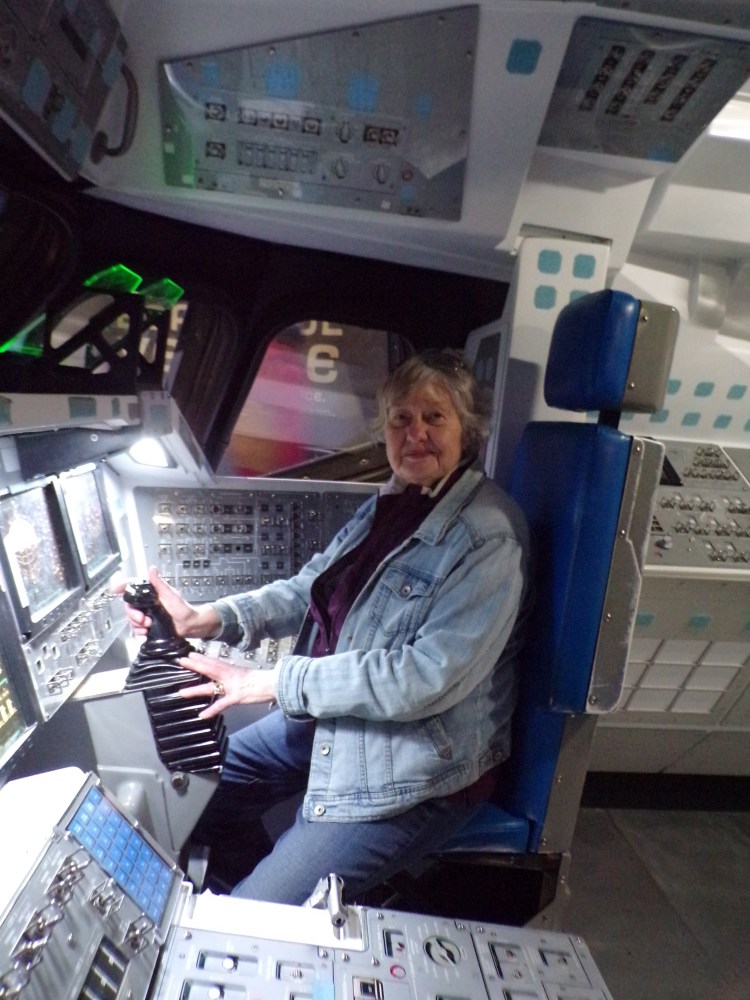
The facility is very interactive; it features over 60 hands-on experiences. Included are astronaut simulators, a mock International Space Station and a Shuttle Launch Experience. We did not get to experience this, but it is advertised as an “exhilarating ride that astronauts themselves say comes close to a real launch liftoff.”
P.C. Cher B 01 Jan 2026
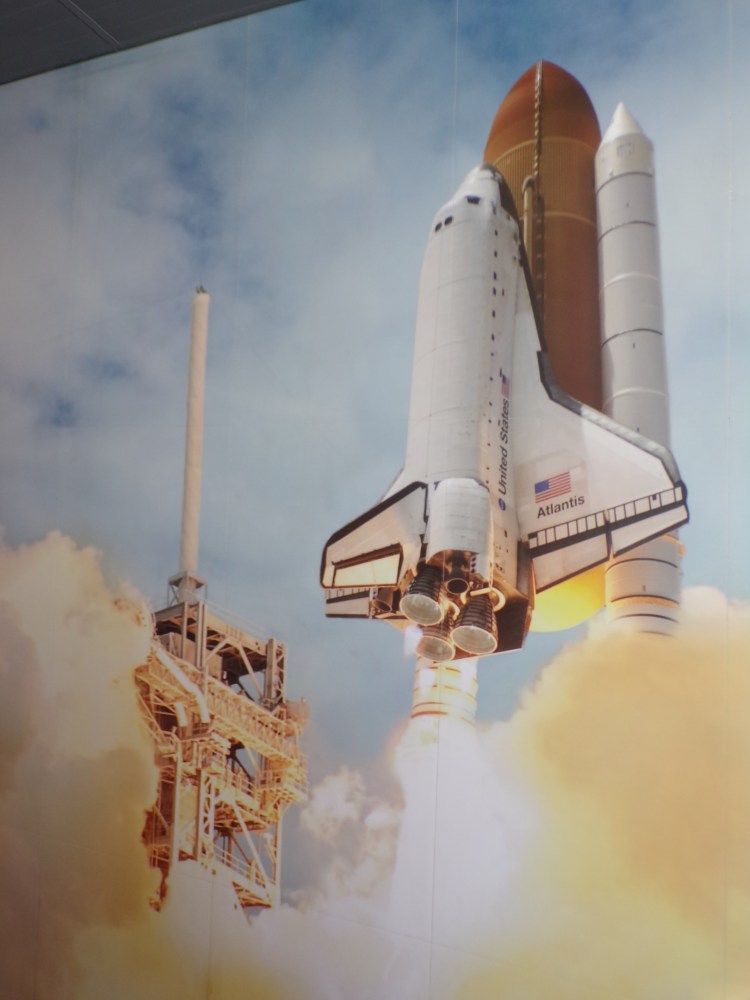
We were quickly reminded that a shuttle is a ship like no other. For 30 years, it transported astronauts to space and back. It launched like a rocket and landed back to Earth like a glider.
P.C. Cher B 01 Jan 2026
As a young adult, I recall seeing the space shuttle being launched, fly in space, land back on earth, and finally, being transported across country atop a commercial airplane! In this exhibit, it was thrilling to see this American icon displayed, close up, as only astronauts saw her in space.
Before my eyes, here it was, rotated 43.21 degrees with huge payload doors open and Canadarm extended. It was as if it had just un-docked from the International Space Station (ISS). I was fascinated to learn that the Canadarm – the robotic arm used in the Space Shuttle and ISS – was left-handed! Made sense on a number of reasons – check it out!
P.C. Cher B 01 Jan 2026
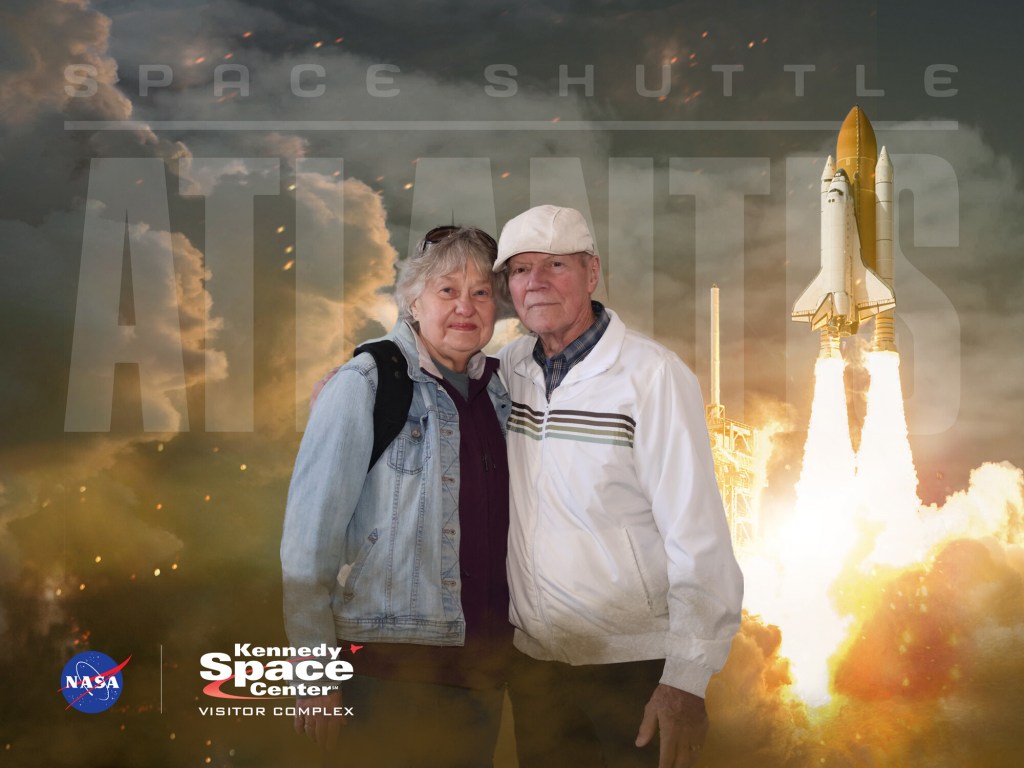
The Space Shuttle Atlantis exhibit includes more than 60 interactive and immersive exhibits. It tells the story of what it was like to live and work in space from liftoff to landing. It provides a moving celebration of humankind’s greatest achievements and is as fascinating as it is inspiring.
P.C. Skip B 01 Jan 2026
P.C. KSC photo purchased 01 Jan 2026
Journey To Mars
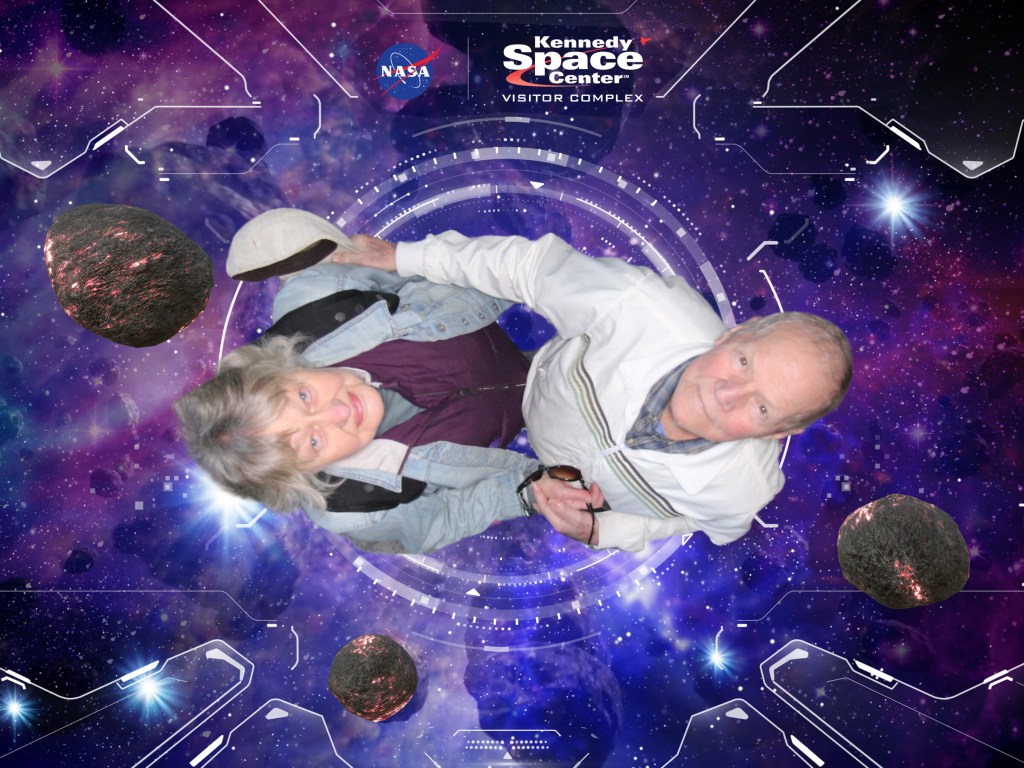
Journey to Mars is an exhibit with a focus is the future of space travel. NASA’s plans for exploration of deep space is highlighted a a multimedia exhibit. Experiences include immersive exhibits, innovative simulators, and an up-close look at rover replicas. The “Explorers Wanted” exhibit provides a powerful glimpse into today’s pioneers, individuals who are paving the way for future space exploration with bold missions aiming for the Moon, Mars – and beyond!
P.C. KSC photo purchased 01 Jan 2026
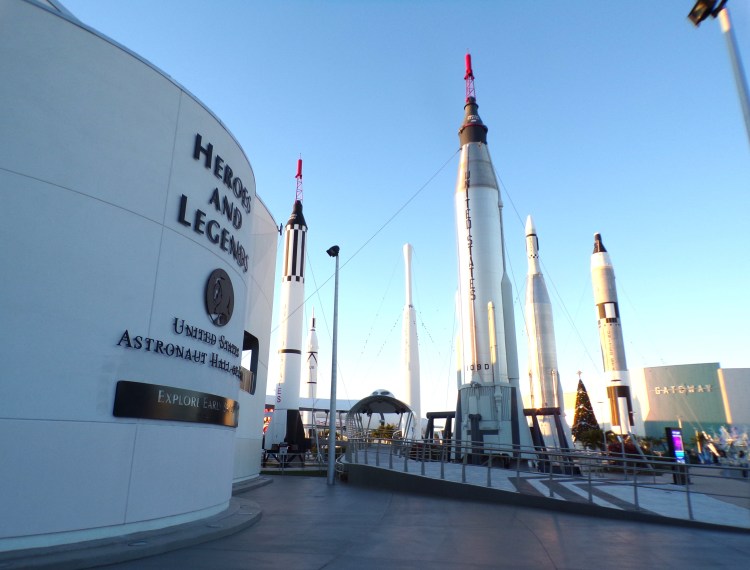
Heroes & Legends
Heroes & Legends, one of the first buildings in the complex, is next to the Rocket Garden. It includes actual artifacts of the dawn of the space age including a Redstone rocket suspended overhead and the Sigma 7 capsule. It was one of the last exhibits we visited on our way out, and seemed appropriate as we wrapped up our visit.
P.C. Cher B 01 Jan 2026
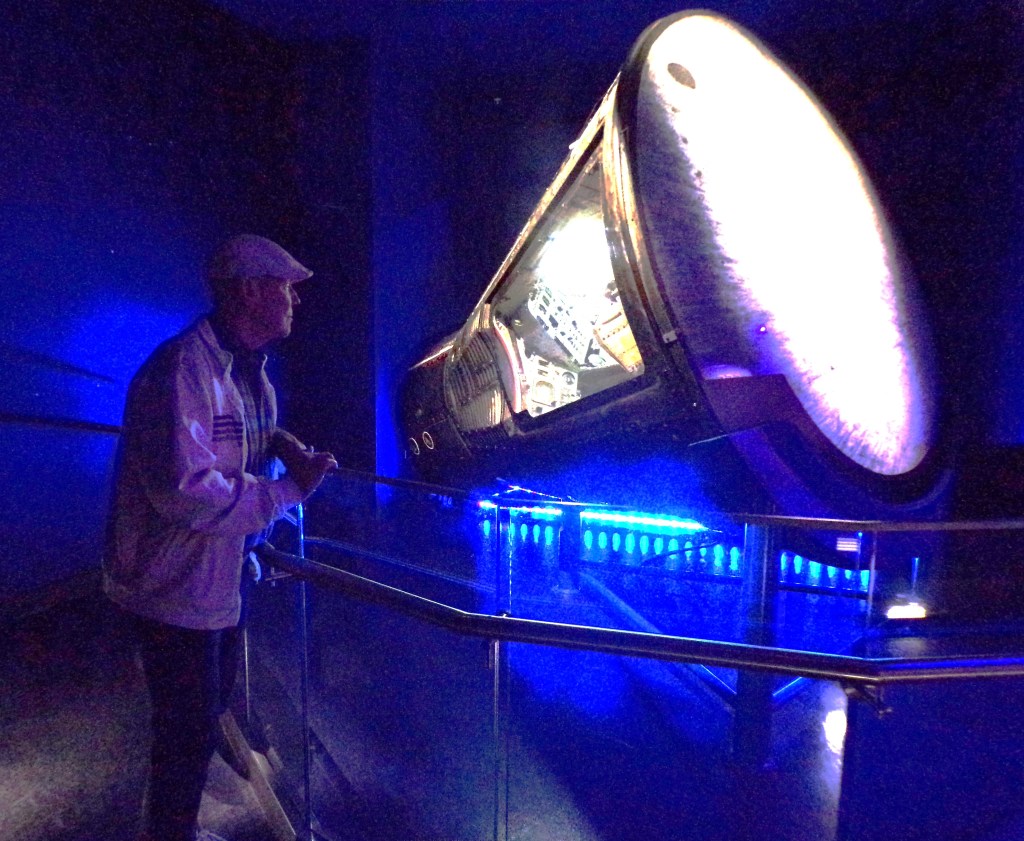
Gemini 9
The mission, originally designated Gemini IX, was renamed Gemini IX-A after the original May 17, 1966, launch date was scrubbed. On June 3, Thomas P. Stafford and Eugene A. Cernan launched into orbit for the seventh crewed flight of the Gemini program.
A unique close-up look at the Gemini 9 capsule was intriguing. The plaque labeled “Gemini 9A, Heating Up” next to the exhibit sharing interesting insight. “Spaceflight constantly places astronauts in the “hot seat” of very real danger. During reentry into the Earth’s atmosphere, the heat shield of this Gemini capsule, carrying Gene Cerman and Tom Stafford, fired up to a scorching 3,500 F. From the endless void of space, to the burning fury of returning to Earth, the advances of human excellence come at no easy cost.”
P.C. Cher B 01 Jan 2026
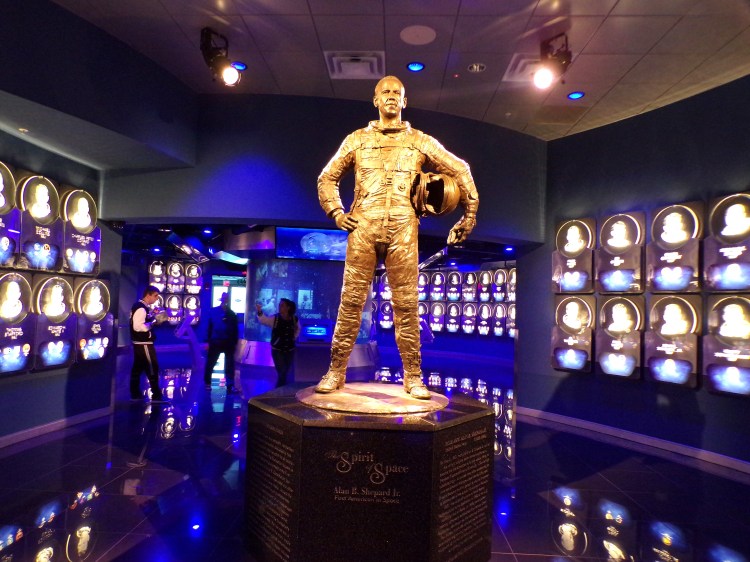
U.S. Astronaut Hall of Fame
The U.S. Astronaut Hall of Fame is located on the bottom floor of Heroes & Legends. Created by the Mercury Seven astronauts, the U.S. Astronaut Hall of Fame inductees are selected by special committee of the Astronaut Scholarship Foundation.
P.C. Cher B 01 Jan 2026
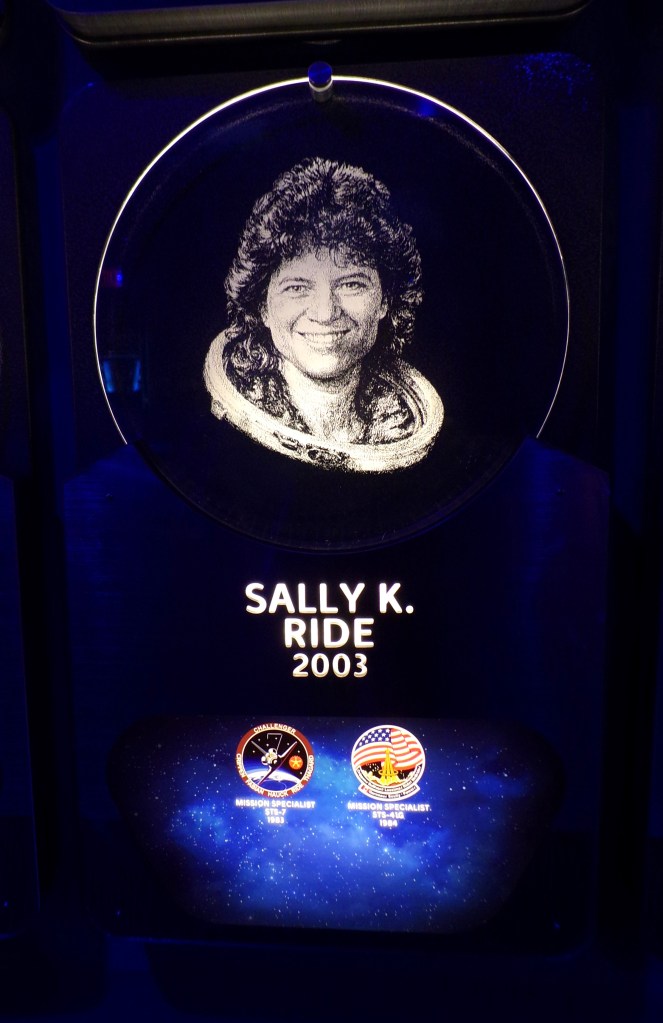
Sally Ride: 1st American Woman in Space
Woman who accomplish greatness in any field inspire me to also strive for greatness.
Sally Ride was one of these women. Besides, she had a really memorable, cool name!
In 1983, Sally Ride (1951-2012) became the first American woman (and 3rd woman after 2 Russian cosmonauts) to fly in space. At the age of 32, she was also the youngest American astronaut to have flown in space.
Seeing her radiant, smiling face in the Hall of Fame brought a smile to my lips as well. – and a renewed inspiration to strive for greatness.
P.C. Cher B 01 Jan 2026
Christa McAuliffe: 1st Teacher & Citizen in Space
“Space is for everyone”
There is another woman astronaut whom I specifically sought out at KSC: Christa McAuliffe.
Winner of the Teacher-In-Space program competition, she became the first citizen passenger – and first teacher – to go to space.
She believed that “space is for everyone” and hoped her participation would serve to demystify and humanize the space program.
As a teacher myself, I was especially interested in her role as first teacher in space. I loved her inspiring approach to the opportunity. She is quoted: “Imagine me teaching from space, all over the world, touching so many people’s lives – that is a teacher’s dream… Imagine a history teacher making history!”
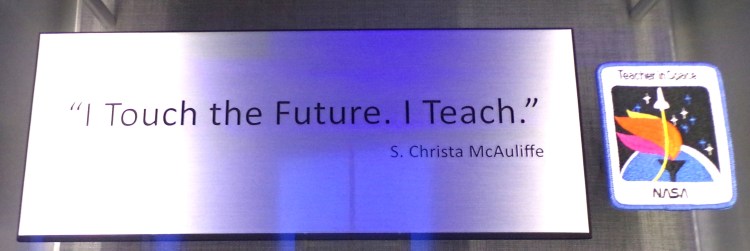
P.C. Cher B 01 Jan 2026
Her down-to-earth and generous spirit touched many. Like me, the American public fell in love with her. She worked on lessons she would teach from space while working on her intensive astronaut training. It is recorded that she joked that no teacher had prepared more than she did for two lessons at once! I was fascinated that classrooms literally all around the world would be linked in to her real-time lessons taught from space. What a fabulous learning experience for both her and her students!
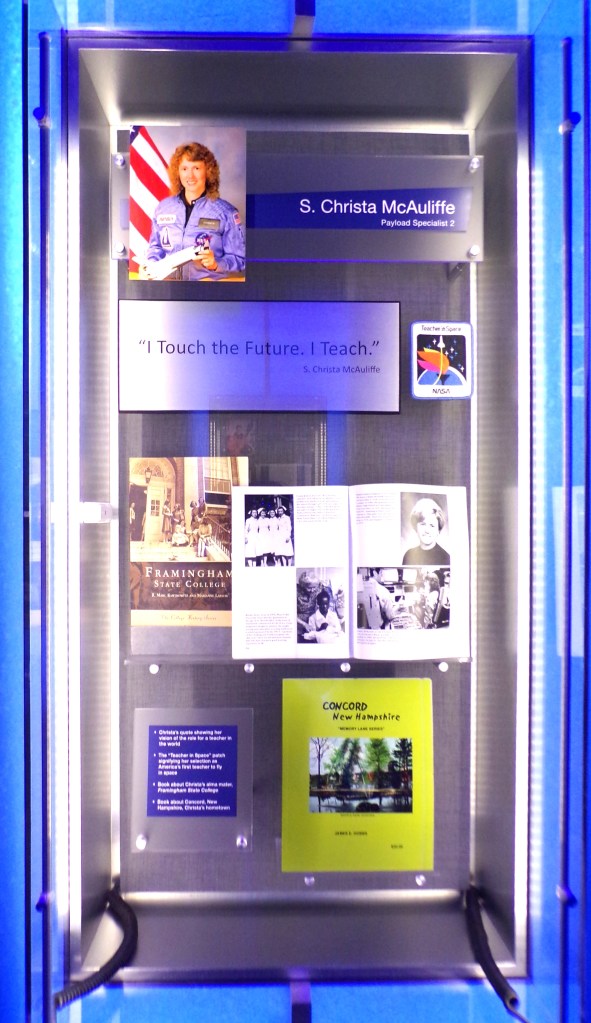
P.C. Cher B 01 Jan 2026
Sadly, fate would provide a different learning experience for her students – and us all…
The launch of the shuttle Challenger, with its infamous teacher on board, was delayed six times due to cold January temperatures at the Cape Canaveral launch site.
On January 28, 1986, the launch finally took off.
Where were you when…?
What was to follow was one of those unforgettable moments in history. A surreal moment when time stands still. And an image is forever etched in one’s memory. At home in my kitchen, I was glued to the TV, cleaning up after a routine breakfast. Excitedly, I watched the long-delayed launch finally take off. I heard the loud cheers of the crowd watching in the viewing bleachers. Then I heard the horrified gasp of the shocked TV commentators, grasping for words. Within minutes after takeoff, the Challenger exploded mid-air. It plunged back to earth, leaving a billowing trail of white smoke trailing behind it. The tragedy instantly took the life of McAuliffe and her 6 fellow astronauts.
The Shuttle Challenger
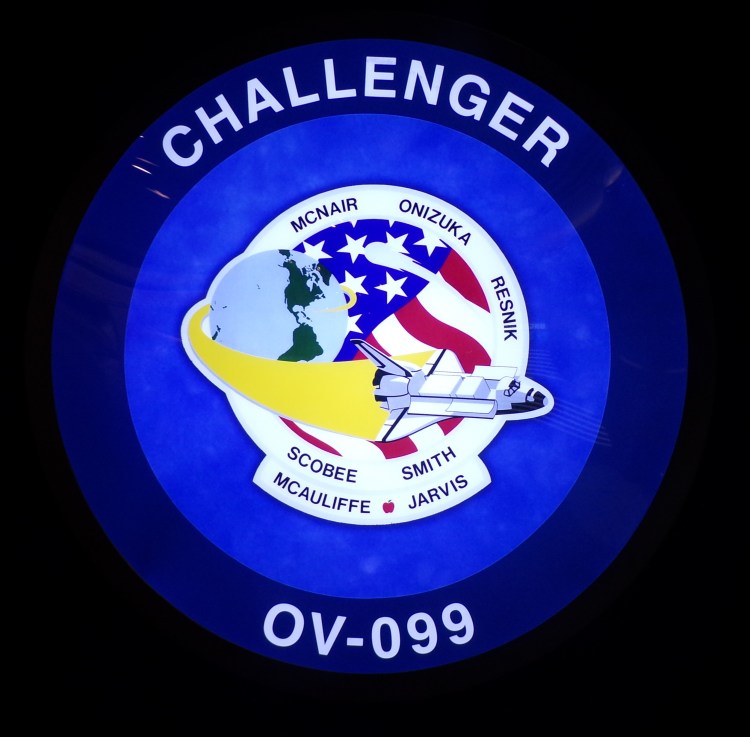
P.C. Cher B 01 Jan 2026
The Shuttle Columbia
The Challenger was not the only tragic fatality in NASA’s history. The Space Shuttle Columbia disintegrated on Saturday, February 1, 2003, as it re-entered the Earth’s atmosphere over Texas and Louisiana. All 7 astronauts aboard were killed.
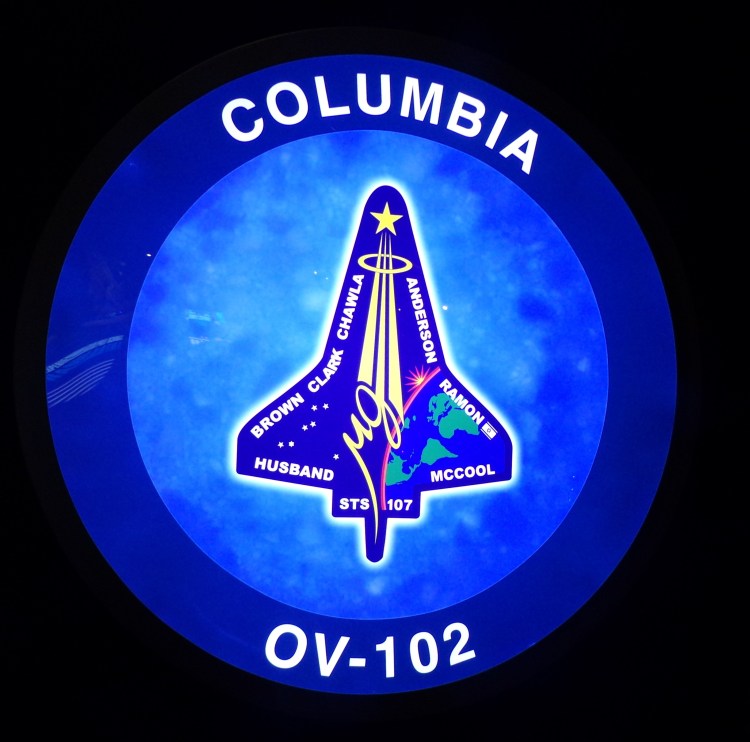
P.C. Cher B 01 Jan 2026
Highlighted in a special area of the Atlantic exhibition are commemorative displays remembering and honoring each astronaut lost in the Challenger and Columbia shuttles.
Words of encouragement and comfort to the grieving nation were posted throughout. This one was by the USA President at the time, George W. Bush
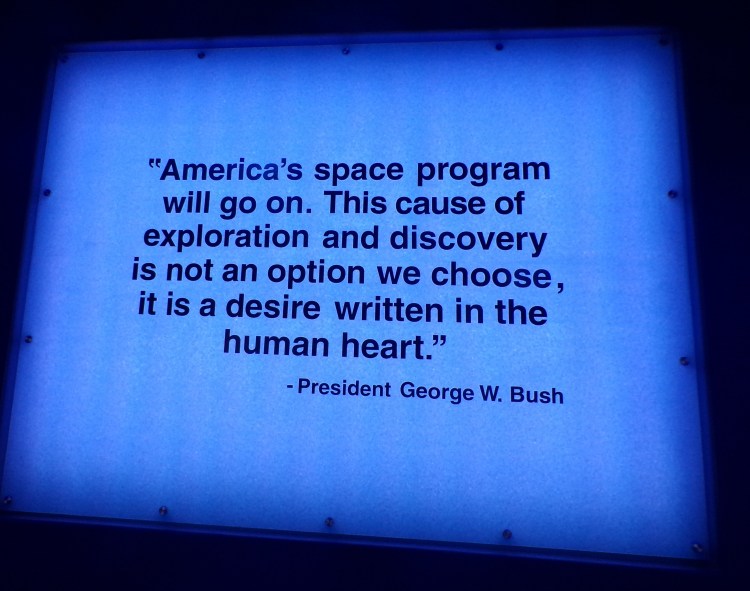
P.C. Cher B 01 Jan 2026
Also at Kennedy Space Center …
There are KSC places we either did not visit or take photos. They are worthy sites and need to be noted:
Deep Sky IMAX
Deep Sky IMAX was a great way to take sit-down break during the day. We love IMAX showings and this one, in line with the rest of the complex, was impressive. Through awe-inspiring images captured by NASA’s Webb Telescope, we experienced one of a wide selection of films available. The daily schedule includes movie titles and show times. NOTE: The popcorn available for purchase in the lobby was excellent, affordable, and given high ratings by my popcorn-loving husband!
Gateway
The Gateway: The Deep Space Launch Complex® is the newest addition to the Kennedy Space Center complex. Unfortunately, we somehow missed this building (not sure how – it is HUGE!), but sadly, we did. We missed viewing the visionary designs which will pave the way of deep space travel for humans. We did not discover the current cutting-edge innovations of space exploration from NASA and its commercial partners. It was included with general admission. I guess we’ll have to return someday!
Hyperdeck VR
The Hyperdeck VR! Through virtual reality, at this exhibit, one will head to the Moon. One will experience a dynamic world featuring a full-motion floor and multi-sensory effects. Reservations are required so check the daily schedule for QR code when you arrive. (Not being fans of virtual reality experiences, we missed this intentionally – but if it is anything like the rest of the complex, is is bound to be exceptional!)
The Fraggles Have Arrived…
In “Fraggle Rock: A Space-y Adventure,” Jim Henson’s Emmy Award-winning Fraggles provide an educational journey that promises to “delight dreamers of all ages.” Visitors are encouraged to join them with laughter, music and physical comedy, as they “embark on an out-of-their-world experience through the inner workings of NASA’s space program.” Other Fraggle experiences include one offered the day we visited, breakfast with the Fraggle stars! Check it out!
Traveler Tip: Included with the visitor complex admission, guests are encouraged to check the daily schedule upon arrival for Fraggle showtimes. In hindsight, after reading a summary of the adventure, I almost wish I had taken the opportunity to indulge the-inner-child in me! NOTE TO SELF: Don’t immediately dismiss an opportunity just because you think it is not for you!
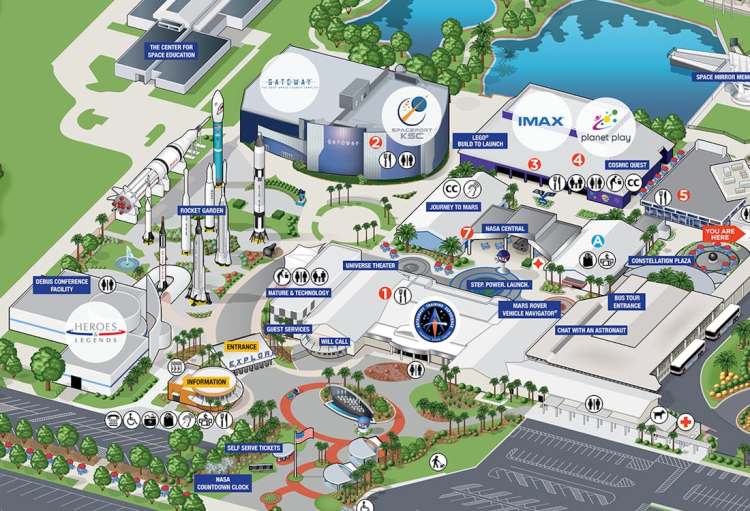
Visitor Map
I highly recommend accessing the downloadable maps to print or load on an app are available on the website. The complex is large – 482 acres – but it is very walk-able and easy to navigate.
Being a visual, hands-on person, I printed out a hard copy of the site map off the website ahead of time and crossed off places as we completed them. Hard copies are available at the Visitor Center, near the entrance gate.
Sun Set & Moon Rise – Top Off a Day in Space
The Sun set in the West behind the Rocket Garden.
The nearly full Moon rose in the East behind Atlantis.
Both seemed symbolical for an end to a perfect day exploring Space!
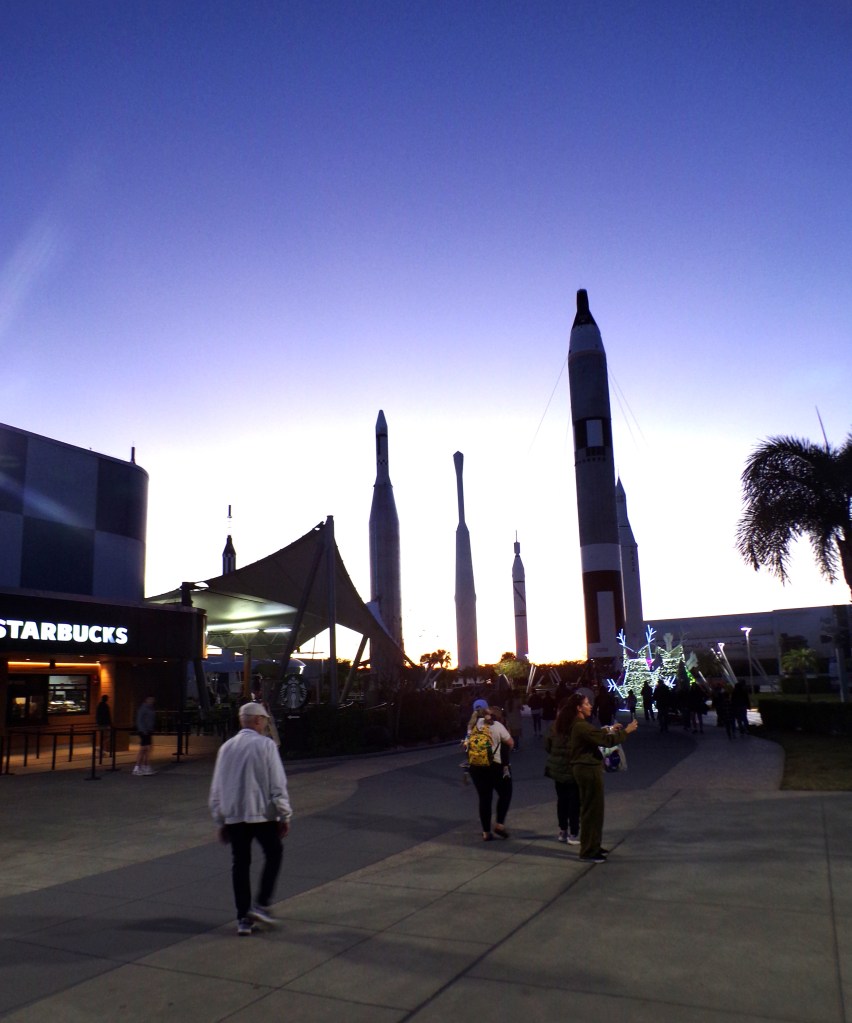
P.C. Cher B 01 Jan 2026
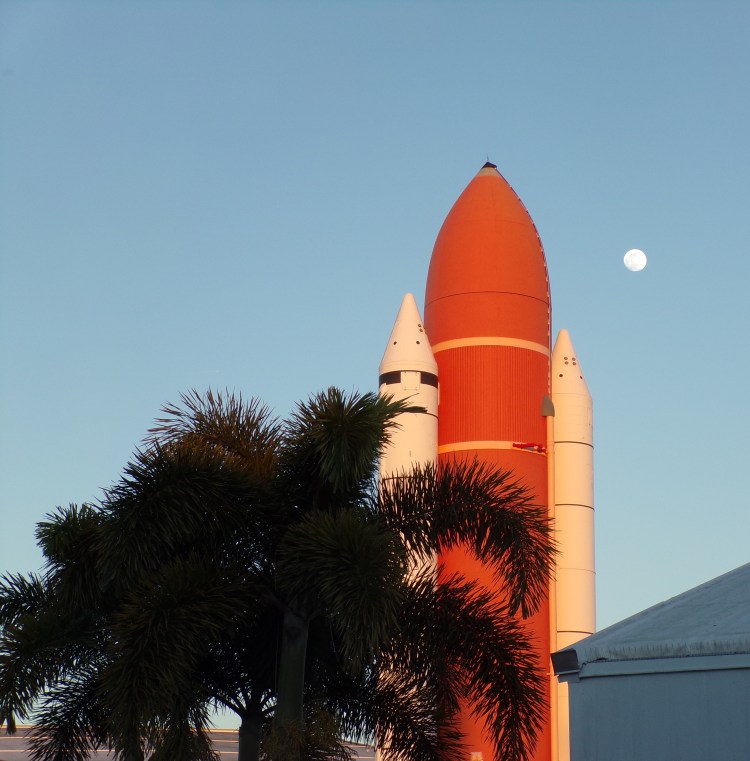
P.C. Cher B 01 Jan 2026
Logistics for a Visit
What will I see at the KSC? As promoted by their excellent and very complete and easy-to-navigate website and printed literature: whether you’re visiting with kids, exploring solo, or a devoted space enthusiast, there’s something for everyone. I have friends and family who fall in all categories and were genuinely impressed and loved their visit.
KSC website: The website is very informative and complete. Sample itineraries help to make the most of your visit. Planning ahead is highly encouraged to make sure you won’t miss the highlights. Give yourself time to enjoy the best of NASA’s past, present, and future. Option to choose from include half-day, one-day, one-day with kids, or two-day plans to guide your journey. There is an official app with the KSC guide to play your day. Hard copies of the map are available at the Visitor Center, near the entrance gate.
Admission Passes: We selected a two-day pass to allow time to enjoy each experience and not rush. We were fortunate in that it was not crowded, even if it was a major holiday, January 1st. As advised by previous travelers, we got there a bit before they opened (9:00 am most days) and found convenient parking near the entrance. We were among the first in line and immediately went to the BUS TOUR spot to visit the Apollo / Saturn and LG 39 spots. I recommend getting your passes online before going. If you want to see any specialty experience, you can book that with your admission.
Food on-site. We had been alerted that the food was kid-oriented and pricey. We found it affordable and with a variety of palates for both adults and kids. Not knowing, we packed protein/granola bars, but enjoyed the Popcorn at the IMAX theater, the hand-dipped ice cream at the Milky Way Ice Cream Shop and a coffee break at Starbucks.
Cashless: Leave your cash behind. The visitor complex is a completely cashless. Details on the website.
Getting There…
The KSC is literally in the middle of nowhere, in the Atlantic Ocean on one of the many islands in the Canaveral area on the east coast of Florida. Figuring out how to get there was one of the most difficult areas of logistics for me on the trip. Thankfully, I got some insider tips from my daughter who had visited in recent years.
Combining w/a Cruise: We paired our KSC visit with a cruise out of Port of Canaveral (flew into Orlando MCO, about an hour away). Our cruise line, NCL, offered departure day excursions to KSC which included transportation from the dock/ship, admission to KSC for a 6 hour visit, and transportation to the MCO airport (Evening flights were necessary). Price for that package seemed to be reasonable.
Renting a Car: We opted to arrive two days early for our cruise departure with the longer visit to KSC in mind. We got a 3 night hotel near-by (see Lodging) and rented a car. Car rental pick up at the Orlando MCO airport was the best option, even if a bit more expensive than off-site car rentals. (Note that MCO has 3 terminals; be mindful which one your plane lands.).
Parking at the KSC is plentiful and prices range per car ($15/day for regular car, more for RV etc). I could not find any public transportation or public shuttle access to KSC but that does not mean it is not available. A car gave us some flexibility and autonomy which we used in exploring the area: we dined on the Cocoa Beach Pier and visited the Warbird Museum near our hotel. (I can recommend both!)
Lodging: The KSC website provides hotel packages which look like good options. They were located both in Orlando (1 hour away from KSC) and nearer the KSC complex. We chose a hotel in nearby Titusville which gave us a good central point for getting to and from the airport, KSC and area beaches.
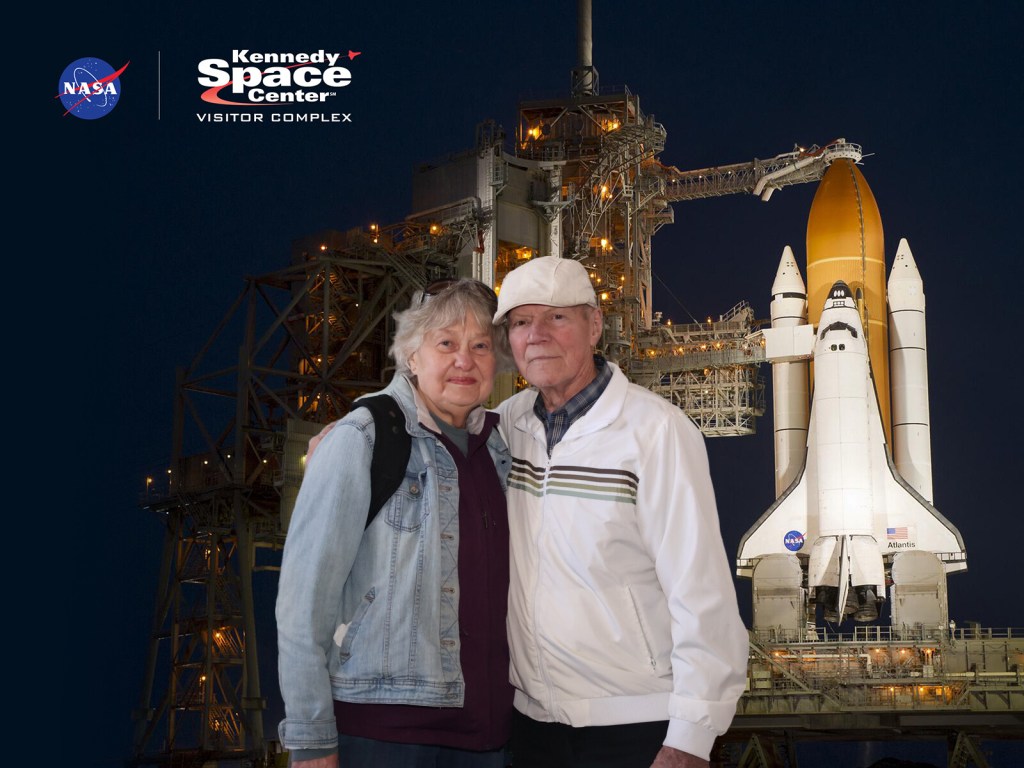
P.C. KSC photo purchased 01 Jan 2026
Overall, the Kennedy Space Center was well worth the time, money and preparatory research. It was entertaining, historical, and relevant.
Sources
- KennedySpaceCenter.com 22 Jan 2026
- NASA.gov 22 Jan 2026
- Personal visit to Kennedy Space Center with KSC guided tours and lectures, plaques/brochures on site, and personal experiences by Cher B and Skip B. 01 Jan 2026
 Charamana Consulting